
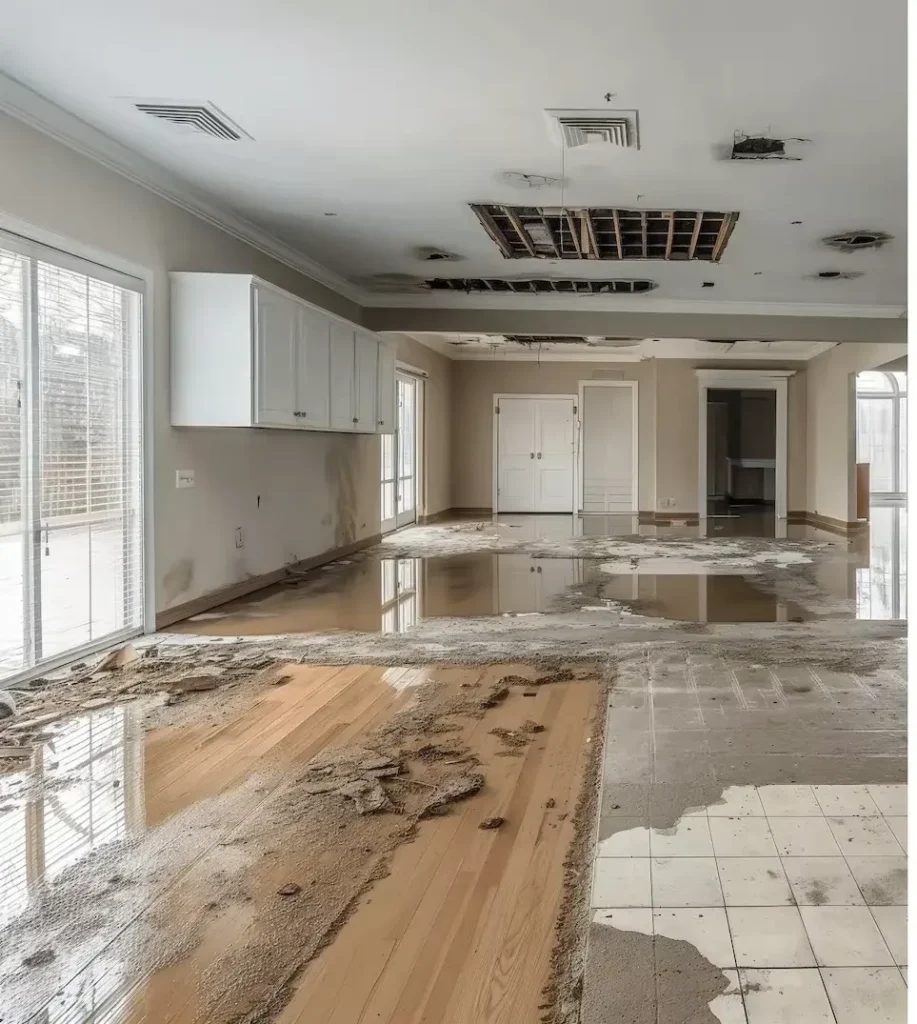
| Quick Answer: You need emergency water restoration in Van Nuys, CA if you notice sudden flooding, water stains on ceilings or walls, warped flooring, a musty odor, or visible mold growth. These are signs of active or recent water damage that requires immediate professional attention to prevent structural damage and health risks. |
Water damage has a way of catching people off guard. One morning everything looks fine, and by afternoon you are standing in a soaked living room trying to figure out where to even start. It can happen because of a burst pipe, an overflowing appliance, a roof that finally gave out after years of wear, or a sudden storm that pushed water where it wasn’t supposed to go.
The tricky part is that water damage doesn’t always announce itself with a flood. Sometimes it’s a slow, hidden leak that works quietly behind your walls for weeks. By the time you notice the stain on the ceiling or the soft spot in your floor, the damage behind it is already far worse than it looks.
Knowing what to look for can make a real difference. This guide walks through the most common, and most overlooked, signs that your property needs professional attention, what those signs usually mean, and why timing matters more than most people realize.
Top Signs Your Home or Property Has Serious Water Damage
Not every leak calls for an emergency team. But some situations simply cannot wait. Here are the clearest signs that you need immediate water damage restoration in Van Nuys, CA:
1. Standing Water or Active Flooding
This one is hard to miss. If there’s water pooling on your floor, seeping under doors, or rising in a basement, you are dealing with an active emergency. Standing water doesn’t just ruin flooring and furniture, it penetrates into subfloors, walls, and structural framing within the first couple of hours.
If the source is a pipe or appliance, shut off the main water supply if you can safely reach it. Avoid walking through the water if you don’t know whether it’s contacted electrical outlets or sewage. Then call for help immediately.
2. Yellow, Brown, or Rust-Colored Stains on Ceilings or Walls
Discoloration on ceilings or walls almost always means moisture has been sitting somewhere it shouldn’t. These stains are typically left behind as water dries, but the materials, drywall, insulation, wood framing, absorb that moisture and hold it long after the surface looks dry.
A small stain might seem minor, but it can indicate a roof leak or a slow plumbing issue that’s been going on for weeks. The visible stain is rarely the full picture. A moisture assessment can tell you how far the water has actually spread.
3. Warped, Buckling, or Spongy Flooring
Floors that feel soft underfoot, hardwood planks that are lifting at the seams, laminate that’s bubbling, or tiles that have started to separate, all of these are signs that moisture has worked its way beneath the surface. Once water reaches the subfloor, the damage compounds quickly.
In some cases, homeowners try to dry the surface and assume the problem is solved. But if the subfloor has absorbed water, surface drying won’t reach it. Professional moisture meters and thermal imaging can detect exactly how deep the saturation goes.
4. A Musty or Earthy Smell That Won’t Go Away
That damp, earthy smell, the kind you associate with old basements, is often the first sign of mold. Mold can begin growing within 24 to 48 hours of water exposure, and it often establishes itself in areas you can’t easily see: inside wall cavities, under flooring, behind cabinets.
If you’ve cleaned the area and the smell keeps returning, that’s a strong signal that there’s moisture, and likely mold, somewhere out of sight. Opening windows may mask the odor temporarily, but it doesn’t address the underlying cause.
5. Visible Mold Growth
Mold shows up in different colors, black, green, white, or gray, and in different textures, from fuzzy patches to slimy surfaces. It tends to appear first in corners, on grout lines, around window frames, under sinks, and along baseboards.
Visible mold is a health concern, not just a cosmetic one. It can aggravate respiratory conditions and allergies, and some types can be more serious than others. More importantly, if you can see it, there’s almost certainly more you can’t see. Mold remediation and water damage restoration typically need to be handled together to fully resolve the problem.
6. Peeling Paint, Bubbling Wallpaper, or Swollen Drywall
Paint that’s flaking away from a wall, wallpaper lifting at the edges, or drywall that looks swollen or feels soft to the touch, these are all signs that water has gotten into the wall itself. Drywall is highly absorbent and deteriorates quickly once wet. It can also become a surface where mold thrives.
These signs are easy to dismiss as cosmetic issues, but they’re usually a symptom of something more significant happening inside the wall.
7. Unexplained Spike in Your Water Bill
If your water usage habits haven’t changed but your bill is noticeably higher than usual, there’s a good chance you have a hidden leak somewhere in your plumbing system. Leaks behind walls or under slabs can go undetected for a long time, and during that time, water is slowly saturating the surrounding materials.
This kind of slow leak is particularly damaging because it’s easy to miss until the damage has become extensive. If you can’t identify a reason for the higher bill, it’s worth having a plumber and a restoration professional both take a look.
Why Timing Makes Such a Big Difference with Water Damage
One of the most common things people say after dealing with water damage is that they wish they’d called sooner. It’s a natural impulse to try to handle things yourself first, grab some towels, run a fan, see if it dries out. But with water damage, every hour of delay tends to expand the scope of what needs to be fixed.
| Timeframe | What’s Happening Inside Your Property |
| 0–2 Hours | Water saturates flooring, drywall, and furniture; dyes and finishes begin to bleed |
| 2–24 Hours | Swelling in drywall and wood; metal surfaces begin to rust; odors develop |
| 24–48 Hours | Mold begins to germinate; structural materials start breaking down |
| 1 Week+ | Significant mold growth, subfloor and framing damage, potential biohazard risk |
The earlier you bring in professionals with the right drying equipment, the more materials can be salvaged rather than replaced, and the lower the overall restoration cost tends to be.
What Does Emergency Water Restoration in Van Nuys, CA Include?
A lot of people aren’t sure what actually happens when a restoration team comes out. It’s not just fans and dehumidifiers, a proper response is more systematic than that.
Here’s a general overview of what the process looks like:
- Inspection and moisture mapping using meters and thermal imaging to locate all affected areas, including those you can’t see
- Water extraction — removing standing water with industrial pumps and wet vacuums
- Structural drying — placing commercial air movers and dehumidifiers to dry out walls, floors, and cavities over several days
- Material removal — when drywall, insulation, or flooring is too saturated to save, it’s removed to allow proper drying and prevent mold
- Sanitization — treating surfaces with antimicrobial products to prevent bacterial growth and eliminate odors
- Mold assessment — checking for mold growth and arranging remediation if needed
- Documentation — creating a full record of damage and work performed, which is typically required for insurance claims
One thing worth knowing: restoration teams work to save as much of your existing structure as possible. Demolishing and replacing materials is a last resort, not the default. The goal is to get the property dry, clean, and stable as efficiently as possible.
Common Causes of Water Damage in Residential and Commercial Properties
Water damage has many possible sources, and understanding the most common ones can help you recognize a problem earlier, or take steps to prevent it in the first place.
- Burst or leaking pipes — especially in older plumbing systems or during unexpected cold snaps
- Water heater failure — tanks corrode over time and can leak or rupture without much warning
- Appliance supply line failures — washing machines, dishwashers, and refrigerators all have water connections that can fail
- Roof leaks — damaged shingles, flashing, or gutters that let water in during rain
- Sewage backups — blocked or damaged drains can push contaminated water back into the property
- Storm water intrusion — heavy rain can overwhelm drainage systems and push water into basements or crawl spaces
- HVAC condensation issues — poorly maintained systems can produce excess moisture that leads to hidden water damage
Many of these causes are gradual. A roof leak might drip slowly for months before it shows up as a ceiling stain. A corroding water heater might seep quietly under itself before it fails completely. Regular maintenance checks can catch some of these before they turn into larger problems.
What You Can Do Before the Professionals Arrive
There are some things you can safely do on your own to limit the damage while you wait for a restoration team:
- Shut off the main water supply if the source is a plumbing failure
- Turn off electricity in affected areas if you can do so safely from a dry location
- Move valuables, documents, and electronics out of the wet area
- Photograph and document everything you can see, this will support your insurance claim
- Open windows and doors if the weather allows, to improve airflow
What you shouldn’t do: use a regular household vacuum or fan on standing water, use electrical appliances in wet rooms, or assume the space is dry because the surface feels dry. The moisture inside walls and floors needs professional equipment to remove properly.
Final Thoughts: The Sooner You Act, the Better the Outcome
Water damage rarely stays contained on its own. What starts as a small leak or a faint smell can become a significant structural problem if enough time passes. The signs covered in this article, stains, odors, warped materials, visible mold, are all signals worth taking seriously, even when the visible damage looks minor.
The most important thing is not to wait until the problem becomes impossible to ignore. By that point, the damage has usually spread far beyond what’s visible, and the restoration work, and cost, is considerably greater than it would have been with earlier intervention.
If you’re in the Van Nuys area and you have noticed any of the signs described here, getting a professional assessment is the right next step. It doesn’t commit you to anything, it just gives you an accurate picture of what you’re dealing with and what your options are.
SOS Restoration is a licensed water damage restoration company serving Van Nuys and the surrounding communities. If you have questions about a water damage situation at your property, their team can help you understand what’s happening and what to do next.
Frequently Asked Questions
1. How quickly should I call after noticing water damage?
As soon as possible. Mold can start developing within 24–48 hours, and structural materials absorb water quickly. Early response generally means less damage and lower costs.
2. Will my homeowner’s insurance cover water damage restoration?
It depends on the cause. Sudden accidental damage from a burst pipe or appliance leak is typically covered. Gradual leaks and flooding from outside usually require separate coverage. Document everything before cleanup begins.
3. Can I handle water damage cleanup myself?
For very minor surface water, basic cleanup may be enough. But if water reached walls, flooring, or insulation, professional drying equipment is necessary. DIY efforts often leave hidden moisture that leads to mold later.
4. How long does the drying process take?
Structural drying typically takes 3–5 days with professional equipment. The full restoration timeline, including any needed repairs, depends on how much material was affected.
5. I can smell mold but can’t find it. What should I do?
A musty smell without visible mold usually means it’s growing inside walls or under flooring. Professionals use moisture meters and thermal cameras to locate it without unnecessary demolition.
6. Is water damage from a sewage backup different from a regular water leak?
Yes, sewage backups involve contaminated water and are classified as a Category 3 water loss. This requires specialized protective equipment and sanitization protocols. It’s not safe to handle without professional training.