Direct Answer
Fire and smoke damage goes far beyond what you can see. Hidden effects include compromised structural integrity, toxic soot deposits, contaminated HVAC systems, weakened electrical wiring, and long-term smoke odor embedded in walls and insulation. Without a professional smoke damage restoration process, these issues can worsen over time, creating health hazards and increasing repair costs significantly.
Introduction
After a fire, most homeowners focus on what’s visibly burned. But the real danger often hides behind walls, inside air ducts, and deep within structural materials. Understanding these hidden effects is the first step toward a safe and complete recovery.
Whether you experienced a small kitchen fire or a major structural blaze, fire damage restoration isn’t just about cleaning up ash, it’s about protecting your home and your family from dangers you can’t always see.
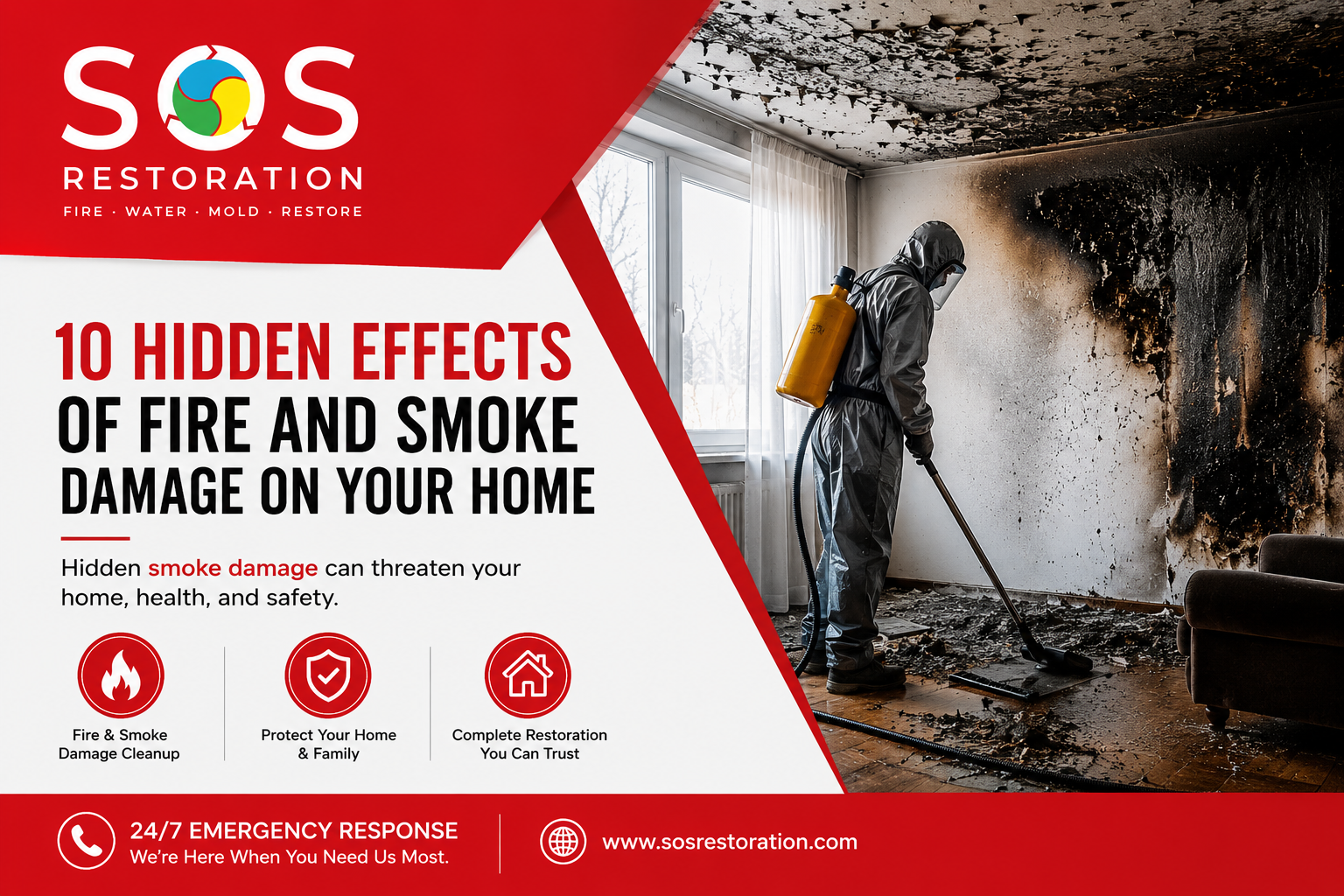
Here are 10 hidden effects of fire and smoke damage that often go undetected, and why addressing them quickly matters.
1. Structural Weakening You Can’t See From the Outside
Heat from a fire doesn’t just burn surfaces. It penetrates deep into wood beams, drywall, and load-bearing elements, reducing their strength significantly.
What happens: Wood exposed to intense heat loses moisture and becomes brittle. Steel can warp. Concrete can crack internally. The structure may appear intact but be structurally unsound.
Why it matters: A home that looks standing may be at serious risk of partial collapse if structural fire repair isn’t assessed by a professional.
2. Toxic Soot Deposits in Hidden Spaces
Soot travels far beyond the fire’s origin. It settles inside wall cavities, behind baseboards, in attic insulation, and along ceiling joists, places you’d never think to look.
What soot contains: Carbon, chemicals from burned materials, heavy metals, and carcinogens. Soot is not just dirty, it’s hazardous.
The risk: Without proper soot removal, these deposits continue to off-gas toxic particles into your living space for months.
3. HVAC System Contamination
One of the most commonly missed areas in smoke damage cleanup is the HVAC system. Smoke and soot particles get pulled into return air vents and coat ductwork, filters, coils, and fans.
The consequence: Every time your heating or cooling runs, it redistributes smoke particles and odor throughout every room — even ones untouched by the fire.
A thorough smoke damage restoration process must include a full HVAC inspection and decontamination.
4. Smoke Odor Embedded in Walls and Insulation
Paint, drywall, wood studs, and insulation are all porous materials. They absorb smoke odor deeply, and surface cleaning won’t remove it.
The problem with DIY: Repainting over smoke-damaged wall00000s without proper treatment seals the odor in temporarily. Within weeks, it comes back.
Professional smoke odor removal uses hydroxyl generators, thermal fogging, or ozone treatment to neutralize odor molecules at the source, not just mask them.
5. Compromised Electrical Wiring
Heat and smoke cause plastic insulation on wires to melt, crack, or off-gas corrosive residue. This can happen even in rooms adjacent to the fire.
The hidden danger: Damaged wiring can arc and spark inside walls without any visible sign, creating a secondary fire risk days or weeks after the original incident.
Any fire damage repair services should include a licensed electrician reviewing all wiring in affected zones.
6. Water Damage From Firefighting Efforts
Firefighting water saturates floors, walls, subfloors, and insulation. This moisture, if not dried within 24–48 hours, leads to mold growth.
What most people miss: The fire gets attention. The water damage is often left too long.
Emergency fire restoration teams address water extraction and structural drying as part of the same response, not as a separate step.
7. Corrosion of Metal Surfaces and Appliances
Smoke contains acidic gases that react with metal. Within hours of a fire, corrosion can begin on pipes, appliances, fixtures, and even metal structural components.
Signs to watch for: Discoloration or pitting on metal surfaces, rust appearing faster than normal, appliances that malfunction shortly after a fire.
Smoke damage isn’t limited to surfaces you can see, it’s a chemical process that continues until the environment is fully decontaminated.
8. Health Hazards From Residual Smoke Particles
Fine smoke particles (PM2.5 and smaller) are invisible to the naked eye but penetrate deep into lungs. Prolonged exposure in a smoke-affected home can cause:
- Respiratory irritation and chronic coughing
- Headaches and dizziness from carbon monoxide residue
- Eye and skin irritation
- Long-term risks for children, elderly, and those with asthma
Re-occupying a fire-damaged home without professional smoke damage cleanup puts your household at measurable health risk.
9. Hidden Damage to Personal Belongings
Smoke permeates fabrics, documents, electronics, and furniture stored far from the fire. Many items appear unaffected but carry invisible soot contamination and persistent odor.
What’s often overlooked in fire damage insurance claims: Personal property losses extend well beyond what burned. Restoration professionals document all smoke-affected items, which supports a more complete insurance claim.
10. Long-Term Psychological and Air Quality Impact
Living in a home with residual smoke damage, even subtle odor or visible staining, has measurable effects on mental wellbeing and perceived safety. Studies consistently show that incomplete restoration leads to ongoing stress, sleep disruption, and decreased quality of life for occupants.
Complete fire damage restoration addresses not just the physical damage but restores the environment to a condition that feels, and is, genuinely safe.
Fire Damage vs. Smoke Damage: What’s the Difference in Restoration?
| Factor | Fire Damage | Smoke Damage |
| Visibility | Often visible | Often hidden |
| Primary risk | Structural collapse | Toxic exposure, odor, corrosion |
| Response urgency | Immediate | 24–72 hours (worsens fast) |
| Restoration focus | Structural fire repair, rebuilding | Soot removal, deodorization, air quality |
| Insurance documentation | Easier to document | Requires professional assessment |
Both require professional attention. Treating only the fire damage and ignoring smoke damage leads to incomplete restoration.
How the Smoke Damage Restoration Process Works
A professional smoke damage restoration process typically follows these steps:
- Emergency assessment — evaluate structural safety and hazards
- Board-up and securing — prevent further exposure or intrusion
- Water extraction — address firefighting water before mold sets in
- Soot and debris removal — specialized equipment, not standard cleaning
- HVAC decontamination — clean ducts, replace filters, treat coils
- Odor neutralization — thermal fogging, ozone, or hydroxyl treatment
- Structural repair — address compromised framing, drywall, and materials
- Final air quality testing — confirm the space is safe for re-occupancy
Conclusion
Fire leaves more behind than most people realize. From toxic soot in your walls to corroded wiring and HVAC contamination, the hidden effects of fire and smoke damage can be more dangerous than the visible destruction.
Addressing these issues requires a complete, systematic approach, not just cleanup, but true restoration. The sooner a qualified fire damage restoration team assesses your property, the safer your recovery will be and the more complete your insurance documentation.
If your home has experienced fire or smoke damage, don’t wait. The damage that isn’t visible today can become a serious health and structural risk tomorrow.
SOS Restoration specializes in fire damage restoration across Los Angeles, offering emergency response, smoke damage cleanup, soot removal, and full structural fire repair, everything covered in this guide, handled by certified professionals. Visit sosrestoration.com to learn more or request an assessment.
Frequently Asked Questions
1. How long after a fire does smoke damage get worse?
Smoke damage begins to worsen within hours. Soot starts etching into surfaces in 24–48 hours. Smoke odor becomes harder to remove the longer it sits. HVAC contamination spreads throughout the home every time the system runs. Early response is critical.
2. Can I clean smoke damage myself?
Surface cleaning is possible for minor incidents, but professional smoke damage cleanup is necessary for anything beyond a small, contained fire. DIY methods typically miss soot in hidden spaces, don’t neutralize odor at the molecular level, and don’t address HVAC or structural concerns.
3. Does homeowner’s insurance cover smoke damage?
Most standard homeowner’s policies cover fire and smoke damage, including smoke damage restoration costs, personal property loss, and temporary housing if the home is uninhabitable. Documenting everything — including smoke-affected items far from the fire — is essential for a complete fire damage insurance claim.
4. Is it safe to stay in a home after a fire if only one room was affected?
Not necessarily. Smoke, soot, and carbon monoxide can migrate throughout a home through HVAC systems, gaps in walls, and air circulation. A professional assessment should determine whether the home is safe for occupancy before you return.
5. What’s the difference between smoke odor removal and deodorization sprays?
Deodorization sprays mask odor temporarily. Professional smoke odor removal uses hydroxyl generators, thermal fogging, or ozone treatment to chemically neutralize odor molecules embedded in porous materials. The difference is permanent elimination vs. temporary masking.
6. How do I find reliable fire damage repair services?
Look for certified restoration companies (IICRC-certified), those offering 24/7 emergency fire restoration response, and those with documented experience in both structural repairs and smoke damage. Verify licensing, insurance, and ask for references from similar projects