
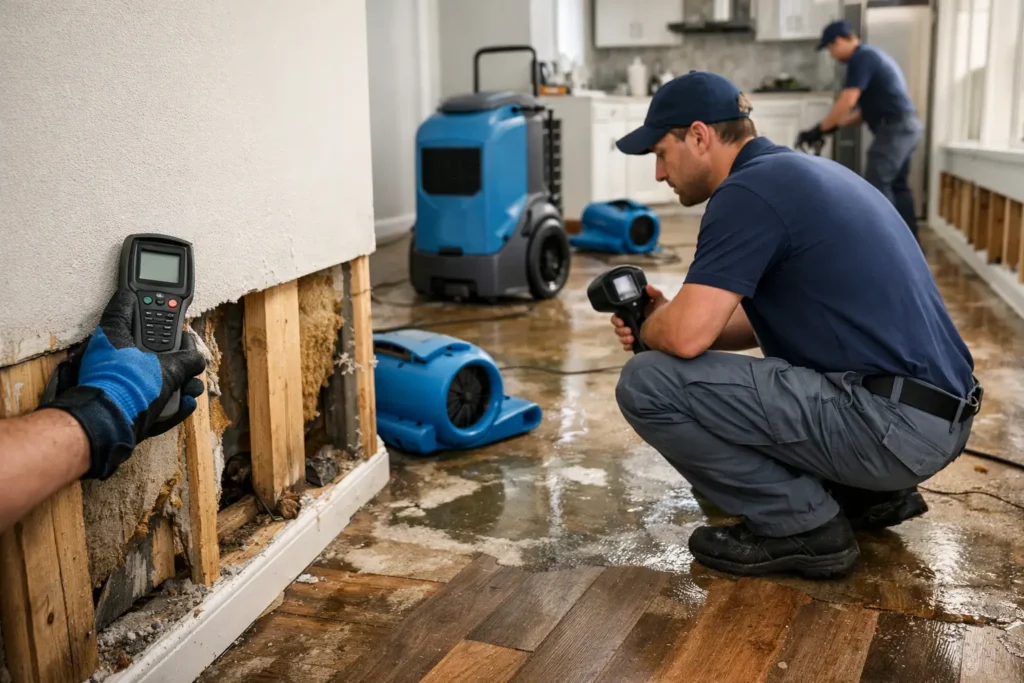
Floodwater does not need to remain in a home for days to create a mold risk. In Southern California, warm temperatures can speed up the problem once wet drywall, carpet, insulation, wood, or belongings stay damp. To prevent mold after flooding, the priority is simple: remove water quickly, dry the structure completely, and verify that hidden moisture is gone before repairs begin.
The first hours after a flood can feel overwhelming. Focus on safety, protect what you can without entering unsafe areas, and bring in qualified restoration help when water has spread beyond a small, clean spill. Fast action can limit damage to your home, belongings, and indoor environment.
The First 24 to 48 Hours Matter Most
Mold can begin growing on damp building materials within 24 to 48 hours. That does not mean every wet surface will develop visible mold immediately, but it does mean waiting for materials to “air out” can allow moisture to settle behind walls, under flooring, and inside cabinets.
Before anyone begins cleanup, make sure the area is safe to enter. Avoid rooms with electrical hazards, structural damage, contaminated water, or ceilings that are sagging from trapped water. If floodwater came from a sewer backup, toilet overflow, stormwater intrusion, or another potentially contaminated source, professional cleanup is especially important. These events require more than removing visible water.
If it is safe to do so, move dry belongings away from affected areas and take clear photos or videos of the damage. Documentation can help establish the condition of the property before cleanup and support conversations with your insurance carrier. Do not delay extraction or drying while waiting for an insurance decision. Secondary damage can grow quickly when moisture remains in place.
Remove Standing Water and Wet Materials Quickly
The most effective way to prevent mold after flooding is to remove standing water as soon as possible. Professional extraction equipment pulls water from carpet, padding, subflooring, and other materials far more effectively than household towels or a fan alone.
What needs to be removed depends on the source of the water, how long it sat, and what materials were affected. Some nonporous surfaces may be cleaned and dried successfully. Other materials, such as soaked insulation, swollen particleboard, saturated carpet padding, or compromised drywall, may need to be removed so the framing and cavities behind them can dry.
This is one area where the right assessment matters. Removing materials unnecessarily adds cost and disruption, but leaving unsalvageable materials in place can trap moisture and create conditions for mold growth. Certified technicians use moisture readings, material condition, and contamination concerns to determine a practical drying plan.
Do Not Rely on Surface Dryness
A floor can feel dry underfoot while moisture remains below it. Walls can look normal while insulation and framing inside are still wet. This is why flood cleanup should not stop once puddles disappear.
Water can travel farther than expected through baseboards, wall cavities, under cabinets, beneath vinyl flooring, and into adjacent rooms. A professional inspection can identify these migration paths and help prevent hidden damage from becoming a larger remediation project later.
Dry the Structure, Not Just the Room
Opening windows and running a few household fans may help with a minor spill, but flooding typically calls for a controlled structural drying process. The goal is to lower moisture in both the air and affected materials until they reach an appropriate dry standard.
Professional drying commonly involves high-volume air movement, commercial dehumidification, targeted drying equipment, and regular moisture monitoring. Air movers encourage evaporation from wet surfaces, while dehumidifiers remove that moisture from the air. Used together, they create conditions that allow building materials to dry rather than simply moving humid air around the room.
Temperature and outdoor humidity affect the approach. On a humid day, open windows can introduce more moisture into the home and slow drying. In other situations, ventilation may help. A restoration team adjusts equipment and containment based on the affected space, the weather, and the materials involved.
Moisture Monitoring Is the Proof
Drying equipment should not be removed because the room feels comfortable or because the visible water is gone. Moisture meters and other monitoring tools help technicians compare affected materials with dry areas of the home and track progress over time.
This step protects against a common mistake: closing walls, reinstalling flooring, or repainting before the underlying structure is dry. New finishes can conceal a moisture problem temporarily, but they cannot solve it. If water remains behind them, mold may develop out of sight and repairs may need to be repeated.
Protect Belongings Without Spreading Damage
Contents can hold moisture just as stubbornly as a wall or floor. Upholstered furniture, rugs, mattresses, books, clothing, and cardboard boxes can all become mold risks if left wet in a closed room. Move salvageable belongings to a dry area when it is safe, keeping them separated from items affected by contaminated water.
Avoid stacking wet items together. This slows drying and can transfer moisture to belongings that were not originally damaged. Take photos before discarding anything when possible, especially if you may file an insurance claim. For valuable, delicate, or heavily affected contents, professional contents cleaning and evaluation can help determine the safest next step.
Do not use bleach or fragrance products to mask odors. A musty smell is a warning sign that moisture or microbial growth may still be present. Covering the odor does not address its source.
Watch for Signs That Mold May Be Developing
Not every mold problem is obvious right away. After a flood, pay attention to persistent dampness, peeling paint, warped flooring, discoloration around baseboards, new staining on ceilings or walls, and lingering musty odors. Condensation on windows or unusually humid rooms may also point to a drying issue.
Visible growth should be taken seriously, particularly after contaminated water exposure or when it covers more than a small isolated area. Avoid disturbing it, since aggressive scrubbing can spread particles to other areas of the home. A qualified mold remediation team can assess the affected materials, contain the area when needed, remove damaged materials safely, and address the moisture source that allowed growth to occur.
When to Call a Flood Restoration Professional
A small clean-water spill that is dried immediately may not require extensive restoration. Flooding is different. Professional help is strongly recommended when water has entered walls or flooring, affected multiple rooms, remained for more than a short time, involved sewage or stormwater, or caused visible mold, odors, or material swelling.
A full-service response should include an assessment of the water source and affected areas, rapid water extraction, controlled drying, moisture documentation, and a clear explanation of what can be restored and what requires replacement. It should also include help documenting damage for your insurance claim without making promises about coverage, which always depends on your policy and carrier.
For homeowners facing an urgent water loss, SOS Restoration provides 24/7 emergency response, certified drying and moisture monitoring, mold remediation, and reconstruction support. The goal is not simply to make the space look dry. It is to help return the home to a safe, stable condition with as little added stress as possible.
Prevent Mold After Flooding by Fixing the Cause
Drying a flooded room is only part of the job. The original source of water must be corrected, whether it was a burst supply line, roof leak, failed appliance connection, overflowing fixture, or storm-related intrusion. Otherwise, the same area can become wet again after repairs are complete.
Before rebuilding begins, ask for clarity on the source of the water, the areas that were affected, the drying results, and the recommended repair scope. Those details help you make informed decisions and reduce the chance of hidden moisture being left behind.
A flooded home deserves more than a quick cleanup. Fast extraction, measured drying, and careful follow-through give your property its best chance to recover before mold has an opportunity to take hold.