
Water can move from a manageable problem to a dangerous one quickly. A washing machine hose, overflowing toilet, roof leak, or storm surge can affect flooring, walls, electrical systems, and indoor air quality before you have time to process what happened. Following the right emergency flood safety steps helps protect the people in your home first, then gives your property the best chance of a faster, less complicated recovery.
Put personal safety ahead of property
Do not enter a flooded area if water is near outlets, appliances, electrical panels, extension cords, or damaged wiring. Even shallow water can conduct electricity. If you can safely reach the main electrical panel without walking through water, turn off power to the affected area. If there is any doubt, stay out and wait for a qualified professional or your utility provider to advise you.
Floodwater can also carry contamination. Water from an outdoor flood, toilet overflow, backed-up sewer line, or unknown source should be treated as unsafe. Keep children and pets away from the affected rooms, avoid touching the water, and do not attempt to clean up sewage or contaminated flooding yourself.
If water is actively entering the home, move everyone to a dry, safe area. During severe weather or a neighborhood flood, follow local emergency alerts and evacuation instructions. Your belongings matter, but no possession is worth the risk of an electrical shock, slip, fall, or exposure to contaminated water.
Emergency flood safety steps to take first
Once everyone is safe, focus on containing the source only if it can be done without entering a hazardous area. For a burst supply line or appliance leak, shut off the water valve serving that fixture. If you cannot identify the source or the leak is substantial, turn off the home’s main water supply if it is safe to access.
Then call a 24/7 water damage restoration team. Fast extraction and professional drying are not simply about making the home look better. Water can travel underneath flooring, into wall cavities, beneath cabinets, and through insulation. What appears to be a small wet spot may hold moisture in places that need specialized equipment and monitoring.
While you wait for help, take these actions only when conditions are safe:
- Move people, pets, and dry valuables away from the affected space.
- Place aluminum foil, wood blocks, or plastic barriers under furniture legs to reduce staining and moisture transfer.
- Remove lightweight items from wet floors, including rugs, baskets, and loose belongings.
- Open interior doors to improve access, but keep doors closed to areas affected by sewage or visibly contaminated water.
- Take clear photos and videos of the source, standing water, and damaged belongings before major cleanup begins.
Do not use a household vacuum to remove standing water. Do not run ceiling fans or HVAC equipment if water may have affected electrical components or ducts. Avoid walking across sagging ceilings, and never puncture a water-filled ceiling on your own. The ceiling can collapse unexpectedly, and the water may be contaminated or near electrical wiring.
Know when the water source changes the response
A clean-water leak from a supply line generally presents different cleanup needs than water from a toilet, drain backup, or outside flood. However, even initially clean water can become more contaminated as it moves through building materials and sits over time.
If you see sewage, smell foul odors, notice murky water, or suspect outdoor floodwater has entered the home, isolate the area. Do not move porous items through unaffected rooms, since this can spread contamination. Professional assessment is especially important in these situations because affected materials may need controlled removal, cleaning, and disinfection before reconstruction can begin.
Document damage without delaying mitigation
Homeowners often worry that starting water removal will interfere with an insurance claim. In reality, preventing further damage is typically an essential part of protecting the property. The key is documenting the loss before items are moved or discarded whenever it is safe to do so.
Use your phone to capture wide shots of each affected room, then closer images of damaged floors, walls, cabinets, furniture, and personal property. Include photos of the likely water source, such as a failed hose, broken pipe, roof opening, or appliance. Make a simple written inventory of damaged items and save receipts for reasonable emergency expenses.
Contact your insurer promptly to report the incident and ask what documentation they need. Coverage can depend on the source of the water, your policy, and the circumstances of the loss, so avoid assumptions. A restoration team can also provide moisture readings, photos, damage documentation, and a clear scope of emergency work to support the claims process.
Why drying visible water is not enough
Mops, towels, and fans can remove surface moisture, but they cannot confirm that structural materials are dry. Water commonly wicks upward into drywall, travels beneath baseboards, and becomes trapped under laminate, hardwood, carpet padding, or tile assemblies. Without targeted extraction and drying, hidden moisture can cause materials to swell, warp, deteriorate, or support mold growth.
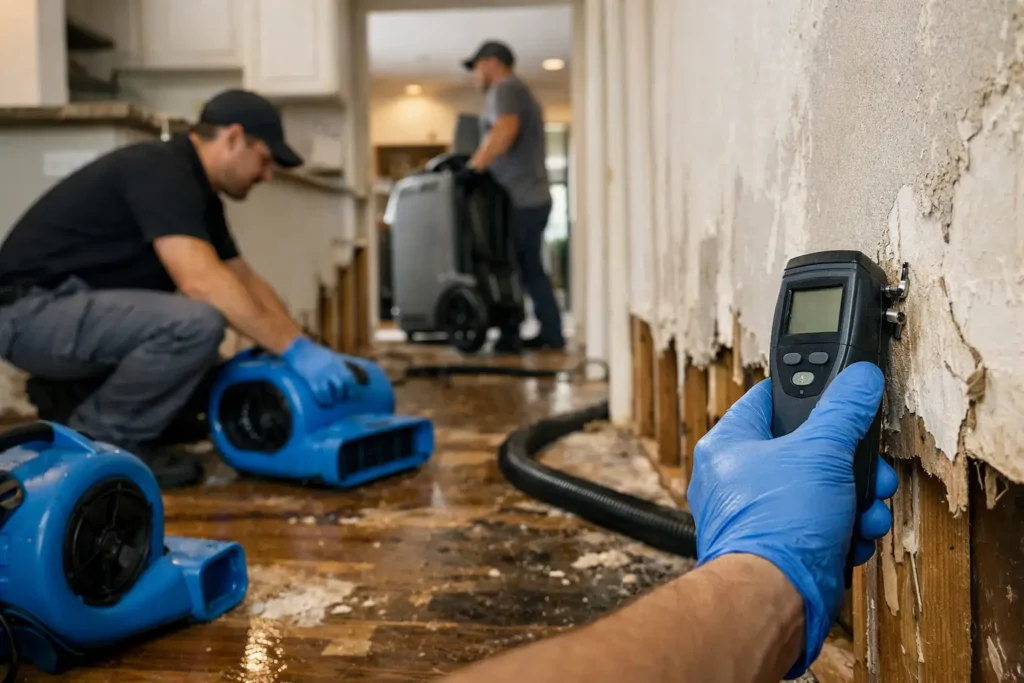
Professional water mitigation begins with identifying how far the water traveled. Certified technicians use moisture-detection tools to inspect materials that may look dry from the outside. They extract standing water, remove unsalvageable materials where necessary, position commercial drying and dehumidification equipment, and monitor progress until affected areas meet drying goals.
There is a balance to strike. Removing materials too aggressively can create unnecessary repair costs, while waiting too long can increase damage behind finished surfaces. An informed inspection helps determine the least disruptive path that still protects the home and the people living in it.
Protect the rest of the home during the response
Flood damage is rarely limited to the first room where water appears. Before restoration work begins, prevent unnecessary traffic through wet areas. Keep doors closed between affected and unaffected spaces when possible, and use a separate path for entering and leaving the home if contaminated water is involved.
Remove dry electronics, important documents, medications, and irreplaceable items from nearby shelves or low storage areas. If you need to relocate wet belongings, place them in a dry, protected location only when the water is known to be clean and the items can be handled safely. For valuable contents, photographs, documents, or upholstered furniture, professional contents cleaning may offer better preservation options than leaving items in place.
Pay attention to odors and changes after the initial event. A musty smell, bubbling paint, buckling floors, peeling baseboards, or new staining can indicate moisture remains behind surfaces. These signs do not always mean extensive demolition is needed, but they do mean the area should be evaluated rather than ignored.
When to call for immediate restoration help
Call for emergency service as soon as you have standing water, a burst pipe, water entering walls or ceilings, a toilet or sewer backup, or moisture spreading beyond a small contained area. The same applies when flooding affects hardwood floors, carpeting, cabinets, drywall, or personal belongings. Quick action can reduce the amount of material that must be replaced and limit disruption to your household.
For Southern California homeowners, SOS Restoration provides 24/7 emergency water mitigation, moisture monitoring, contamination cleanup, and reconstruction support. A trained team can help stabilize the loss, explain what is happening at each stage, and provide the documentation needed to move forward with greater confidence.
After the immediate danger has passed, give the drying process the time and monitoring it requires. The goal is not simply to remove water from sight. It is to return your home to a clean, dry, safe condition so your family can begin using the space with confidence again.