
- ✓ Open 24 hours, 7 days a week
- ✓ Serving Los Angeles County, Orange County, Riverside County and 195 more areas
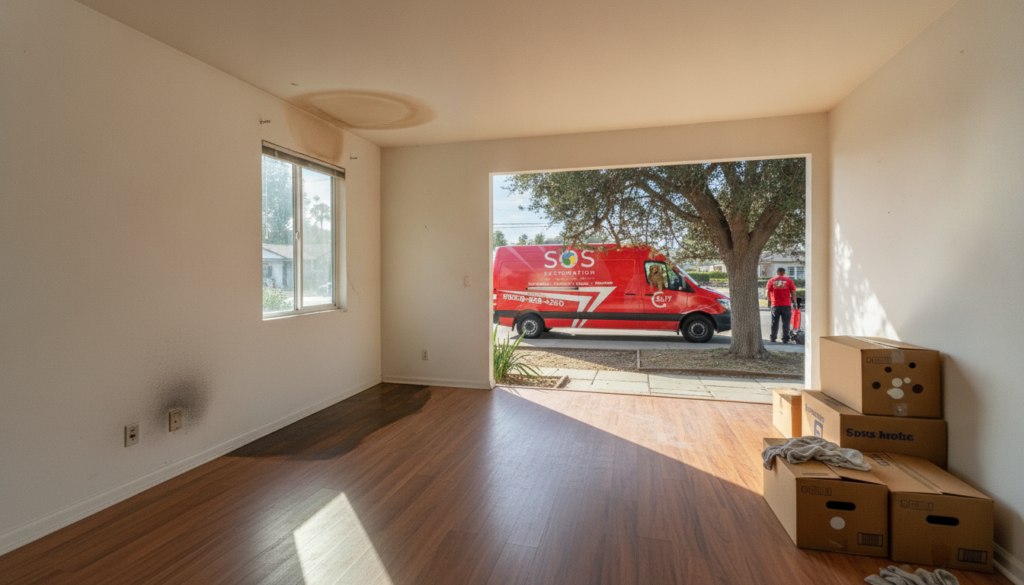
Disaster-related damage is not always obvious at first glance. A dramatic event may leave a clear mess, but other problems may begin with a small area of discoloration, an unfamiliar odor, visible residue, or a change in a wall, ceiling, floor, or piece of furniture.
The practical first step is not to diagnose the entire problem yourself. It is to recognize what has changed, document it clearly, and report the details when requesting disaster cleanup.
SOS Restoration provides disaster cleanup along with water damage restoration, storm damage repair, fire and smoke damage restoration, mold remediation, flood cleanup, sewage cleanup, biohazard cleanup, structural drying, smoke odor removal, contents cleaning and restoration, asbestos removal, emergency board-up, and commercial damage restoration.
Start With a Simple Question: What Has Changed?
Compare the affected area with its usual condition. Look for anything new, unexplained, or expanding, including:
- Visible water or damp-looking materials
- New stains or discoloration
- Peeling, blistering, cracked, or separated finishes
- Soot-like or smoke-related residue
- A persistent smoke odor
- Material you suspect may be mold
- Sewage or other potentially contaminated material
- Openings or exposed areas following storm damage
- Damage to furniture, stored belongings, or other contents
These observations do not establish the cause or full extent of a problem. They give a cleanup provider useful starting information.
Early Signs of Water or Flood Damage
Water-related damage may first appear as a visible change rather than a large pool of water. Pay attention to:
- Water where it does not normally appear
- Damp-looking areas on walls, ceilings, or floors
- New staining or uneven coloration
- Paint, plaster, or another finish beginning to separate
- Flooring that looks different from the surrounding area
- Wet or visibly affected furniture and stored items
- The same area appearing damp more than once
When reporting the issue, identify the exact location and describe what you can see. If more than one room or item is affected, make a separate note for each area.
Water extraction, structural drying, flood cleanup, contents cleaning and restoration, and water damage restoration are among the services available from SOS Restoration.
Signs Connected With Storm Damage
After a storm, focus on visible changes to the property and any newly exposed area. Examples to document include:
- An opening that was not present before
- Exterior materials that appear broken, displaced, or missing
- Debris impact or visible surface damage
- Water appearing inside during or after the storm
- Interior staining that was first noticed after the event
- Damage to doors, windows, walls, ceilings, or contents
Include the timing when you request help. Saying that a stain was first noticed after a storm is more useful than simply reporting “damage.” If the property has an exposed opening, mention that clearly because SOS Restoration offers emergency board-up as well as storm damage repair.
Fire, Smoke, and Odor Clues
Fire and smoke effects may be visible on surfaces or noticeable as an odor. Look for:
- Dark or soot-like residue
- New discoloration near the affected area
- Smoke odor in a room, enclosed space, or on belongings
- Visible residue on walls, ceilings, cabinets, or furniture
- Contents that appear affected by smoke or fire
Record where the odor or residue is most noticeable. If belongings are affected, note the types of items and the rooms in which they are located.
SOS Restoration offers fire and smoke damage restoration, smoke odor removal, and contents cleaning and restoration.
Suspected Mold
If you notice material that you suspect may be mold, document its location and appearance without trying to identify it from appearance alone. Useful details include:
- The room or area where it appears
- Whether it is on a wall, ceiling, floor, cabinet, or another surface
- The approximate visible area
- Whether nearby materials also look affected
- Whether visible water or staining is present in the same area
Mold remediation is one of the services provided by SOS Restoration. A photograph and a clear location description can help explain what prompted the call, but they should not be treated as a complete diagnosis.
Sewage and Biohazard Concerns
Some situations are recognizable because sewage or another potentially contaminated material is visibly present. When contacting a cleanup provider, be direct about what you observed. Mention:
- Where the material is located
- Which rooms or surfaces appear affected
- Whether contents are involved
- Whether the affected area is residential or commercial
- When the issue was first noticed
SOS Restoration provides sewage cleanup and biohazard cleanup. Avoid minimizing the description: the cleanup provider needs to know what type of situation is being reported.
Damage to Belongings Is Part of the Picture
Walls and floors are not the only things to review. Furniture, documents, stored possessions, and other contents may also show visible water, residue, staining, or odor.
Create a basic room-by-room list. It does not need to be a complete inventory before you request help. Begin with the items that are clearly affected and note whether the visible issue involves water, residue, smoke odor, or another concern.
SOS Restoration offers contents cleaning and restoration as part of its listed services.
A Practical Documentation Checklist
Before making the call, gather only the information you can observe without trying to determine what is hidden behind a surface.
Record the location
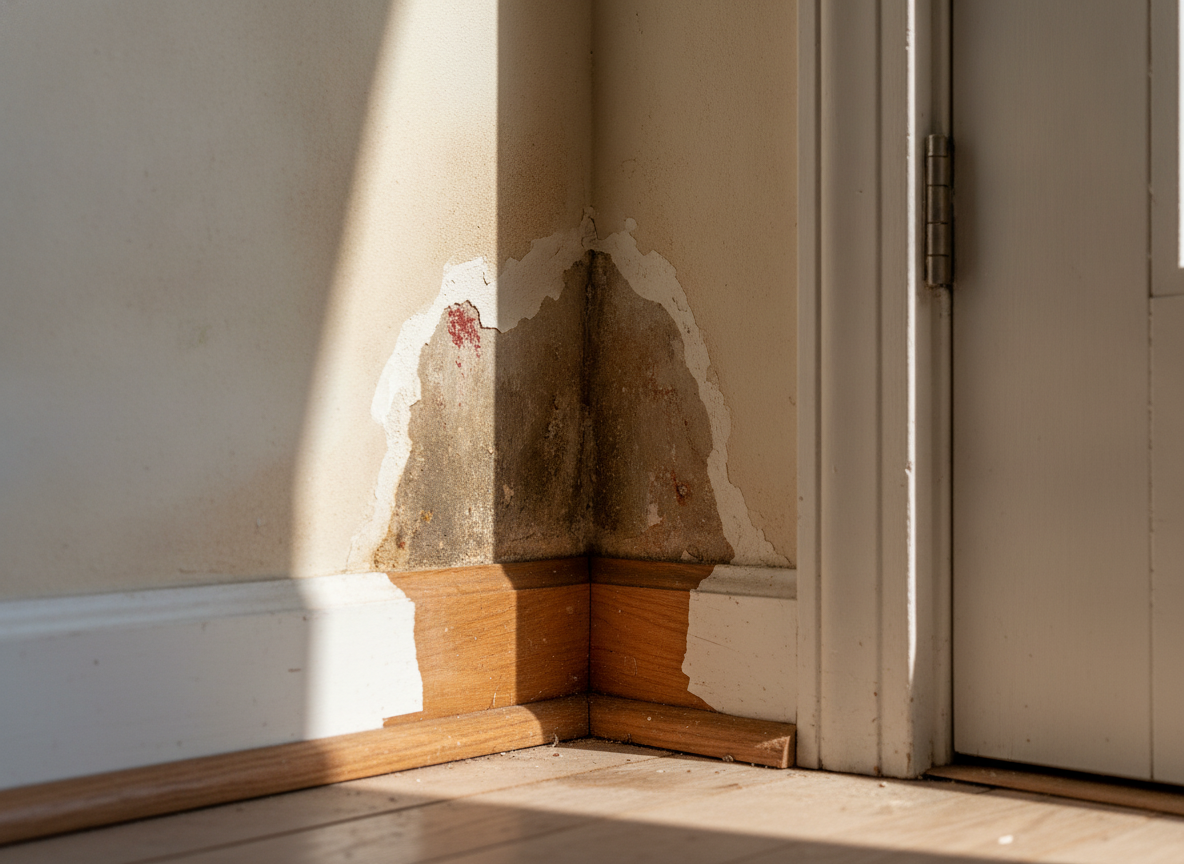
Write down the room, wall, ceiling, floor, exterior section, or group of contents involved.
Note when you first noticed it
Include the day or approximate time, along with any storm, flood, fire, water release, or other event that preceded the visible change.
Describe what you see
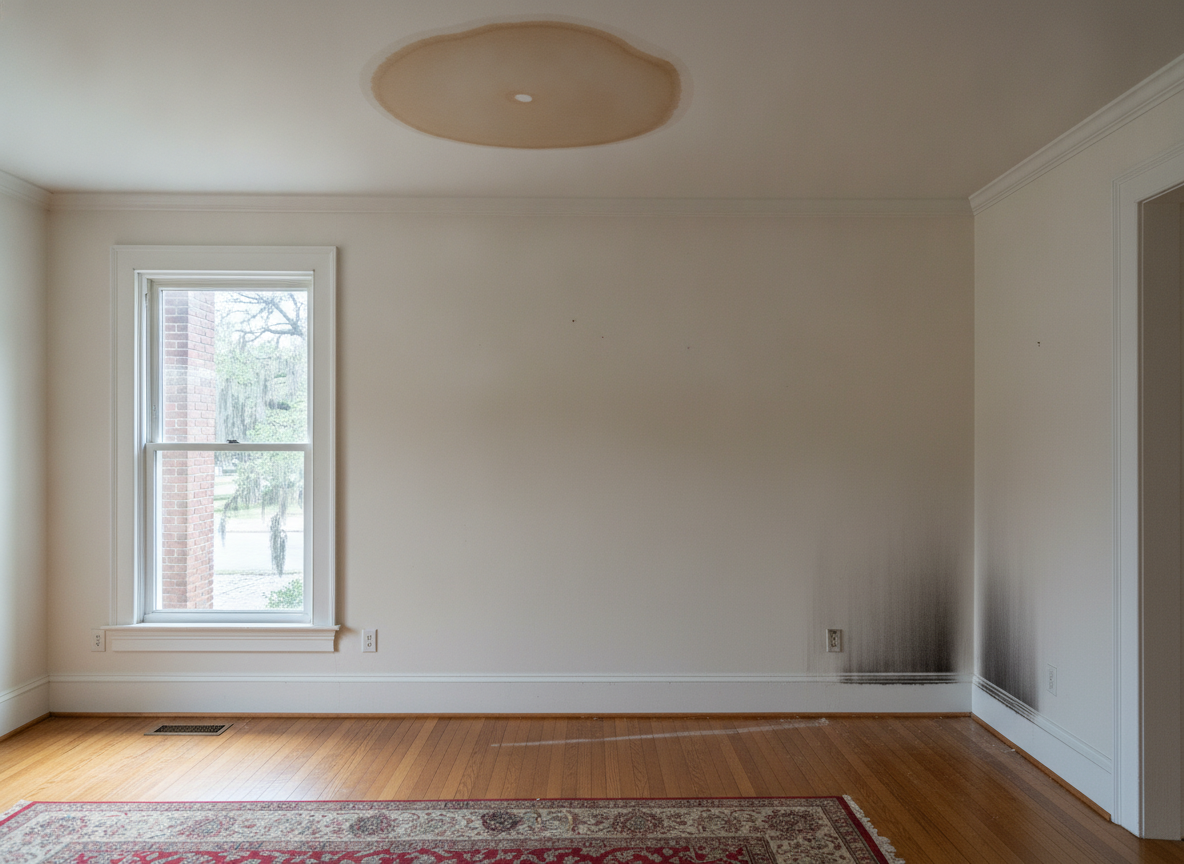
Use direct descriptions such as “new ceiling stain,” “visible water along the floor,” “dark residue on the wall,” or “smoke odor on stored contents.”
Track visible changes
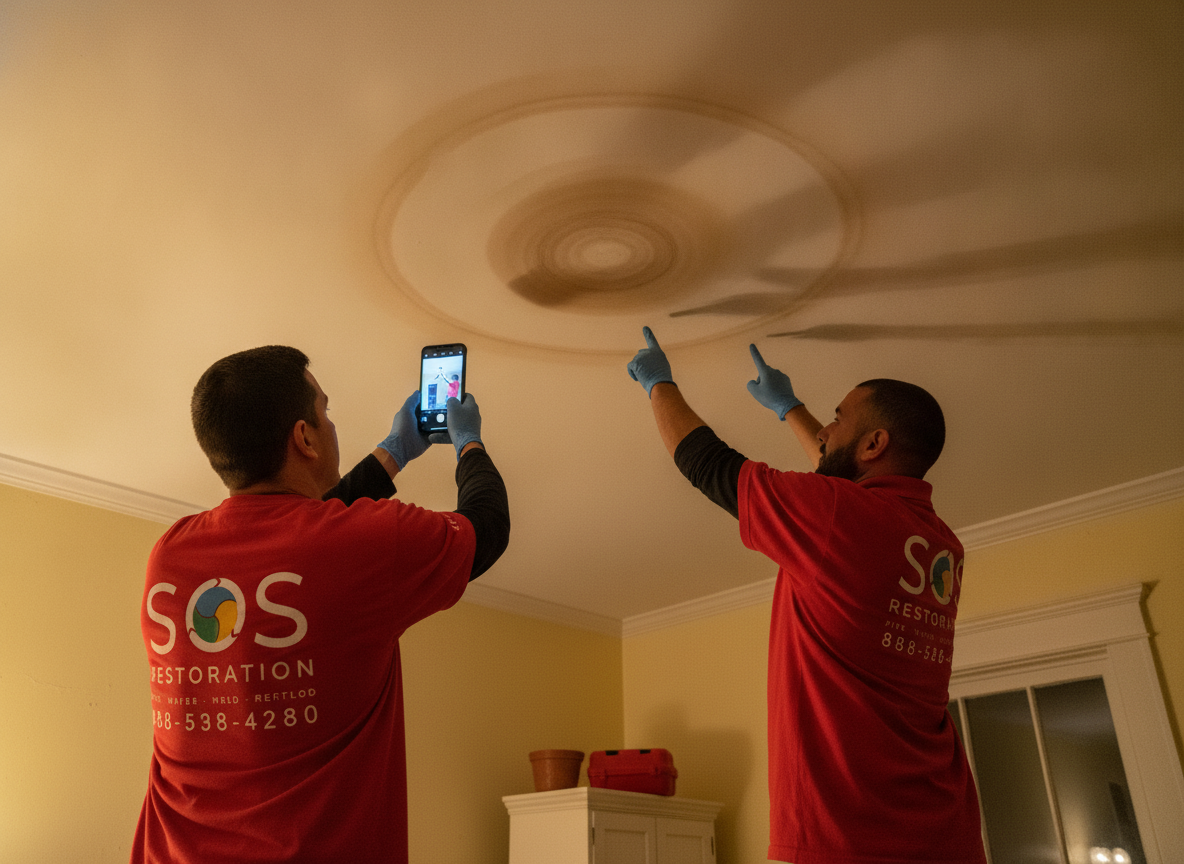
If the affected area appears different later, make another note or photograph. Record the change rather than guessing at its cause.
Identify all affected areas
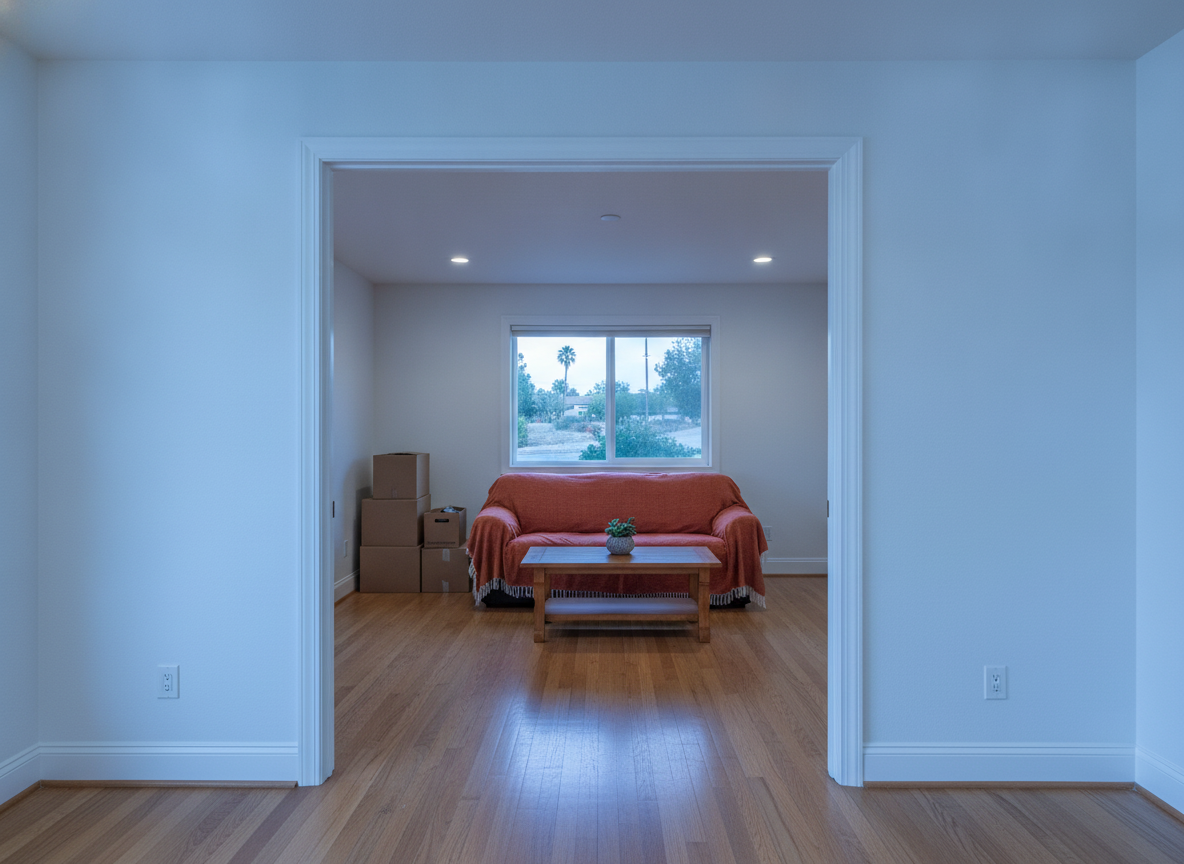
Check adjoining rooms and visible contents for additional changes. List each area separately so nothing you observed is left out of the initial description.
Take photographs when appropriate
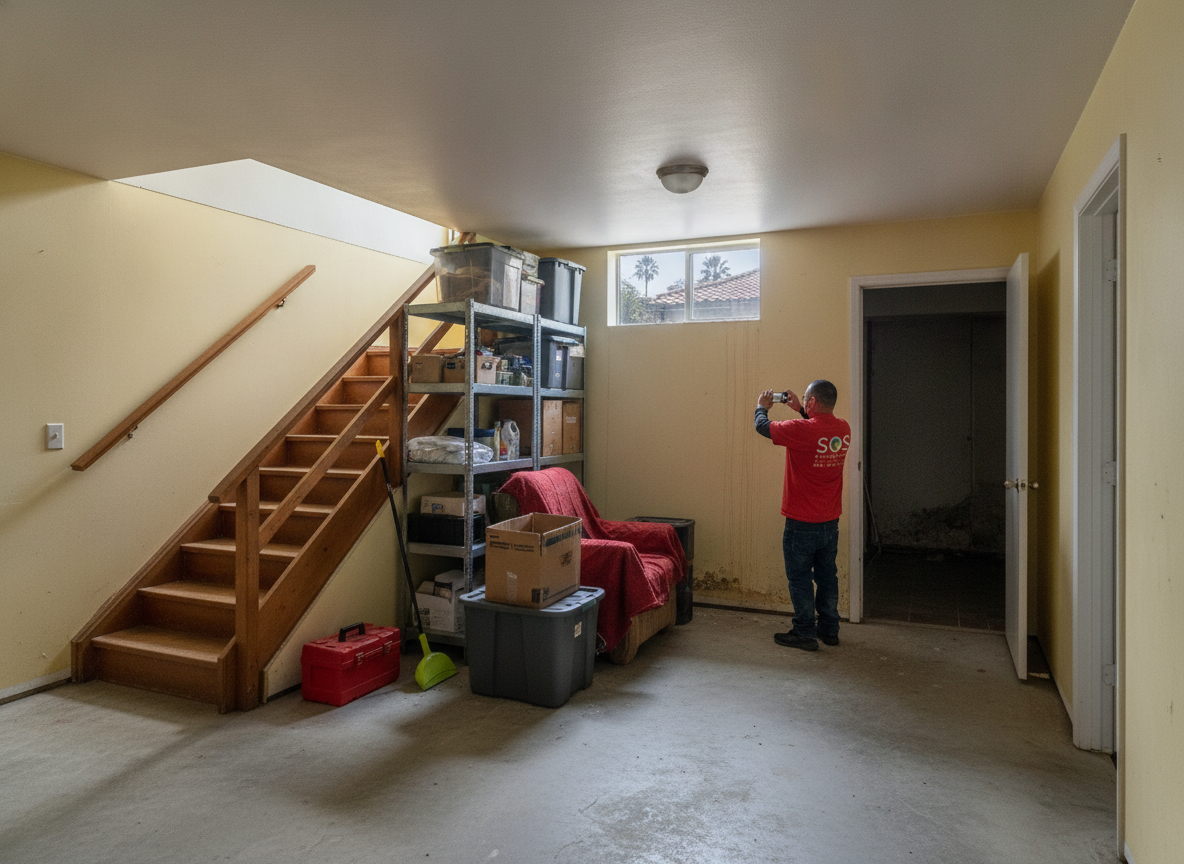
A wide photograph can establish the location, while a closer image can show the visible problem. Keep the images organized by room or area.
What Not to Conclude From an Early Sign
An early sign can tell you that something has changed, but it may not reveal everything involved. Avoid making final conclusions based only on appearance.
For example, do not use a photograph alone to identify an unknown material as mold or asbestos. Do not assume that every stain has the same cause. Report what you observed and let the next steps be based on the specific situation.
SOS Restoration lists both mold remediation and asbestos removal among its services, but the available business information does not specify testing or inspection services.
When to Contact SOS Restoration
Contact SOS Restoration when you notice visible damage, water, smoke residue, smoke odor, suspected mold, sewage, potentially contaminated material, affected contents, or an exposed area requiring disaster cleanup.
The business is open 24 hours a day, seven days a week. Call 888-817-1650 or email info@SOSrestoration.com.
SOS Restoration serves Los Angeles County, Orange County, Riverside County, San Bernardino County, Ventura County, and Santa Barbara County, including listed communities throughout those counties.
Frequently Asked Questions
What information should I provide when I call?
Describe what happened, when you first noticed the issue, where it is located, what you can see or smell, and which rooms or belongings appear affected. Mention visible water, smoke odor, sewage, suspected mold, exposed openings, or affected contents directly.
Should I wait until I know the exact cause?
You can report an observable problem without diagnosing it. Explain what changed and any event that occurred before you noticed it.
Can disaster cleanup include damaged belongings?
SOS Restoration offers contents cleaning and restoration in addition to disaster cleanup and its other listed restoration services.
Does SOS Restoration handle commercial properties?
Yes. Commercial damage restoration is included in the company’s listed services.
Is emergency board-up available?
Yes. Emergency board-up is one of the services offered by SOS Restoration.
Is SOS Restoration available outside regular business hours?
Yes. The listed hours are 24 hours a day from Monday through Sunday.
—
Featured image direction for production: Show a close, clearly recognizable water-damaged wall as the focal subject, with visible staining and separated wall material. Include a carefully opened section exposing the framing so the inspection and drying process is understandable from the image alone. Keep the visible defect, protective work area, and restoration process prominent; avoid a generic worker, vehicle, tool, or exterior property shot.
Suggested alt text: Water-damaged wall opened to the framing so the affected cavity can be checked and dried.
Related services
Areas we serve
- ● Los Angeles County
- ● Orange County
- ● Riverside County
- ● San Bernardino County
- ● Ventura County
- ● Santa Barbara County
- ● Agoura Hills
- ● Alhambra
- ● Arcadia
- ● Artesia
- ● Avalon
- ● Azusa
- ● Baldwin Park
- ● Bell
- ● Bell Gardens
- ● Bellflower
- ● Beverly Hills
- ● Bradbury
- ● Burbank
- ● Calabasas
- ● Carson
- ● Cerritos
- ● Claremont
- ● Commerce
- ● Compton
- ● Covina
- ● Cudahy
- ● Culver City
- ● Diamond Bar
- ● Downey
- ● Duarte
- ● El Monte
- ● El Segundo
- ● Gardena
- ● Glendale
- ● Glendora
- ● Hawaiian Gardens
- ● Hawthorne
- ● Hermosa Beach
- ● Hidden Hills
- ● Huntington Park
- ● Industry
- ● Inglewood
- ● Irwindale
- ● La Cañada Flintridge
- ● La Habra Heights
- ● La Mirada
- ● La Puente
- ● La Verne
- ● Lakewood
- ● Lancaster
- ● Lawndale
- ● Lomita
- ● Long Beach
- ● Los Angeles
- ● Lynwood
- ● Malibu
- ● Manhattan Beach
- ● Maywood
- ● Monrovia