
The short answer: Before drilling, cutting, sanding, opening, or removing building material, make “Has its asbestos status been addressed?” a required checkpoint in your project plan. If the answer is no or uncertain, pause work in that area and decide what must happen before the project continues.
This is not a method for identifying asbestos by sight, and it is not a do-it-yourself removal guide. It is a simple planning habit designed to put an informed decision before physical disturbance.

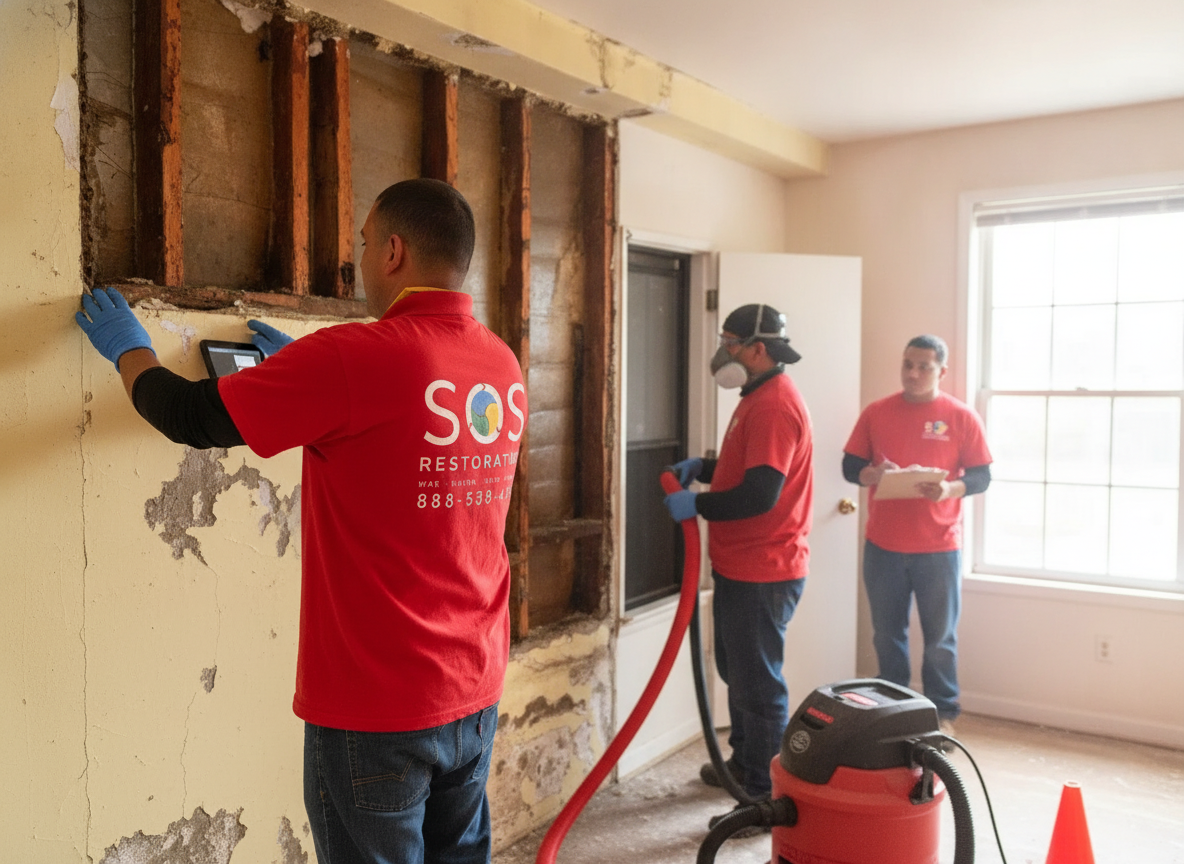
Show a renovation paused at a visibly damaged wall or ceiling section. A cutting tool remains unused and set aside. The same material is the focal point of a clearly controlled asbestos-removal process, with protective containment and asbestos-marked removal packaging visible. The image should communicate the central lesson without relying on its caption: stop before disturbing the material, then arrange the appropriate removal process.
Property projects often begin with practical questions: What needs to be opened? What needs to be removed? Where will drilling or cutting happen? Add one more question before work starts:
Use that question whenever planned work would physically disturb a wall, ceiling, floor, enclosure, or other building component. Do not wait until material has already been broken apart or removed to add asbestos planning to the job.
The value of this habit is its timing. It creates a deliberate stop point between planning the work and touching the material.
The following routine keeps the focus on decisions a property owner, manager, or project coordinator can make without attempting hands-on asbestos work.
Avoid describing the project only as “a remodel” or “some repairs.” Record the specific locations and materials the planned work will affect.
For example, note:
This gives anyone reviewing the project a clearer picture of what the work actually involves.
A photograph, assumption, or informal opinion should not be recorded as a confirmed determination. In project notes, use plain wording such as:
Clear wording helps prevent an uncertain answer from being mistaken for a completed step later.
If the asbestos status has not been addressed, pause work involving that material. Leave it as it is while the next step is arranged rather than breaking off a sample or opening the area simply to see what is behind it.
This checkpoint should apply even when the larger project has already begun. Other tasks can be planned separately, but the area in question should not be treated as cleared merely because it is one part of a larger job.
“Asbestos handled” is too vague for a project plan. Write down who is responsible for determining what must happen, who is responsible for removal if removal is selected, and who will confirm that the relevant step is complete.
SOS Restoration is confirmed to offer asbestos removal. Asbestos inspections, sampling, laboratory testing, and clearance services are not included in the available business information. Ask directly about the scope available for your particular project rather than assuming those services are included.
Before authorizing work, ask for a scope that identifies the area and material to be addressed. Useful questions include:
These questions do not assume a particular removal method. They help ensure that the customer and service provider are discussing the same work.
Retain the project description, correspondence, scope, and any documentation supplied to you. Label records by area rather than saving them under a generic project name.
For example, “rear bedroom—north wall” is more useful than “repair documents.” Specific records make it easier to understand what was addressed if another project is planned in the future.
A formal renovation is an obvious time to review project details, but smaller tasks can also involve physical disturbance. Before proceeding, use the same checkpoint whenever a task would drill into, cut, sand, open, or remove a building component.
A simple note in a maintenance checklist can make the habit consistent:
Before disturbance: confirm whether asbestos planning is required.
Property managers can add this line to work-order templates. Homeowners can add it to renovation notes. Commercial property teams can include it in pre-project discussions.
This planning habit does not:
Its purpose is narrower: to prevent the project plan from moving directly from “we want to do this work” to “start disturbing the material” without an asbestos-related checkpoint.
SOS Restoration offers asbestos removal. The company serves Los Angeles County, Orange County, Riverside County, San Bernardino County, Ventura County, and Santa Barbara County, including listed communities throughout those counties.
Business hours are 24 hours a day, Monday through Sunday. To discuss whether asbestos removal is available for your project and what the scope may include, contact SOS Restoration:
Make asbestos planning a required checkpoint before any work that would disturb building material. If the material’s status has not been addressed, pause work in that area and determine the next step before proceeding.
A photograph is not a confirmed determination. Use photos to document the location and planned work, but do not record a visual guess as a confirmed answer.
Yes. Asbestos removal is a confirmed service offered by SOS Restoration.
Testing and inspection are not included in the available business information. Ask SOS Restoration directly before assuming those services are part of the removal scope.
The listed business hours are 24 hours a day, seven days a week. Availability for a specific project, start time, or location should be confirmed directly.
The confirmed service area includes Los Angeles County, Orange County, Riverside County, San Bernardino County, Ventura County, and Santa Barbara County, along with listed cities and postal codes throughout those areas.
The available information does not specify how estimates are prepared or whether a project can be quoted by phone. Call 888-817-1650 or email info@SOSrestoration.com to ask what information is needed.