
SOS Restoration addresses tornado-related property damage through water damage restoration, fire and smoke damage service, and mold removal when needed.
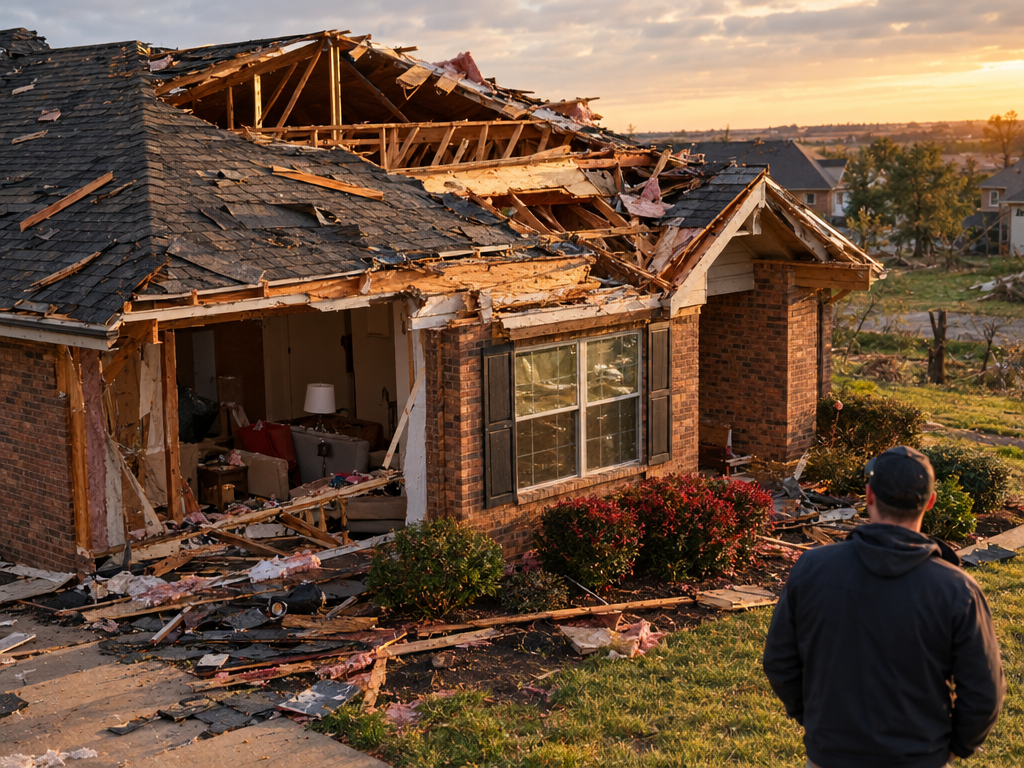
Tornado damage can expose a property to rain, broken plumbing, and other sources of unwanted water. The visible damage may be only part of the problem. Water can move beneath flooring, behind cabinets, and into wall cavities, making moisture checks an important part of determining what needs attention.
Restoration should focus on the conditions actually found at the property. That may involve removing water, checking affected materials for moisture, drying wet areas, and evaluating exposed spaces. If fire, smoke, or mold is present, those conditions require their own appropriate restoration work.

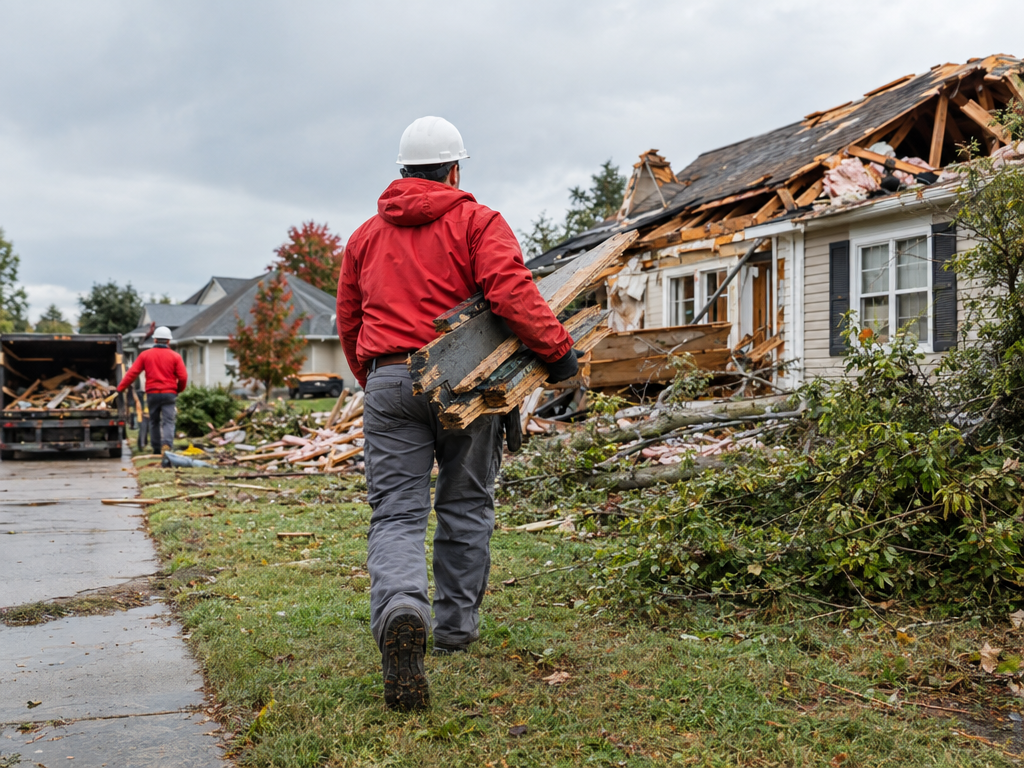
Consider restoration services when a tornado or the weather surrounding it has left standing water, wet flooring, damp walls, water beneath cabinets, visible staining, or lingering moisture. A property can also need attention when an exterior opening has allowed rain to enter, even if water is no longer visibly flowing.
Before entering a severely damaged building, wait until it has been declared safe to access. Restoration addresses water, smoke, fire, and mold-related conditions; it should not be treated as a substitute for any structural evaluation the property may require.


The first priority is understanding where water or other damage is present. Moisture readings can help identify damp materials and concealed water in opened areas. The findings determine where extraction or drying is needed and whether affected sections require further attention.
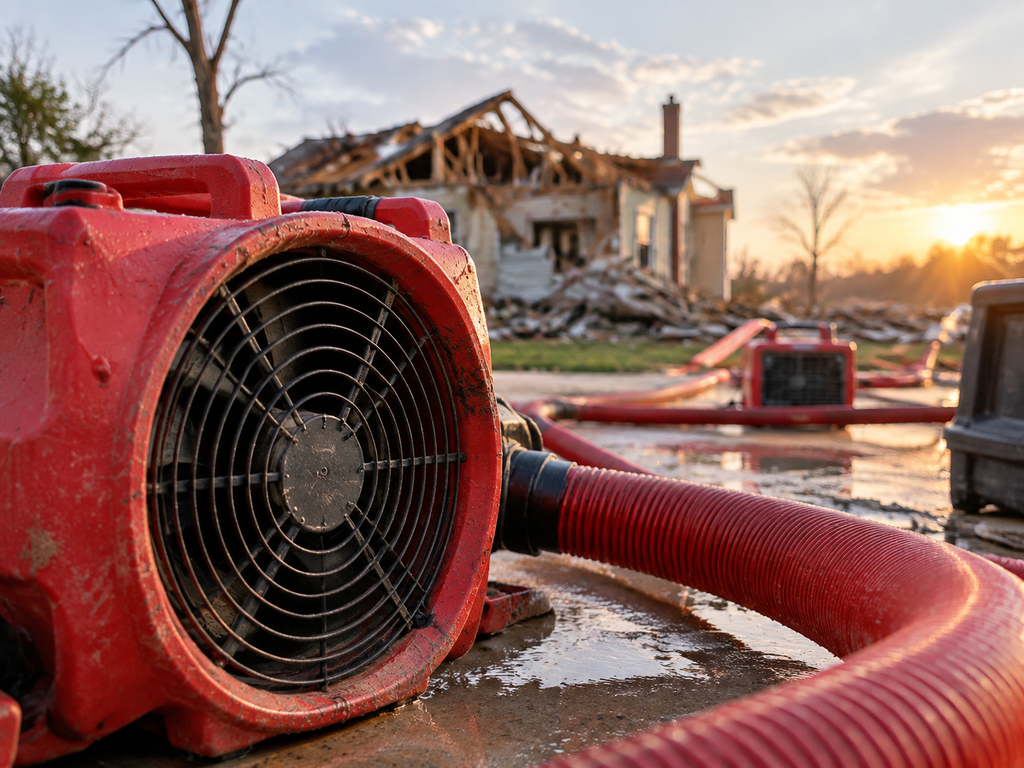
Water removal may include extracting moisture from flooring, cabinet toe kicks, and other hard-to-reach spaces. Drying equipment can then be positioned according to the affected area. The extent of the work depends on how far the moisture traveled, which materials were exposed, and how long the area remained wet.


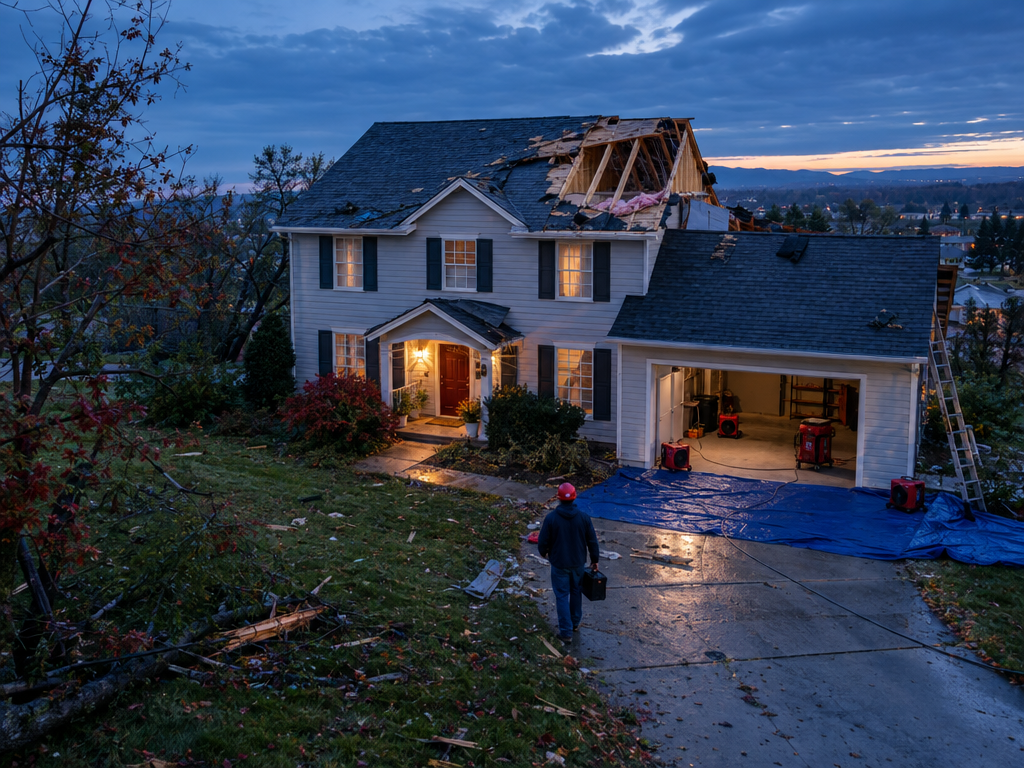
Moisture that remains after storm damage can create conditions in which mold becomes a concern. Visible growth, staining, or a damp area that has gone unnoticed may indicate that mold removal should be considered.
Mold work may involve containment, removing trim to reach affected wall sections, treating the affected area, and checking moisture as work progresses. The necessary scope depends on where the mold is found and how much of the surrounding material is affected.


SOS Restoration is available 24 hours a day, seven days a week. The business has a 5-star rating based on 109 reviews and provides restoration services for water damage, fire and smoke damage, and mold.
Each tornado-related loss is different. Focusing on the conditions present helps define the restoration work without assuming that every property needs the same process.
Make personal safety the priority and do not enter a building that may be unsafe. Once access is permitted, restoration professionals can evaluate water, moisture, smoke, fire, or mold-related conditions.
Yes. Water can move behind walls, beneath flooring, under cabinets, and into other concealed spaces. Moisture readings and inspection of affected areas can help identify where drying may be needed.
No. Mold removal depends on the conditions found. The amount of moisture, the materials involved, and how long they remained wet can all affect whether mold becomes a concern.
Cost depends on the type and extent of the damage, the affected materials, and the restoration work required. The property must be evaluated before the necessary scope can be determined.
If your property has water, fire, smoke, or mold-related damage following a tornado, call SOS Restoration at 888-817-1650 or get in touch to discuss the affected areas.