
When water disrupts your Brea property, the first decisions are about safety, limiting further damage, and knowing what needs attention.


A wet floor or stained ceiling can make it tempting to start moving belongings immediately. First, consider whether entering the affected space is safe. Standing water near electrical equipment, a sagging ceiling, or suspected contamination calls for caution. Keep people and pets away from areas that may be unsafe.
If you can safely stop the water at its source, do so. Otherwise, avoid putting yourself at risk. Photographs taken from a safe position can help document the condition of the property before cleanup begins.
Avoid affected areas where electricity, unstable materials, or contaminated water may be present.
Move unaffected belongings away from the water only when it is safe to reach them.
Note when you noticed the problem, whether water is still entering, and which rooms appear affected.
Explain that the property is in Brea and describe the conditions you can safely observe.
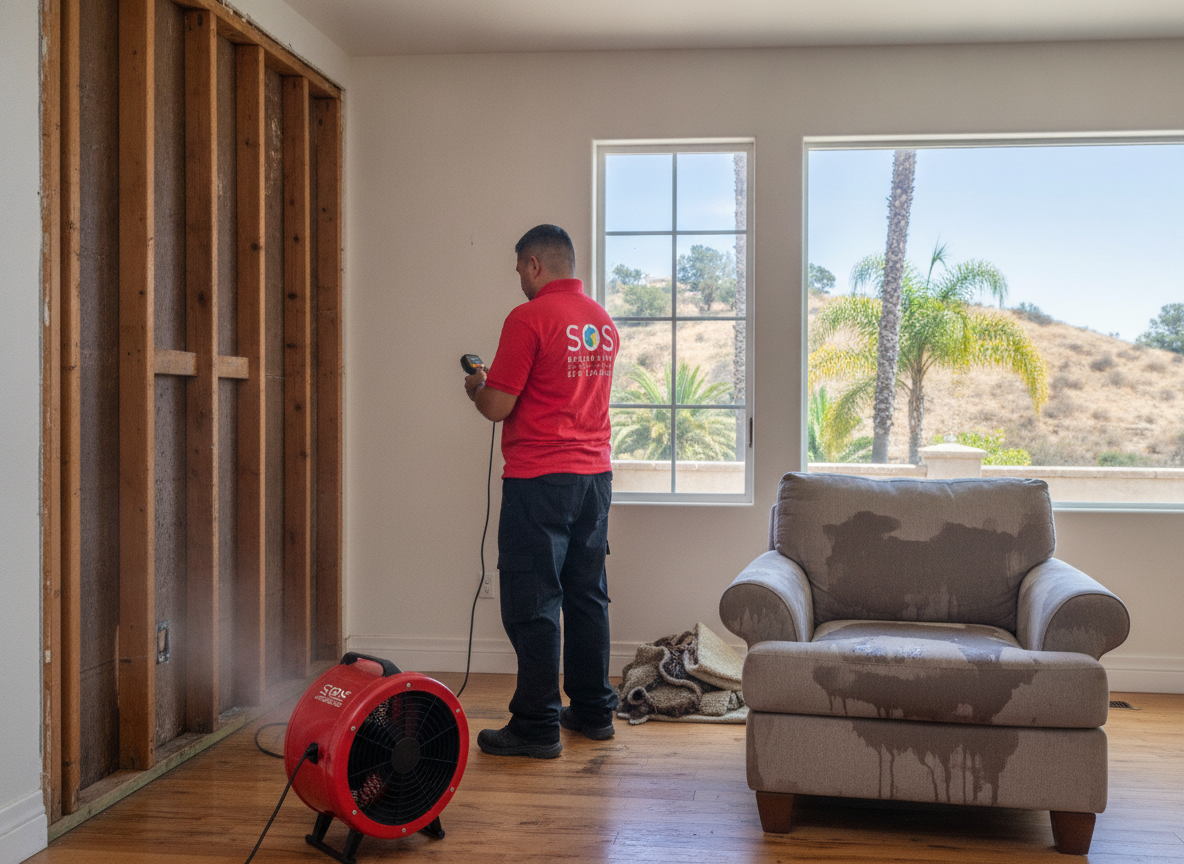
SOS Restoration serves Brea with water damage restoration, water extraction, structural drying, and contents cleaning and restoration, alongside fire and smoke damage restoration, mold remediation, sewage cleanup, and commercial damage restoration.
For someone deciding whom to contact, that range matters because a water problem may involve both the building and the belongings inside it. Removing visible water is only one part of the decision. Damp materials and affected contents may need different attention, so describe the whole situation rather than just the largest puddle.
Water can move beneath flooring, into wall assemblies, and through porous materials. The surface you can see may look better before the materials underneath have dried. That is why the extent of the damage cannot always be judged from a photograph or a quick look around the room.
In this kind of work, decisions generally depend on where the water travelled, how long materials remained wet, and whether contamination is involved. Some materials may be suitable for drying; others may require removal. The appropriate approach depends on the actual condition of the property, not simply the size of the visible stain.
When contacting SOS Restoration about a Brea property, explain whether the affected space is occupied, whether access is restricted, and whether the water source has stopped. Mention affected furniture or other belongings as well as floors, walls, and ceilings.
You do not need to diagnose the damage before asking for help. A straightforward description gives the conversation a useful starting point. If you are uncertain about a condition, describe what you see rather than entering an unsafe area to investigate.
Yes. Brea is within SOS Restoration’s service area. When you contact the business, identify the property’s location and explain the problem you are dealing with.
Appearance alone does not establish whether underlying materials are dry. If water reached flooring, walls, or enclosed spaces, seek guidance rather than assuming that a dry-looking surface means the issue is resolved.
Costs generally depend on the affected area, the materials involved, the extent of moisture, and any contamination. Describe the conditions when you get in touch and ask what information is needed to discuss the scope and cost of the work.
Take the next step toward addressing the damage. Call SOS Restoration at 888-817-1650 or use the contact form to describe what happened at your Brea property and discuss your restoration needs.