
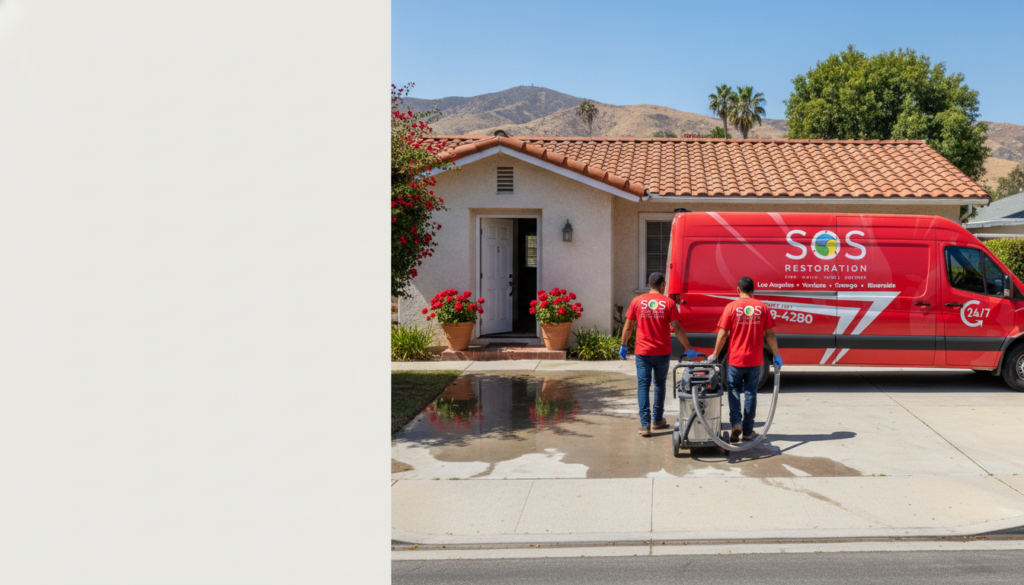
- ✓ Open 24 hours, 7 days a week
- ✓ Serving Los Angeles County, Orange County, Riverside County and 195 more areas
When you need water damage restoration, a useful checklist should help you explain the problem, understand the proposed work, and know what you are agreeing to. You do not need to arrive at the first conversation with a technical diagnosis. Start with what you can describe, then ask for clear answers about your particular job.
This guide focuses on three practical questions:
What damage have I noticed, and what still needs to be checked?
Which restoration services are being proposed, and why?
What are the arrangements, costs, and next steps?
SOS Restoration offers water damage restoration, water extraction, structural drying, and contents cleaning and restoration. Those confirmed services provide a starting point for the conversation—not a predetermined work plan for every property.

An example of water damage restoration work: opening a damaged wall back to the framing so the cavity behind it can be checked and dried out. The photograph’s location is not confirmed.
1. Check Your Description of the Damage
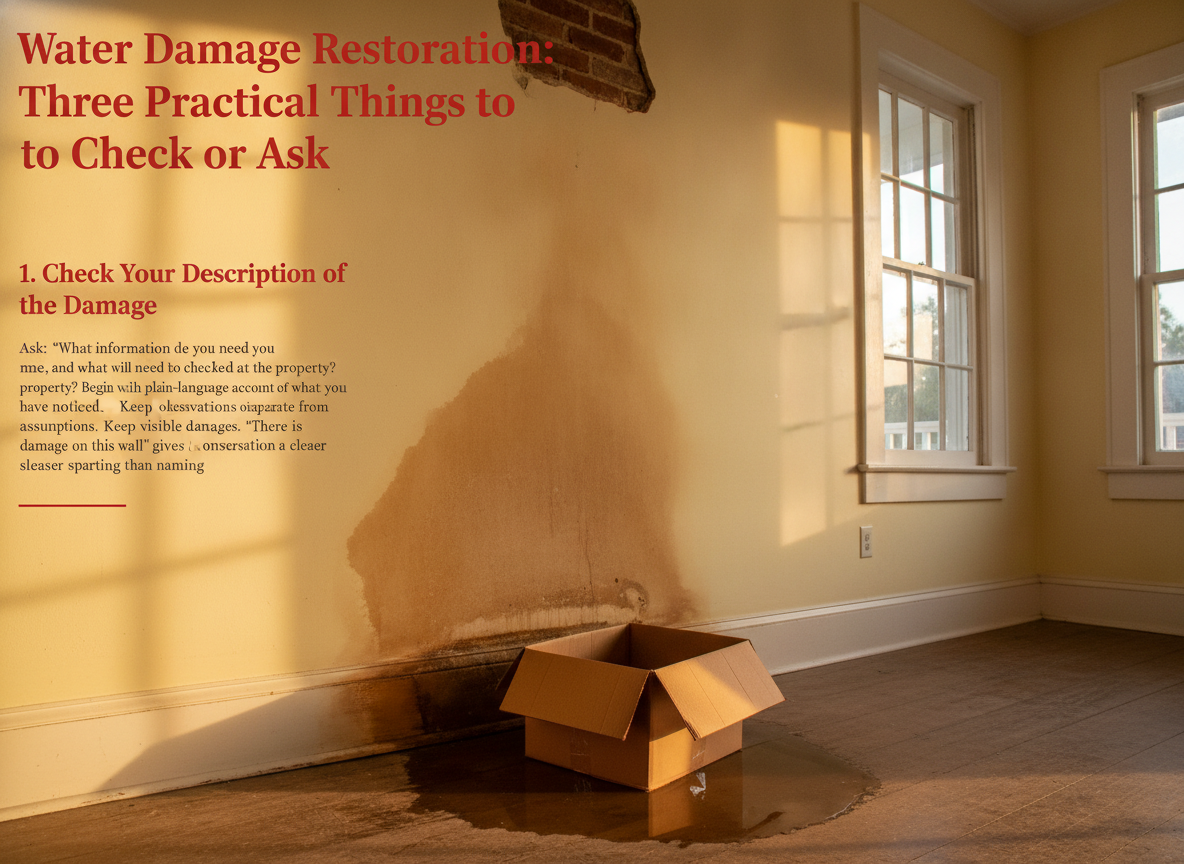
Ask: “What information do you need from me, and what will need to be checked at the property?”
Begin with a plain-language account of what you have noticed. Keep observations separate from assumptions. “There is visible damage on this wall” gives the conversation a clearer starting point than naming a cause you have not confirmed.
You can organize your notes under four headings:
Location:
Which room or part of the property are you calling about?
Visible condition:
What can you actually see?
Timing:
When did you first notice it?
Affected belongings:
Which items, if any, are part of your concern?
If you already have photographs, ask how to share them. Label them by room or area so that your description and the images can be discussed together. Do not treat a photograph as a substitute for answers about what needs to be checked.
Use the wall-opening example to ask a better question
The photograph above shows a damaged wall being opened back to the framing, with old plaster removed so the cavity can be checked and dried out. It illustrates a specific restoration activity. It does not establish that your wall needs the same work.
A useful question is:
“Does any part of my property need to be opened for checking or drying? If so, please explain which area and the reason for the proposed work.”
That wording asks for a job-specific explanation rather than assuming that a visible example is the right solution for your situation.
Your first checklist
Before the conversation, write down:
- The areas you want to discuss.
- What you have observed in each area.
- Anything you do not know, including the cause if it is unconfirmed.
- The questions you want answered before agreeing to work.
The goal is not to diagnose the damage yourself. It is to make your concerns clear enough to discuss.
2. Ask What the Proposed Restoration Work Includes
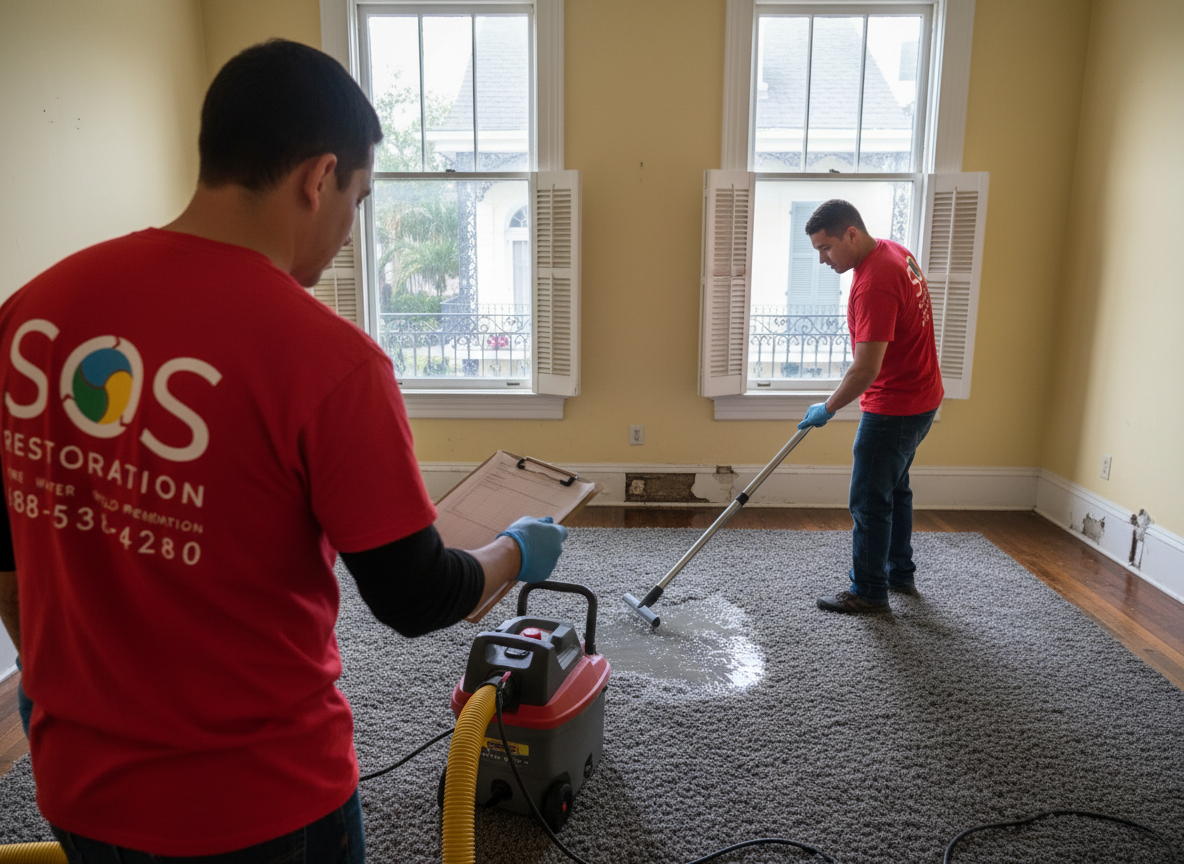
Ask: “Which services are you recommending for this job, and what does each part include?”
“Water damage restoration” names the service, but you should still ask what the proposed work means for your property. SOS Restoration’s confirmed services include water extraction, structural drying, and contents cleaning and restoration. Ask which, if any, are included in your proposed scope.
Use these questions to make the discussion specific:
Water extraction:
“Is water extraction included in the proposed work?”
Structural drying:
“Which areas would be included in structural drying?”
Contents:
“Are any belongings included in contents cleaning and restoration?”
Wall opening:
“Is opening a wall part of the proposal, and which section would be affected?”
Exclusions:
“What is not included in this proposal?”
Do not assume that every listed service will be needed or included. Equally, do not assume that a general description covers every area or item you have mentioned.
Match the scope to your own list
Compare the proposed work with the notes you made in the first step. If you identified two areas of concern, ask how each is addressed. If you mentioned belongings, ask whether they are included or excluded.
A simple way to organize the answers is:
- Area or item: What are we discussing?
- Proposed work: What is being recommended?
- Open question: What still needs clarification?
Ask for the scope in writing so you have something specific to review. This guide does not establish SOS Restoration’s estimate format, contract terms, or project-specific procedures; those details need to be requested directly.
3. Confirm the Practical Arrangements Before Agreeing
Ask: “What happens next, what will it cost, and what remains undecided?”
Once the proposed work is clear, turn to the arrangements. Keep business hours, attendance timing, and project duration as separate questions.
SOS Restoration’s listed hours are 24 hours a day, every day. That does not establish an arrival time for your address or a completion date for your job. Ask for those details directly.
Questions about timing and access
- When can someone attend this property?
- What access arrangements should I provide?
- What timing information is available for the proposed work?
- Which parts of the schedule are confirmed, and which are still undecided?
Questions about price and authorization
- What is the quoted price, and what does it cover?
- Which items or services are excluded?
- What payment terms apply?
- How would any proposed change to the work or price be presented for my approval?
No prices, payment terms, response-time commitments, or job-duration estimates are provided in the available business information. Treat them as questions to resolve—not details to assume.
Before you agree, review whether you have clear answers about the work, the cost, and the next step. If an answer is still pending, identify it explicitly in your notes.
Keep This Three-Point Checklist Handy
For your first water damage restoration conversation, bring these three prompts:
Damage:
“Here is what I have noticed. What else needs to be checked?”
Scope:
“What work are you proposing, and what is included or excluded?”
Arrangements:
“What are the timing, price, access requirements, and approval steps?”
To discuss water damage restoration with SOS Restoration, call 888-817-1650 or email info@SOSrestoration.com.
Frequently Asked Questions
Does SOS Restoration offer water extraction and structural drying?
Yes. Both are listed services, along with water damage restoration and contents cleaning and restoration. Ask which services are proposed for your particular job.
Does every water damage job involve opening a wall?
The available information does not establish that. The supplied photograph shows wall-opening work on one restoration job. Ask whether it is proposed for your property and why.
Is SOS Restoration open around the clock?
Yes. Its listed hours are 24 hours a day, seven days a week. Contact the business to confirm attendance timing for your location.
Which counties does SOS Restoration serve?
The listed service area includes Los Angeles County, Orange County, Riverside County, San Bernardino County, Ventura County, and Santa Barbara County.
How much will restoration cost, and how long will it take?
Pricing and project-duration details were not provided. Ask for a job-specific scope, price, and timing information before agreeing to the proposed work.
Related services
Areas we serve
- ● Los Angeles County
- ● Orange County
- ● Riverside County
- ● San Bernardino County
- ● Ventura County
- ● Santa Barbara County
- ● Agoura Hills
- ● Alhambra
- ● Arcadia
- ● Artesia
- ● Avalon
- ● Azusa
- ● Baldwin Park
- ● Bell
- ● Bell Gardens
- ● Bellflower
- ● Beverly Hills
- ● Bradbury
- ● Burbank
- ● Calabasas
- ● Carson
- ● Cerritos
- ● Claremont
- ● Commerce
- ● Compton
- ● Covina
- ● Cudahy
- ● Culver City
- ● Diamond Bar
- ● Downey
- ● Duarte
- ● El Monte
- ● El Segundo
- ● Gardena
- ● Glendale
- ● Glendora
- ● Hawaiian Gardens
- ● Hawthorne
- ● Hermosa Beach
- ● Hidden Hills
- ● Huntington Park
- ● Industry
- ● Inglewood
- ● Irwindale
- ● La Cañada Flintridge
- ● La Habra Heights
- ● La Mirada
- ● La Puente
- ● La Verne
- ● Lakewood
- ● Lancaster
- ● Lawndale
- ● Lomita
- ● Long Beach
- ● Los Angeles
- ● Lynwood
- ● Malibu
- ● Manhattan Beach
- ● Maywood
- ● Monrovia