
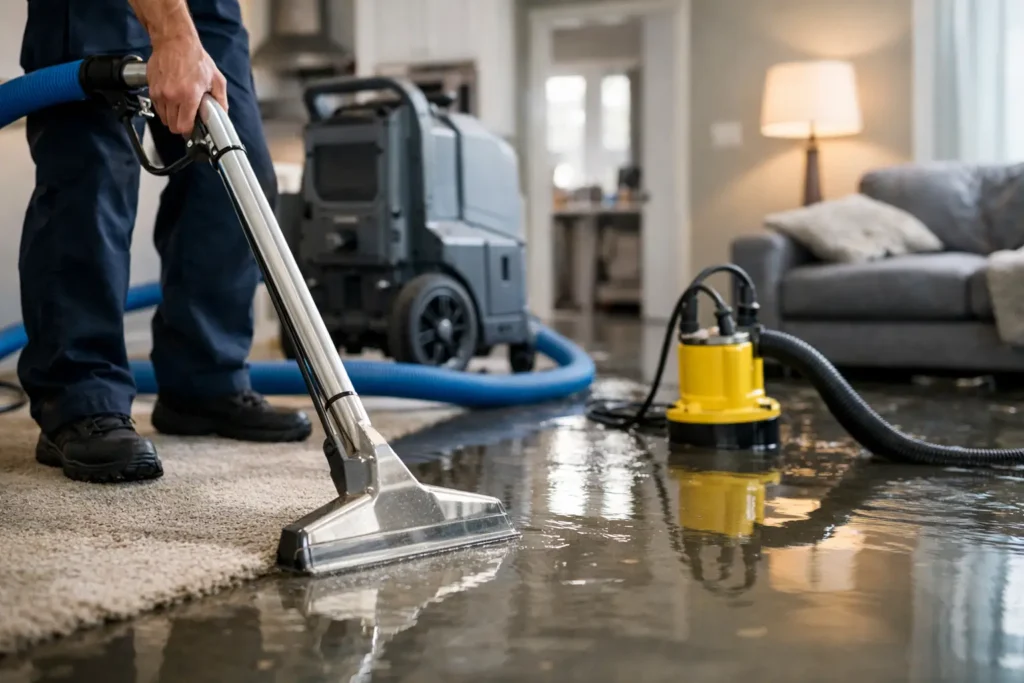
A burst supply line can release gallons of water before you find the shutoff valve. A washing machine overflow can spread beneath flooring while the visible puddle seems manageable. In either situation, an emergency water extraction service is about more than removing water you can see. It is the first step in protecting your home, belongings, indoor air quality, and insurance claim.
For homeowners across Southern California, quick action matters because water moves fast through drywall, baseboards, cabinets, carpet padding, and subfloors. The sooner standing water is extracted and hidden moisture is identified, the better the chance of saving materials and avoiding a larger, more disruptive repair.
What to Do Before Emergency Water Extraction Arrives
First, stop the source if it is safe to do so. Shut off the water supply to the affected fixture, appliance, or main line. If water is near outlets, appliances, or electrical panels, do not walk through it or attempt to unplug anything. Turn off power only if you can do so safely from a dry location, then wait for qualified help.
Move small valuables, documents, and lightweight furniture out of the affected area if the floor is safe. Take a few photos or a short video of the source and visible damage for your records. Then call for 24/7 professional help. Avoid spending hours trying to solve a major water loss with towels, fans, or a household wet vacuum. Those efforts may remove surface water, but they rarely address moisture trapped behind walls or under finished flooring.
Do not use a standard vacuum on water. Do not enter a room with a sagging ceiling, and do not handle water that may contain sewage, chemicals, or unknown contamination. Water from a clean broken pipe calls for fast drying. Water from a toilet backup, sewer line, or outdoor flood can require containment, removal of affected materials, and sanitation procedures to protect your household.
Why Fast Water Extraction Protects More Than Floors
Water damage changes by the hour. Materials such as carpet padding, particleboard cabinets, insulation, and drywall can absorb water quickly. Wood can swell, laminate can separate, and moisture can migrate into areas that appear dry at the surface.
Mold growth is another concern. It does not mean every water incident becomes a mold problem, but prolonged moisture creates the conditions mold needs to grow. In Southern California, dry outdoor weather does not guarantee a dry home. Moisture sealed inside a wall cavity, beneath vinyl flooring, or under a cabinet can remain there long after the visible water is gone.
Fast extraction also helps preserve options. A prompt response may allow some flooring, trim, furnishings, and structural materials to be dried and restored rather than removed. The outcome depends on the water source, how long materials were wet, the type of construction, and whether contamination is present. A professional assessment provides a clearer answer than appearances alone.
How an Emergency Water Extraction Service Works
A qualified restoration team begins by identifying the source, evaluating safety concerns, and determining where water traveled. This assessment is not limited to the largest puddle. Technicians use moisture meters and other detection tools to check walls, floors, cabinets, and adjoining rooms for moisture that may not be visible.
Extraction Comes First
High-capacity extraction equipment removes standing water from floors, carpet, padding, and other affected materials. Thorough extraction is one of the most effective ways to shorten drying time. The less water left behind, the less work drying equipment must do.
Depending on the loss, technicians may remove saturated carpet padding, detach sections of baseboard, or create controlled access to wet materials. This can feel concerning in the moment, but targeted removal is sometimes the safest way to prevent trapped moisture and protect unaffected areas. A responsible team should explain what is being removed, why it is necessary, and what restoration steps will follow.
Drying Is a Measured Process
After extraction, industrial air movers and dehumidifiers are positioned to dry affected materials. Equipment is not simply set up and forgotten. Proper drying requires regular moisture monitoring, equipment adjustments, and documentation of progress.
Drying times vary. A small, clean water loss caught early may dry relatively quickly, while water that reached multiple rooms, wall cavities, cabinets, or structural materials can take longer. The goal is not to make a room feel dry. The goal is to return materials to an appropriate moisture level and reduce the risk of ongoing damage.
Cleaning, Repairs, and Recovery Follow
Once the area is dry and safe, the next phase may include cleaning, odor treatment, mold remediation if warranted, and repairs to damaged drywall, flooring, cabinetry, or paint. Working with a restoration company that can coordinate extraction through reconstruction reduces the burden of finding separate providers while your home is already disrupted.
When Water Damage Requires Extra Precautions
Not every water loss should be handled the same way. Water from a pipe supplying clean water is generally different from water that has passed through a drain line or entered from outside. The source determines the safety measures, protective equipment, cleaning process, and whether porous items can be saved.
A sewage backup, for example, can expose your home to harmful bacteria and other contaminants. Floodwater may carry debris, pollutants, and pathogens. In these cases, keep children and pets away from the affected area. Do not attempt to dry and reuse soaked porous materials without professional guidance.
Hidden leaks also deserve attention, even when there is no standing water. A musty smell, peeling paint, warped baseboards, warm spots on flooring, or a sudden increase in your water bill can point to moisture behind finished surfaces. Addressing a small leak early can prevent a major extraction and repair project later.
Documentation and Insurance Support Matter
Water emergencies are stressful enough without trying to understand a claim while standing in a damaged room. Clear documentation helps show the source, affected areas, mitigation work, and the condition of materials before repairs begin. Keep photos, notes about when the damage was discovered, and receipts for reasonable emergency expenses.
Your homeowners insurance coverage depends on your policy and the cause of loss. Sudden, accidental pipe breaks are often treated differently than gradual leaks, neglected maintenance, or groundwater flooding. A restoration professional cannot decide coverage, but detailed mitigation records can help support communication with your insurer.
Ask the restoration team how they document moisture readings, equipment use, affected materials, and completed work. You should also know who will communicate with your adjuster and what decisions require your approval. Good guidance does not replace your insurer, but it can make a confusing process more manageable.
Local Help When Your Home Cannot Wait
An emergency is not the time to guess whether water reached behind a wall or beneath the floor. SOS Restoration provides 24/7 emergency response for homeowners in Los Angeles, Orange, Ventura, and Riverside counties, with certified technicians focused on extraction, drying, moisture monitoring, and clear next steps.
If water is spreading, a ceiling is leaking, or a hidden leak has left materials damp, act now. Protect the area if it is safe, document what you can, and get experienced help on site. Fast, careful extraction gives your home the strongest possible start toward a safe and lasting recovery.