
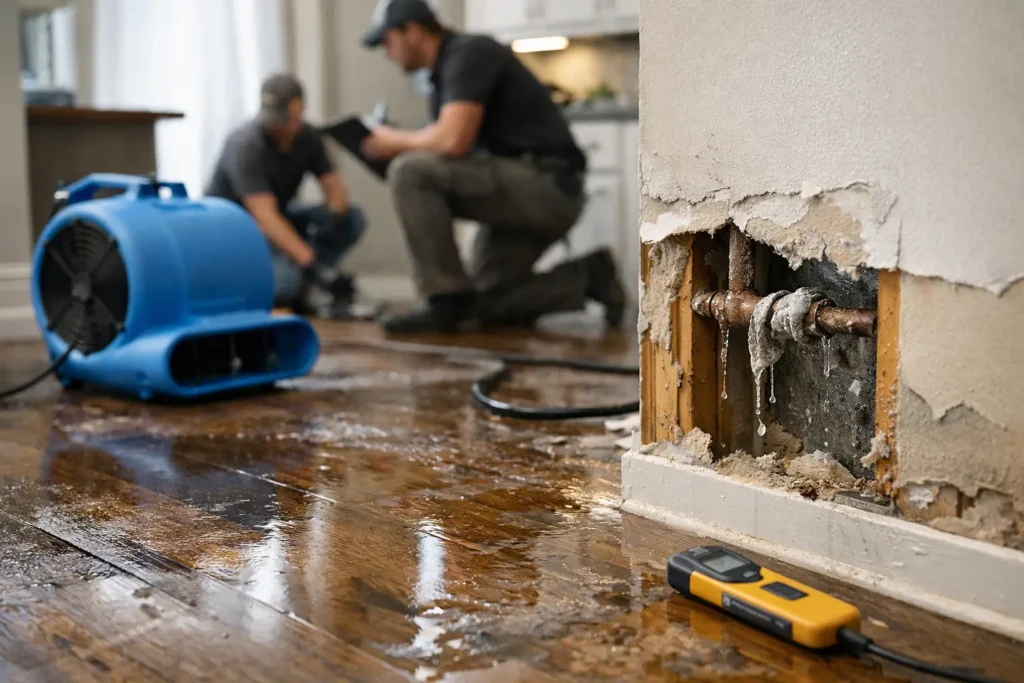
A burst pipe can turn a normal morning or quiet evening into a fast-moving property emergency. Knowing what to do after burst pipe damage begins can limit the spread of water, protect your family, and give your home a better chance of a complete recovery. The first priority is not saving every item or figuring out the final repair plan. It is stopping the water safely and getting the drying process started as soon as possible.
What to Do After a Burst Pipe: Take These First Steps
1. Shut off the water source
If water is actively flowing, turn off the nearest fixture valve if you can reach it safely. If the pipe has ruptured behind a wall, in a ceiling, or somewhere the local valve is not accessible, shut off your home’s main water supply. Many homes have a main shutoff near the water meter, garage, exterior wall, or utility area.
Every minute of active water flow can affect more materials. Water can travel under flooring, behind baseboards, through insulation, and into adjacent rooms before it becomes visible. Stopping the flow is the single most useful action you can take.
If the break involves a hot-water line, turn off the water heater as well when it is safe to do so. Avoid handling damaged plumbing, electrical equipment, or standing water if you are unsure of the conditions.
2. Put electrical safety first
Water and electricity are a dangerous combination. Do not enter a room with standing water if outlets, appliances, extension cords, or electrical panels may be affected. If you can access the breaker panel without walking through water, turn off power to the impacted area. Otherwise, wait for a qualified professional.
A ceiling that is sagging or bulging with water also needs caution. It may hold a significant amount of water, and it can fail without warning. Keep children, pets, and other household members away from the affected space until it can be assessed.
3. Call for emergency plumbing and water damage help
A plumber addresses the failed pipe. A water damage restoration team addresses what the water has already reached. These are related but separate needs, and handling both quickly helps prevent the problem from becoming larger than it needs to be.
After the plumbing source is stopped, emergency restoration technicians can inspect the affected areas, remove standing water, identify hidden moisture, and establish a drying plan. In Southern California, this matters even when the visible water seems limited. Water trapped beneath laminate flooring, inside wall cavities, or under cabinets can support mold growth and cause materials to swell, warp, or deteriorate.
SOS Restoration provides 24/7 emergency response for homeowners who need help containing water damage, drying affected materials, and documenting the condition of the property for the next steps.
4. Move belongings out of harm’s way
Once the area is safe, move dry, lightweight belongings away from the wet area. Lift furniture legs onto blocks or foil if the flooring is wet, and relocate items such as rugs, clothing, books, electronics, and important documents to a dry space.
Do not drag saturated furniture across carpet or flooring, since that can spread moisture and damage. Avoid trying to move heavy furniture that has absorbed water. It can be unstable, and forcing it across a wet surface can cause injury or additional damage.
If water has contacted electronics, leave them unplugged and do not attempt to test them. Take photos first, then set them aside for professional evaluation if possible.
5. Document the damage before cleanup changes it
Take clear photos and short videos of the burst pipe, pooled water, damaged ceilings or walls, affected furniture, and any visible damage to flooring. Capture wide shots that show the room as a whole, then closer images of specific items and materials.
This documentation can help your insurance carrier understand the scope of the event. Keep notes about when you discovered the break, when you shut off the water, and what actions were taken. Save invoices, receipts, and written reports from the plumber and restoration company.
You do not need to wait for an insurance decision before taking reasonable action to prevent further damage. Prompt mitigation is often necessary to protect the property. A restoration team can also provide moisture readings, photographs, and a detailed record of the drying work to support your claim process.
Start Drying, But Know the Limits of Household Equipment
If the affected water is clean and the area is safe, you can use towels, mops, and a wet/dry vacuum to remove small amounts of surface water while help is on the way. Open interior doors and use fans only when electrical conditions are confirmed safe. Air conditioning can help lower indoor humidity, but it is not a substitute for professional structural drying when water has reached building materials.
What you should not do is assume a dry-looking surface means the problem is over. Carpet padding, subflooring, drywall, insulation, cabinetry, and wall framing can retain moisture long after puddles disappear. Standard fans may dry the surface while leaving hidden moisture in place.
Professional water mitigation uses extraction equipment, commercial air movers, dehumidifiers, and moisture meters to dry the structure methodically. Technicians monitor progress and adjust equipment based on moisture levels, not guesswork. That distinction helps reduce the risk of secondary damage such as warped floors, deteriorated drywall, persistent odors, or mold growth.
Be careful with contaminated water
The water category affects what can be safely handled. A clean supply-line break is different from water that has mixed with sewage, backed up from a drain, or passed through contaminated building materials. If the water is discolored, has an odor, came from a toilet overflow, or may contain sewage, keep people and pets out of the area. Do not attempt sewage cleanup yourself.
A trained restoration team can determine the appropriate containment, removal, cleaning, and drying steps based on the source and extent of the loss.
Understand What May Need to Be Removed
Homeowners often ask whether wet drywall, carpet, or cabinets can be saved. The honest answer is that it depends on how long materials stayed wet, how far water traveled, the category of water involved, and whether drying can reach the affected materials.
Some materials can be dried in place when addressed quickly. Others, including soaked insulation, swollen laminate, delaminated cabinetry, or contaminated porous materials, may need removal to allow proper drying and cleaning. Removing only what is necessary is part of a careful mitigation plan. The goal is to protect your home while preserving salvageable materials whenever conditions allow.
This is also why a free professional inspection can be valuable after a burst pipe. Moisture mapping can show whether water is limited to one visible area or has migrated into nearby rooms, walls, or flooring.
Contact Your Insurance Carrier With Clear Information
Once immediate safety and water control are underway, notify your insurance carrier and report the loss. Share the date of the incident, the suspected cause, and the steps already taken to stop further damage. Provide the photos and records you collected, and ask what documentation they need as the claim progresses.
Avoid discarding damaged materials until they have been documented and you have received guidance, unless they pose a safety or contamination concern. A restoration company experienced in insurance-supported work can help organize photos, moisture documentation, equipment logs, and itemized mitigation records. While no one can promise what a policy will cover, clear documentation helps make the process easier to follow.
Do Not Rush the Repair Phase
It is understandable to want your home put back together immediately. Still, repairs should wait until the affected structure has been properly dried and verified. Repainting a damp wall, replacing flooring over a wet subfloor, or closing up a wall cavity before moisture levels are acceptable can create more expensive problems later.
A complete recovery generally moves in stages: stop the source, extract water, dry and monitor materials, clean affected areas, then repair or reconstruct what could not be saved. Clear communication during each stage gives you a better sense of what is happening in your home and why.
A burst pipe is disruptive, but quick action can change the outcome. Once the water is off and your household is safe, let trained professionals identify the moisture you cannot see and guide the property back to a clean, dry, comfortable condition.