
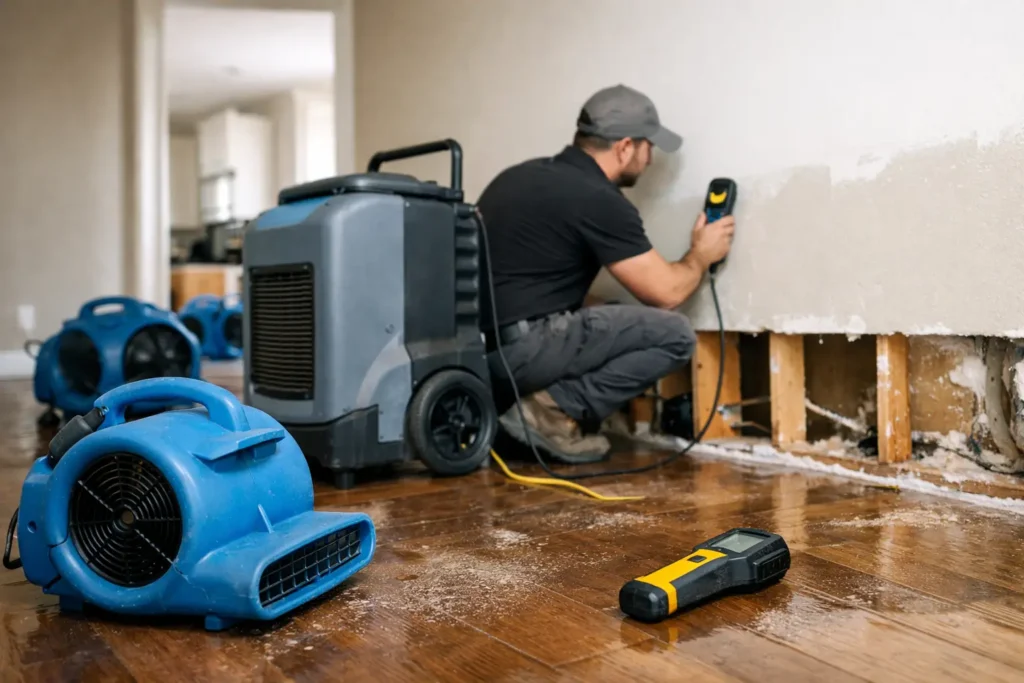
A soaked carpet can look dry by the next morning while the padding, subfloor, drywall, and framing behind it are still holding damaging moisture. That is why the answer to how long does structural drying take cannot be based on appearance alone. Proper drying protects the parts of your home you cannot easily see, helping prevent material deterioration, odors, and mold growth after a leak or flood.
For many residential water losses, professional structural drying takes about three to five days. Smaller, clean-water incidents caught quickly may dry sooner. Large floods, water that traveled behind walls, wet hardwood flooring, or high humidity can extend the process to a week or longer. The timeline is determined by moisture readings, not by a calendar.
What Structural Drying Actually Means
Structural drying is the controlled removal of moisture from a building’s materials after water damage. It goes beyond extracting standing water or setting a few fans in the room. A qualified restoration team identifies where water traveled, removes water that can be extracted, creates the right drying conditions, and measures progress until affected materials reach an acceptable moisture level.
Depending on the loss, the structure may include drywall, insulation, wood framing, subflooring, baseboards, cabinets, concrete, carpet backing, and flooring underlayment. Each material releases moisture differently. Dense wood, layered flooring, and enclosed wall cavities often take longer than exposed surfaces.
The goal is not simply to make the room feel comfortable again. It is to return materials to their normal or target moisture condition as safely as possible before repairs begin.
The Typical Structural Drying Timeline
The first 24 hours are usually focused on assessment, extraction, and stabilization. Technicians document affected areas, check moisture levels, remove standing water, and determine whether materials can be dried in place or need to be removed. Fast extraction matters because less remaining water generally means a shorter drying cycle.
During days two through four, air movers and commercial dehumidifiers work together to pull moisture from wet materials and remove it from the air. Technicians may adjust equipment placement, change containment, or use specialized methods for wall cavities, hardwood floors, or other difficult assemblies. Moisture measurements are taken regularly to confirm that drying is progressing rather than merely moving humid air around the home.
By day three to five, many straightforward losses are ready for final verification. Equipment should not be removed just because surfaces feel dry. The restoration team compares moisture readings in affected materials with dry or unaffected areas to determine whether drying goals have been met.
More complex projects can take longer. If water sat for days, traveled through multiple levels, affected insulation, or saturated dense building materials, the drying plan may require additional time. In some cases, controlled demolition of unsalvageable materials is the safer and more efficient path to drying the structure behind them.
What Affects How Long Structural Drying Takes?
Every water event has its own drying conditions. The most influential factor is how much water entered the property and how long it remained there. A supply-line leak discovered within an hour is very different from a toilet overflow or a roof leak that has been wetting a ceiling and wall for several days.
The source of the water matters, too. Clean water from a broken supply line may allow more materials to be dried and saved when handled promptly. Water involving sewage, flooding, or other contamination requires careful safety protocols and may require removal of impacted porous materials. Drying cannot be separated from cleaning and contamination control.
Building materials also shape the timeline. Drywall can wick water upward, sometimes well above the visible water line. Insulation inside a wall may trap moisture and prevent the framing from drying. Hardwood flooring can cup, buckle, or hold moisture beneath its surface. Cabinets and vanities create enclosed spaces where airflow is limited.
Southern California’s climate can help or complicate the work depending on the season and conditions inside the home. Warm outdoor weather does not automatically dry a water-damaged structure. Open windows may introduce humid air, dust, or outside pollutants, and unregulated heat can create uneven drying. Professional equipment is designed to control temperature, airflow, and humidity inside the affected space.
Why Equipment Alone Is Not Enough
Fans from a hardware store can dry a damp surface, but structural drying requires a measured plan. Air movers increase evaporation from wet materials. Dehumidifiers capture that evaporated moisture from the air. If the air becomes too humid, evaporation slows down. If equipment is poorly positioned, moisture can remain in hidden areas even while the room feels dry.
Technicians use moisture meters, thermal imaging when appropriate, and humidity readings to locate wet materials and track conditions. These readings guide decisions such as whether to remove baseboards, create small access openings, lift carpeting, dry under cabinets, or adjust the number and placement of drying units.
This is also why turning equipment off early can create setbacks. The equipment may be noisy and inconvenient, but interrupting the drying process can allow materials to retain moisture longer. If a concern comes up about noise, power use, pets, or access to the affected area, speak with the restoration team before moving or unplugging anything.
Signs Your Home May Need More Than Basic Drying
Water does not always stay in the room where the incident began. It can follow gravity through ceilings and walls, travel under flooring, and collect beneath cabinets or appliances. A professional inspection is especially valuable when you notice a musty odor, staining that expands after the initial leak, warped flooring, swollen baseboards, peeling paint, or a ceiling that feels soft or bowed.
You should also seek prompt help if water reached several rooms, came from an unknown source, involved contaminated water, or sat overnight. These conditions increase the chance that hidden materials have been affected. Waiting for visible signs can make a manageable drying job more disruptive.
What to Expect While Drying Is Underway
A reputable restoration process should feel organized, even when the event itself is stressful. You should know what areas are affected, what equipment is running, when technicians will return to monitor progress, and what comes next after drying is complete.
Expect some disruption. Air movers and dehumidifiers are loud, and affected rooms may be unavailable for a few days. Doors may be closed to control drying conditions, and some furniture may need to be moved or protected. These short-term inconveniences help preserve the home and reduce the risk of more extensive repairs later.
Documentation is another useful part of the process. Moisture readings, photographs, and a clear record of work performed can support communication with your insurance carrier. Coverage depends on your policy and the cause of loss, but timely documentation helps establish what happened and what mitigation work was necessary.
When Is It Safe to Start Repairs?
Repairs should begin after drying verification, not simply after equipment is removed. Once moisture levels are within the established drying goal, the home can move toward reconstruction tasks such as replacing drywall, insulation, flooring, trim, paint, or cabinets as needed.
Starting repairs over damp materials can trap moisture behind new finishes. That may lead to failed paint, warped materials, lingering odors, or avoidable rework. A careful transition from mitigation to repair gives homeowners a clearer path from the immediate emergency to a lasting restoration.
If you are facing a burst pipe, appliance leak, roof leak, or indoor flooding, quick action makes a meaningful difference. SOS Restoration provides 24/7 emergency response and moisture-focused drying support for homeowners who need clear guidance when water has entered their property. The sooner the water is extracted and the drying process is monitored, the better the chance of protecting the home you worked hard to build.