
A burst supply line, overflowing appliance, or ceiling leak can turn a normal day into a race against time. Water damage insurance claim help starts with protecting the property, documenting what happened, and getting a qualified restoration team involved before moisture spreads behind walls, under flooring, or into the air you breathe.
For Southern California homeowners, the pressure often comes from having to make urgent decisions while trying to understand an unfamiliar insurance process. You do not need to have every answer in the first hour. You do need to take the right next steps.
Put Safety and Damage Control First
If water is near electrical outlets, light fixtures, appliances, or a breaker panel, stay clear of the affected area and address the safety risk before entering. If the source is still active and it is safe to do so, shut off the nearest water supply valve or the home’s main water shutoff. For a leak from above, avoid standing beneath a sagging ceiling. It can hold a surprising amount of water and may collapse.
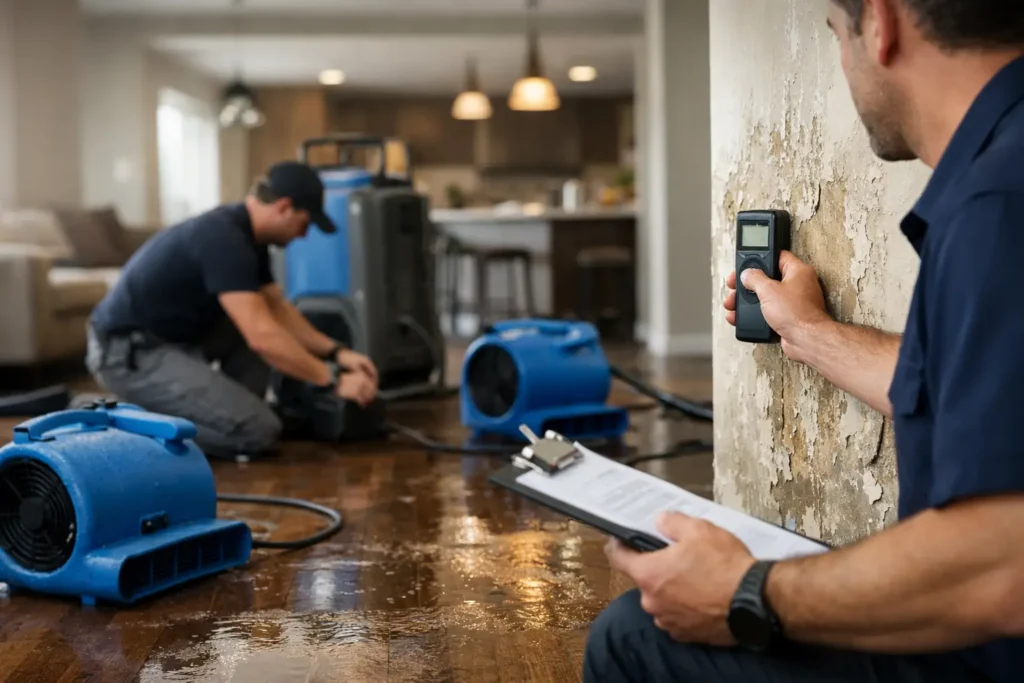
Then call for professional water mitigation. The purpose of emergency restoration is not simply to remove visible water. Certified technicians assess affected materials, extract standing water, set drying equipment, monitor moisture levels, and identify areas where water may have traveled out of sight. Fast action can limit secondary damage such as warped flooring, damaged drywall, odors, and mold growth.
Do not wait for an adjuster to approve emergency drying before taking reasonable steps to prevent further damage. Insurers generally expect policyholders to protect the home after a loss. Keep records of the actions taken, the condition of the property, and any emergency services performed.
Start Your Water Damage Insurance Claim Help File
Clear documentation makes it easier to explain the event and support the condition of your home at the time of loss. Before cleanup changes the scene, take wide photos and videos of every affected room, then capture closer images of damaged floors, walls, ceilings, cabinets, furniture, and belongings.
Write down the date and time you discovered the water, where it came from if known, and what you did to stop it. Save relevant details such as a plumber’s findings, a failed appliance model number, or the source of a roof or pipe leak. If you moved belongings to a dry area, photograph them first when possible.
Create one folder for claim-related materials. It can hold your claim number, policy information, photos, contractor reports, mitigation records, emails, call notes, and receipts. A simple log is useful: record the date, the person you spoke with, what was discussed, and any next action promised. Claims can involve several people over several weeks, and a written record helps prevent confusion.
Report the Loss Promptly
Contact your insurance carrier as soon as you reasonably can and report the water loss. Ask for the claim number and the contact information for the assigned adjuster. Describe the facts plainly: what happened, when you discovered it, and what emergency measures have been taken.
Avoid guessing about the cause or the full extent of damage if that information is not yet known. A professional inspection may reveal moisture beneath finished surfaces or identify a source that was not obvious at first. It is fine to say that the cause is still being investigated.
Understand What Your Policy May Cover
Coverage depends on your individual policy, endorsements, exclusions, deductible, cause of loss, and the details documented during the inspection. Sudden and accidental water damage from a failed supply line or appliance may be handled differently than a long-term leak, repeated seepage, groundwater intrusion, or flooding from an outside source.
This distinction matters because water damage is not one category in every policy. A standard homeowners policy may treat a burst pipe differently from a sewer backup, and flood-related losses often require separate coverage. Your insurer can explain the policy language that applies to your claim. If something is unclear, ask for the explanation in writing and request that the representative identify the relevant policy section.
Do not assume that visible damage tells the whole story. Water can wick into baseboards, insulation, cabinetry, subflooring, and adjacent rooms. A detailed mitigation assessment and moisture readings give the adjuster a clearer view of the work needed to dry and restore the affected area.
How a Restoration Team Supports the Claim Process
A restoration company works on the property side of the loss: stabilizing conditions, documenting affected materials, drying the structure, and preparing a clear scope of necessary restoration work. This documentation can help the insurer understand the emergency response and the extent of moisture-related damage.
At SOS Restoration, the goal is to reduce the burden during an already stressful event. The team can document conditions, communicate restoration findings, provide mitigation records, and help homeowners stay organized as the claim moves forward. That is support, not a promise of coverage. The insurance carrier makes its own coverage determination based on the policy and claim investigation.
Professional documentation commonly includes photos of affected areas, equipment placement records, daily moisture monitoring, drying logs, and a description of materials that could not be saved. This level of detail is especially helpful when water has moved beyond the original room or when materials need controlled removal to achieve proper drying.
Ask Questions Before Work Moves to Reconstruction
Emergency mitigation and permanent repairs are related but not identical phases. Mitigation focuses on stopping damage from getting worse and drying the structure. Reconstruction may involve replacing drywall, flooring, cabinets, paint, trim, or other finished materials after the area is dry and the scope is approved.
Before reconstruction begins, make sure you understand the proposed scope, what has been documented for the insurer, and which decisions may affect your out-of-pocket cost. Your deductible, coverage limits, upgrades, matching issues, and policy terms can all influence the final project. Clear communication early is far easier than trying to sort out differences once materials have been ordered.
Avoid Common Claim Delays
Delays often begin with small gaps in communication. Homeowners may throw away damaged items before photographing them, fail to report a loss promptly, or rely only on verbal updates. Others postpone drying because the water looks minor, only to find swelling materials or microbial growth later.
A few habits can keep the process moving:
- Take photos before disposal, removal, or major cleanup whenever it is safe to do so.
- Keep damaged items available for inspection until the insurer advises otherwise, unless they create a safety or sanitation concern.
- Save receipts for reasonable emergency expenses and services connected to the loss.
- Respond quickly to requests for information, estimates, or access to the property.
- Ask for updates in writing when timelines, scope, or next steps are unclear.
It also helps to separate facts from frustration when speaking with everyone involved. Water losses are disruptive, and it is reasonable to be concerned. A concise record of the source, damage, mitigation work, and outstanding questions gives the adjuster and restoration team information they can act on.
Protect the Home After the Equipment Leaves
Drying equipment is temporary, but verification matters. A reliable restoration process includes moisture monitoring to confirm affected materials have reached appropriate drying goals before walls are closed or finishes are replaced. Rushing this step can trap moisture where it is difficult and costly to address later.
If water involved sewage, visible contamination, or a category of water that may carry contaminants, keep people and pets away from the area and let trained professionals handle cleanup. The priority is to remove affected materials where necessary, clean and treat impacted surfaces appropriately, and restore the space with health and safety in mind.
When the immediate emergency is over, keep your claim folder until the work is complete and all questions have been resolved. A well-documented loss cannot erase the inconvenience of water damage, but it can give you a clearer path forward. Fast mitigation, steady communication, and a restoration partner that treats your home with care can help you move from crisis containment toward a dry, safe, lasting recovery.