
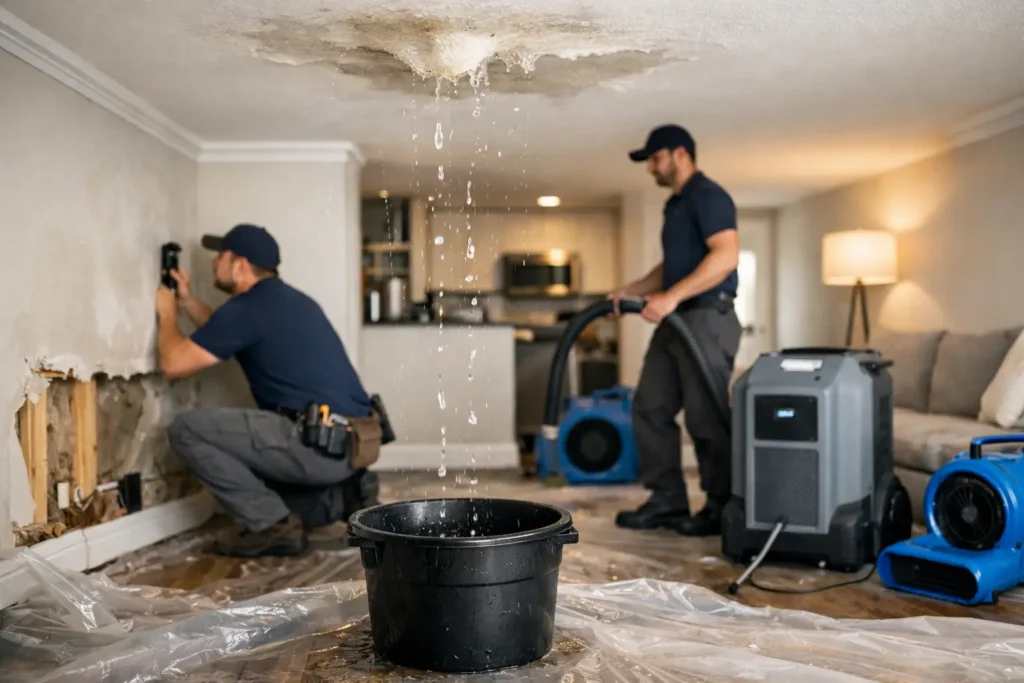
A ceiling drip can turn into soaked insulation, damaged drywall, and hidden mold growth faster than most homeowners expect. Knowing how to stop a ceiling leak safely starts with protecting people first, then limiting the water until the source can be repaired and the affected materials can be properly dried.
A leaking ceiling is not always caused by a roof problem. In Southern California homes, the source may be a failed supply line, overflowing upstairs fixture, leaking drain, damaged appliance hose, air-conditioning condensate line, or roof intrusion after heavy rain. The stain or drip you can see may also be several feet away from the actual leak.
Treat a Ceiling Leak as a Safety Issue First
Water and electricity are a dangerous combination. If water is dripping near a light fixture, ceiling fan, outlet, breaker panel, or electrical appliance, do not touch the fixture, switch, or wet area. Keep children and pets away, and avoid standing in water.
If you can safely reach the electrical panel without crossing wet flooring or touching wet surfaces, turn off power to the affected area. If that is not clearly safe, leave it alone and call for emergency help. A qualified professional can assess the conditions without adding electrical risk.
Also watch the ceiling itself. Drywall that is holding water may sag, bubble, bow, or develop a large soft-looking bulge. That material can fail suddenly. Move furniture, rugs, and valuables out from below the area if you can do so safely, then stay out from under the damaged section. Do not climb a ladder beneath a wet, weakened ceiling.
How to Stop a Ceiling Leak Safely: Immediate Steps
Your goal in the first few minutes is containment, not a complete repair. Start by placing a bucket, storage bin, or other stable container beneath active drips. Put towels around the container to catch splashing, especially on hard flooring where water can spread quickly.
Next, look for an obvious active water source that can be shut off without risk. If the leak began while someone was showering, running a dishwasher, using a washing machine, or flushing an upstairs toilet, stop using that fixture immediately. For a suspected plumbing leak, turn off the local shutoff valve if you know where it is and can access it safely. If the source is unclear or water continues flowing, shut off the home’s main water supply.
Do not assume that stopping the visible drip means the problem is over. Water can remain inside ceiling cavities, insulation, walls, and flooring. It can also migrate along framing and wiring before appearing in another room. Quick containment reduces the mess, but professional moisture inspection and drying may still be needed to prevent secondary damage.
If the Leak Is Coming Through a Light Fixture
A light fixture leak deserves extra caution. Do not remove the globe, unscrew a bulb, pull a ceiling fan chain, or attempt to catch water directly from the fixture. Shut off the circuit only if it is safe to do so, then keep the area clear.
Water entering a fixture can indicate a significant amount of moisture above the ceiling. Even after the visible leak stops, the wiring, junction box, and surrounding ceiling materials may need inspection before power is restored.
If the Ceiling Is Bulging or Sagging
A water-filled ceiling bulge is a sign that the drywall may be carrying considerable weight. Do not press on it, poke it, or try to drain it yourself while standing below it. The ceiling can collapse, and the water may be contaminated depending on its source.
Clear the room below the affected area, close the door if possible, and keep people out. If water is spreading into nearby rooms, use towels at doorways only when it is safe to do so. Emergency water damage professionals can release trapped water in a controlled manner, protect the surrounding space, and determine whether ceiling materials can be dried or should be removed.
Find the Source Without Creating More Damage
Once the immediate risk is controlled, think about what is located above the leak. A bathroom, laundry room, kitchen, or second-story plumbing line often points to an indoor water source. A leak that appears during or shortly after rainfall may be related to roofing, flashing, skylights, vents, or exterior drainage.
Timing matters. A ceiling stain that grows only when the upstairs shower runs may involve a drain, shower pan, supply line, or failed caulking around a fixture. Water that appears after the HVAC has been operating may be caused by condensate drainage. A leak that starts without any appliance or fixture in use can be a pressurized plumbing leak and should be treated as urgent.
Avoid cutting open the ceiling to investigate. This can disturb wet insulation, spread debris, damage wiring or pipes, and turn a contained loss into a larger repair. Documentation is more useful at this stage. Take clear photos and short videos of the drip, stain, damaged belongings, and any visible source before cleanup changes the scene.
What Not to Do During a Ceiling Leak
Small decisions can make a major difference in the hours after water appears. Avoid these common mistakes:
- Do not use a household vacuum to remove water from a wet ceiling, carpet, or floor unless it is specifically designed for wet pickup and the electrical conditions are safe.
- Do not run ceiling fans or operate light fixtures near the leak.
- Do not place a ladder under sagging drywall or attempt overhead repairs while water is present.
- Do not ignore a stain simply because the dripping has stopped.
- Do not use heaters to force-dry wet ceiling cavities. Excess heat can worsen material damage and does not address moisture trapped behind surfaces.
A fan or dehumidifier can sometimes help with minor surface moisture after the water source is fully stopped and the area is electrically safe. But drying a ceiling properly often requires moisture meters, air movement, dehumidification, and targeted access to wet materials. The right approach depends on how long the leak ran, where the water traveled, and whether the water was clean, gray, or contaminated.
When to Call for Emergency Water Damage Help
Call for professional help right away if water is actively flowing, the ceiling is sagging, a fixture or electrical area is involved, or the source cannot be identified. The same applies when water has affected multiple rooms, flooring, cabinets, insulation, or personal belongings.
Fast response is especially valuable when a leak has been hidden for hours or days. Even a slow leak can saturate drywall and insulation, weaken materials, create odors, and support mold growth if moisture remains. A restoration team can locate moisture beyond what is visible, extract standing water, set drying equipment, monitor progress, and document damage for an insurance claim.
For homeowners, landlords, and families facing an urgent leak, SOS Restoration provides 24/7 emergency water damage support. Certified technicians can help stabilize the situation, assess affected materials, and guide the recovery process with clear communication from initial mitigation through repairs.
After the Drip Stops, Confirm the Home Is Actually Dry
The most expensive part of a ceiling leak is often what happens after the visible water disappears. Drywall can look normal while insulation remains wet above it. Moisture can move into wall cavities, framing, flooring, and adjacent rooms, where it may cause swelling, warping, staining, or microbial growth later.
A proper assessment looks beyond the drip location. It identifies the water source, maps where moisture traveled, evaluates the condition of the ceiling assembly, and determines whether controlled drying or material removal is necessary. It also helps establish a clear record of the event, which can be useful when speaking with an insurer.
If your ceiling is leaking now, focus on the next safe action: stay clear of electrical hazards, contain the water, stop the source when you can do so safely, and get qualified help before hidden moisture has time to spread.