
A burst supply line can soak drywall, flooring, cabinets, and belongings long before the visible puddle looks serious. That is why the water mitigation timeline begins the moment water is discovered, not when repairs start. Fast action limits how far moisture travels, protects indoor conditions, and gives your restoration team a clearer path to restoring the property.
For Southern California homeowners, the process can look different depending on whether the source was a clean pipe break, an appliance leak, storm intrusion, or contaminated sewage backup. The affected materials, how long water sat, and whether moisture reached hidden cavities all influence the schedule. Still, most professional mitigation follows a clear sequence designed to stop damage before it becomes a larger reconstruction project.
The First 24 Hours of a Water Mitigation Timeline
The priority is always safety and source control. If water is still entering the home, shut off the supply when it is safe to do so. Avoid entering rooms with electrical hazards, sagging ceilings, or contaminated water. Move only dry, accessible valuables out of harm’s way, and contact a 24/7 restoration professional as soon as possible.
When technicians arrive, they assess the source, identify the water category, inspect affected rooms, and document visible damage. This early documentation matters because it creates a record of conditions before extraction and drying begin. It can also help support communication with your insurance carrier, although coverage depends on the details of your policy and loss.
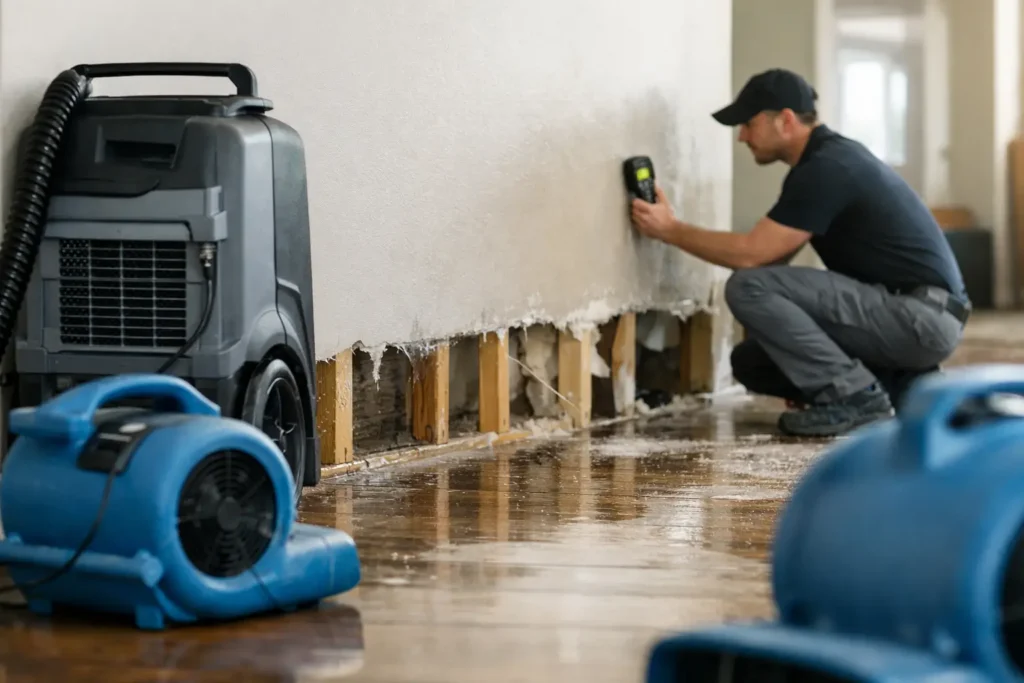
Next comes emergency extraction. Powerful pumps, truck-mounted extraction, portable extractors, and specialized tools remove standing water from floors, carpets, pads, and other wet surfaces. Removing water quickly is more effective than trying to dry a saturated space later. In many cases, technicians can also use moisture meters and thermal imaging to find water that has moved beneath flooring, behind baseboards, or into walls.
Not every material can remain in place. Saturated carpet padding, swollen laminate, wet insulation, and compromised drywall may need to be removed to expose wet structural areas and prevent prolonged moisture retention. The goal is not to tear out materials unnecessarily. It is to make sure hidden wet areas can dry properly and that damaged materials do not continue affecting the home.
Days 1 Through 3: Drying and Moisture Control
Once extraction is complete, the drying phase begins. Air movers create controlled airflow across wet surfaces, while commercial dehumidifiers pull moisture from the air. Depending on the affected area, technicians may use floor-drying equipment, wall cavity drying systems, or containment to focus the process where it is needed.
This stage can feel disruptive because equipment may run continuously. That is intentional. Drying equipment needs consistent operation to lower moisture levels efficiently. Turning equipment off too early, opening windows in humid conditions, or moving machines can slow progress and leave moisture behind.
A professional team does not simply place fans and return when the room looks dry. Technicians monitor temperature, humidity, and moisture content in materials such as drywall, framing, subfloors, and cabinets. Readings are compared over time to confirm that drying is moving in the right direction. If a wall remains wet or a floor is not responding as expected, the drying setup may be adjusted.
The type of water matters here. Clean water from a recent supply line issue may call for extraction and structural drying, provided the conditions remain controlled. Water from a toilet overflow, sewage backup, or outside floodwater requires a more cautious approach because it may carry contaminants. Affected porous materials may need to be removed, and the area requires cleaning and disinfection before restoration can proceed.
Days 3 Through 7: Verification, Cleaning, and Damage Decisions
Many straightforward water losses dry within three to five days, but that is not a promise or a deadline. A small leak caught immediately may dry quickly. A loss that reached multiple rooms, traveled under flooring, or saturated dense building materials can take longer. High indoor humidity, limited access, and the need for controlled demolition can also extend the water mitigation timeline.
As moisture readings approach dry standards, technicians verify that materials are no longer holding excess moisture. Equipment is removed only after the area has reached appropriate drying goals. This is one of the most important checkpoints in the process. A room can look normal while moisture remains behind a wall or under a floor.
During this period, the team may also clean and treat salvageable contents and surfaces affected by the loss. Furniture, clothing, and personal belongings often need individual evaluation. Some items can be dried and cleaned; others may be too damaged or contaminated to safely restore. Clear documentation helps homeowners understand what was affected and what may need replacement.
If mold was already present before the water event, or if moisture was hidden for an extended period, the scope may change. Mold remediation is a separate, controlled process that addresses affected materials and helps prevent spores from spreading to unaffected areas. It is one reason a prompt inspection after a leak matters, even when visible water seems limited.
After Mitigation: When Repairs Can Begin
Mitigation and reconstruction are connected, but they are not the same job. Mitigation stops the damage, removes water, dries the structure, and addresses contamination. Reconstruction returns the home to its pre-loss condition by repairing or replacing materials such as drywall, insulation, flooring, baseboards, cabinets, and paint.
Repair timing depends on how much material was removed, product availability, drying verification, and the decisions involved in an insurance claim. Minor repairs may begin soon after drying is complete. Larger losses may require estimates, approvals, material selections, and a more detailed reconstruction schedule.
This distinction is helpful when you are planning around a disrupted kitchen, bedroom, or living space. The loudest and most urgent part of the event is often over after the first few days, but full recovery can continue while permanent repairs are organized. A restoration company that handles both mitigation and reconstruction can help reduce handoffs and keep the process easier to follow.
What Can Delay Water Damage Recovery?
The biggest variable is usually how long water had time to travel before it was discovered. Water moves through seams, below flooring, into wall cavities, and along framing. A leak from an upstairs bathroom may create visible damage downstairs while leaving a much broader area wet above the ceiling.
Access can also affect the schedule. Built-in cabinets, finished basements, crawl spaces, and tightly installed flooring can make it harder to reach wet materials. For multi-unit properties, water may cross into neighboring spaces, which requires coordinated assessment. Contaminated water and structural safety concerns add necessary steps as well.
Homeowners can help keep the process moving by sharing details about when the loss was noticed, where water may have originated, and what areas were affected. Keep photos, receipts, and claim information organized, but do not wait for a claim decision before arranging emergency mitigation. The first priority is preventing additional damage.
A Faster Response Protects More Than Surfaces
Water damage becomes more complicated with every hour that moisture remains trapped in a home. Quick extraction and monitored drying can help protect building materials, belongings, and indoor conditions while giving you a documented plan for what comes next.
If your home has standing water, a fresh leak, damp walls, warped floors, or a musty odor after a water event, ask for a professional inspection promptly. SOS Restoration provides emergency water mitigation, moisture monitoring, and direct claim support so homeowners can move from immediate containment toward lasting repairs with clear guidance at every stage.