
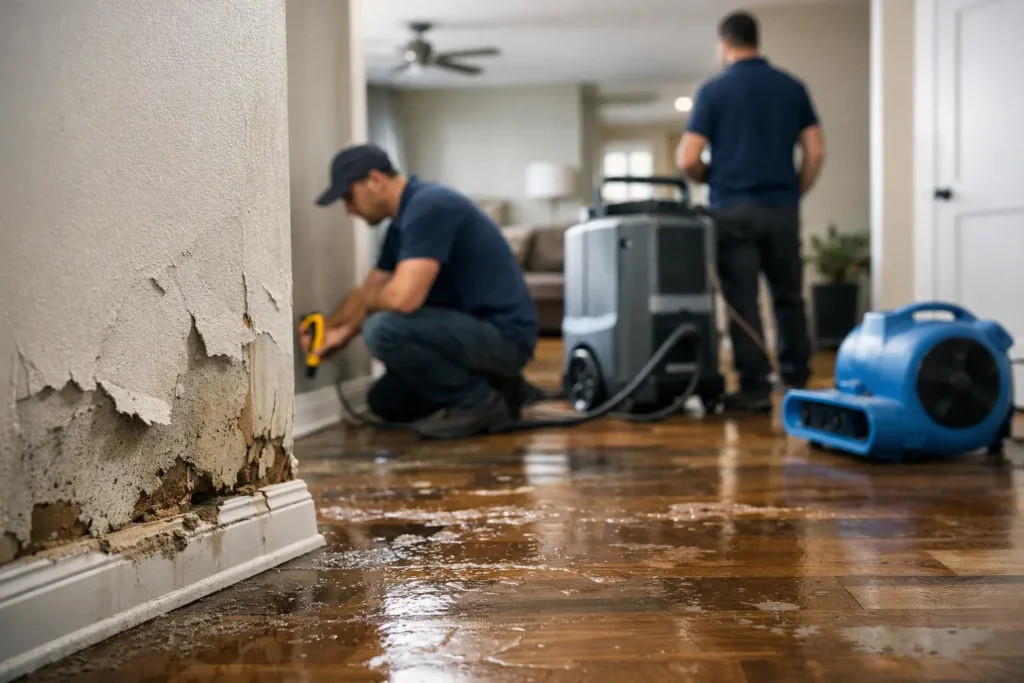
A leak under the kitchen sink can look contained to one cabinet, then show up days later as a stained ceiling, warped flooring, or a musty odor in the next room. So, does water damage spread? Yes. Water can move well beyond the visible wet spot, especially when it enters porous materials, travels along framing, or settles beneath floors and behind walls.
The sooner moisture is located, extracted, and professionally dried, the better the chance of limiting repairs and protecting your home’s indoor environment. What looks like a small plumbing issue can become a larger restoration project when hidden moisture is left in place.
How Does Water Damage Spread?
Water follows gravity, but it does not only travel straight down. It can wick upward through drywall, insulation, carpet backing, baseboards, and wood framing. It can also move sideways through wall cavities, under flooring, and around pipes or electrical openings. A slow leak may spread quietly for weeks before there is a visible sign.
For example, water from an upstairs bathroom leak may soak into the subfloor, reach the ceiling below, and continue into adjacent walls. A dishwasher leak can move underneath cabinets and flooring, where it is harder to see and harder to dry with household fans alone. In Southern California homes, slab foundations, tile floors, and attached living spaces can make moisture paths especially difficult to identify without proper inspection equipment.
The amount of spread depends on several factors: the source of the water, how long it has been present, the type of materials affected, and how quickly drying begins. Clean water from a newly broken supply line presents a different situation than water from a sewage backup or outdoor flooding. Any contaminated water event needs immediate professional attention for safe cleanup and proper handling.
Why Hidden Moisture Causes Bigger Problems
Visible standing water gets attention. The moisture behind a wall or beneath a floor is often what creates the most expensive surprises. Building materials absorb water at different rates. Drywall can lose strength, wood can swell or warp, and insulation can hold moisture long after surfaces feel dry to the touch.
When materials stay wet, secondary damage can begin. Paint may bubble, flooring can cup or separate, cabinets can deteriorate, and metal components may corrode. Damp conditions can also support mold growth. That is why a restoration response is more than removing water from the floor. It includes finding the full moisture footprint, drying structural materials, and confirming that affected areas have reached appropriate drying goals.
A home can appear dry while moisture remains trapped under vinyl flooring, inside wall cavities, or beneath heavy furniture. Professional moisture meters and thermal imaging help technicians identify these areas without unnecessary demolition. If materials cannot be effectively dried or safely restored, a qualified restoration team can explain what needs to be removed and rebuilt.
Signs Water Damage May Be Spreading
Not every leak announces itself with a ceiling collapse. Many homeowners first notice subtle changes that are easy to dismiss. Pay attention if a room suddenly feels humid, a floor feels soft or uneven, or a new odor develops after a plumbing issue.
Common warning signs include:
- Stains, discoloration, bubbling paint, or peeling wallpaper on walls and ceilings
- Swollen baseboards, warped wood, loose tiles, or flooring that begins to buckle
- A musty odor, especially near closets, cabinets, bathrooms, or laundry areas
- Damp carpet, recurring condensation, or a higher-than-usual water bill without a clear reason
These signs do not always reveal the source. Water can travel from a different room, from above, or from a hidden pipe. A moisture inspection helps determine whether the problem is active, where water has migrated, and what drying or repair work is needed.
How Fast Can Water Damage Get Worse?
There is no single timeline because every loss is different. A major pipe break can saturate multiple rooms quickly, while a pinhole leak may spread slowly and remain hidden. Either way, delay gives water more time to move into materials that are difficult to dry.
Porous materials are particularly vulnerable. Carpet and padding can absorb water rapidly. Drywall can wick moisture upward from the floor. Wood flooring may expand as it absorbs water, and cabinets can trap moisture where they meet the wall and subfloor. Once water reaches concealed spaces, simple surface drying is rarely enough.
Speed matters, but the right response matters just as much. Removing visible water without checking hidden areas can leave the actual problem unresolved. Effective mitigation combines extraction, containment when needed, controlled airflow, dehumidification, and ongoing moisture monitoring. The goal is not to make the room look dry. The goal is to dry the affected structure thoroughly and prevent avoidable secondary damage.
What to Do When You Find Water Damage
If water is actively flowing, stop the source if it is safe to do so. This may mean turning off a local supply valve or the home’s main water shutoff. Avoid entering areas with electrical hazards, and do not handle contaminated water from sewage, flooding, or other unsanitary sources.
Move valuable items away from the affected area if you can do so safely, and take clear photos of the damage for your records. Then contact a water damage restoration professional promptly. Fast assessment is especially useful when water has affected walls, ceilings, hardwood, laminate, carpet, cabinets, or multiple rooms.
A professional team can document the loss, identify the water category, locate hidden moisture, and create a drying plan based on the materials involved. If you plan to file an insurance claim, detailed documentation and clear communication can also make the process less overwhelming. Coverage decisions are made by the insurance carrier and depend on your policy, but early documentation helps preserve an accurate picture of the loss.
What Professional Drying Looks Like
Professional restoration is a measured process, not just a row of fans. Technicians begin by assessing the affected areas and identifying where moisture has traveled. They extract standing water, remove unsalvageable materials when necessary, and set drying equipment based on the size and conditions of the space.
Air movers help circulate air across wet surfaces, while dehumidifiers remove moisture from the air so materials can continue releasing water. In some situations, technicians may use controlled drying methods for wall cavities, subfloors, or other concealed spaces. Moisture readings are taken throughout the process to track progress and verify that the structure is drying properly.
This approach also helps avoid unnecessary disruption. Some materials can be saved when drying begins quickly and is monitored carefully. Others may be too damaged, contaminated, or difficult to dry safely. A responsible restoration provider should explain those trade-offs clearly, including what can be restored, what may need replacement, and why.
When to Call for Emergency Water Damage Help
Call for prompt professional help when there is standing water, a burst pipe, an overflowing appliance, a roof leak affecting ceilings or walls, water beneath flooring, or any sign that moisture has reached multiple areas. You should also act quickly when there is a musty smell after a leak, even if the surface looks dry.
SOS Restoration provides 24/7 emergency water damage mitigation, moisture inspection, structural drying, and restoration support for homeowners facing stressful property damage. Certified technicians can help contain the loss, protect affected materials where possible, and guide you through the next steps with clear communication.
Water damage rarely stays exactly where it starts. Treating a leak early gives your home the best chance to recover with less disruption, fewer hidden surprises, and a clearer path back to normal.