
A toilet backup that reaches flooring, wastewater rising from a drain, or floodwater entering through the home is not a mess to handle casually. This guide to category three water explains why these events require fast, controlled action to protect your family, limit damage, and prevent contamination from spreading through your property.
What Is Category Three Water?
Category Three water, often called black water, is water that is grossly contaminated and may contain harmful bacteria, viruses, parasites, sewage, chemicals, or other unsanitary materials. In restoration work, water categories help professionals determine the safety precautions, cleanup methods, and materials that may need to be removed.
Common sources include sewage backups, toilet overflows involving waste, failed septic systems, and flooding from rivers, streets, or stormwater runoff. Water that has been standing for an extended period can also deteriorate into Category Three conditions, especially when it has moved through soil, building materials, or other contaminants.
The category describes the water source and contamination risk, not simply how dirty the water looks. Clear-looking water can still be unsafe after a sewer line issue or flood event. That is why a prompt professional assessment matters.
Why Category Three Water Requires an Urgent Response
When contaminated water enters a home, the immediate concern is not only visible water. It can soak into carpet padding, subflooring, drywall, cabinets, insulation, and belongings. If those materials are not properly assessed and addressed, contamination and moisture can remain behind after the surface appears dry.
There is also a practical urgency. Water continues moving through porous materials, and warm Southern California conditions can accelerate secondary problems in damp areas. Fast containment helps reduce the affected area, while professional extraction and moisture monitoring help identify water that has traveled behind walls or beneath flooring.
Category Three losses also call for more than ordinary drying. The goal is to remove contaminated materials where necessary, clean and treat remaining structural surfaces using appropriate methods, dry the area to documented targets, and return the space to a safe, livable condition. Skipping any part of that process can leave a home with hidden damage and difficult cleanup later.
What to Do Immediately After a Sewage Backup or Contaminated Flood
Your first decision should be about safety, not saving items. Keep children, pets, and unnecessary foot traffic away from the affected area. Do not walk through standing water, and do not try to vacuum, mop, or use household fans on sewage-contaminated water. These actions can spread contamination to nearby rooms and belongings.
If it is safe to do so without entering the affected area, stop the source of water. For a plumbing-related incident, this may mean shutting off the main water supply or stopping use of toilets, showers, sinks, and laundry appliances until the issue is evaluated. If water is near electrical outlets, appliances, or the electrical panel, avoid the area and do not attempt to handle electrical equipment.
Call a qualified restoration company as soon as possible. A 24/7 response is especially valuable when contaminated water is still spreading or has reached finished areas such as bedrooms, kitchens, hallways, or living rooms. A trained crew can assess the source, establish containment, extract water, document damage, and begin the cleanup process without exposing your household to unnecessary risk.
Before cleanup begins, take photos or video from a safe location for your records. Keep notes about when the loss occurred, where water traveled, and any visible damage. If you plan to file a claim, this documentation can support conversations with your insurance carrier. Coverage depends on your policy and the cause of loss, so it is wise to review your specific policy and speak with your insurer.
How Professional Category Three Water Cleanup Works
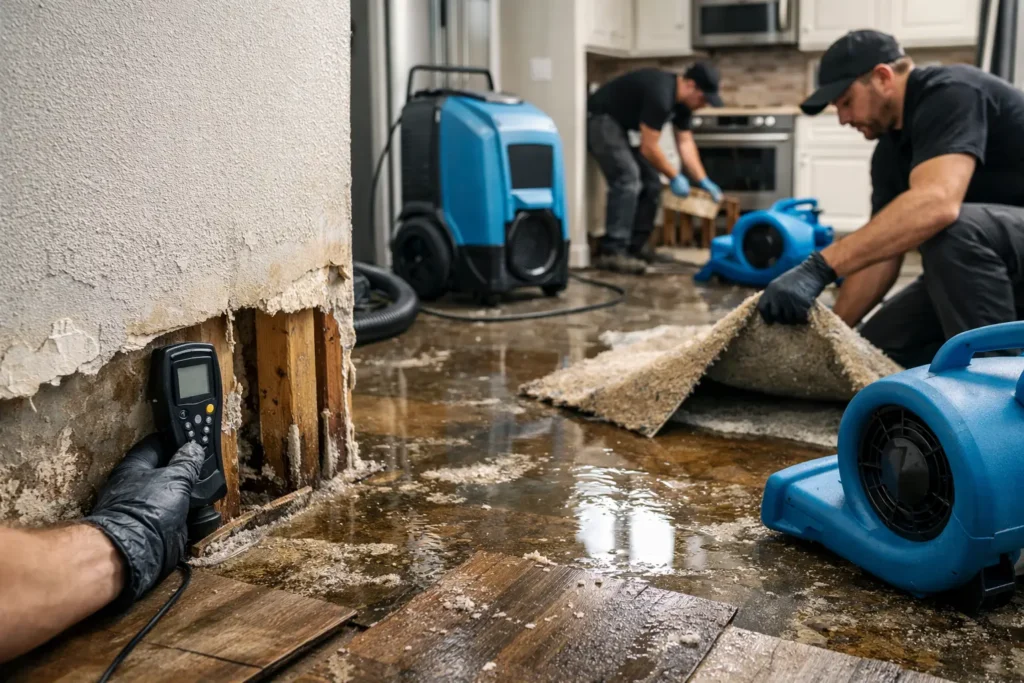
A proper response starts with an inspection of the affected areas and the water source. Restoration technicians identify where contamination has traveled, what materials are porous or nonporous, and whether water has moved beneath floors, into wall cavities, or into adjacent rooms. Moisture meters and other equipment help reveal conditions that cannot be confirmed by sight alone.
Containment and controlled removal
The work area may be isolated to help prevent cross-contamination. Technicians use appropriate protective equipment and follow established cleanup procedures while removing standing water and affected materials. Carpet, padding, insulation, drywall, and other porous items may need removal when they have been exposed to Category Three water. The right scope depends on the material, duration of exposure, extent of contamination, and condition of the structure.
Not every item is treated the same way. Hard, nonporous surfaces can often be cleaned and treated when they are structurally sound. Absorbent materials are more difficult because contaminants can penetrate below the surface. A professional assessment helps distinguish what can be restored from what should be removed for health and safety reasons.
Cleaning, treatment, and structural drying
After removal and extraction, the remaining structure is cleaned using methods appropriate for contaminated water losses. Then the drying process begins. Industrial air movers, dehumidifiers, and targeted airflow are used to remove moisture from framing, concrete, subfloors, and other materials that can retain water.
Drying is not complete when the room merely feels dry. Technicians should monitor moisture levels throughout the process and adjust equipment as conditions change. This approach helps avoid premature equipment removal and reduces the chance that hidden dampness remains inside walls or beneath flooring.
Documentation and restoration planning
A professional team should communicate what was found, what materials were affected, and what work is recommended next. Clear documentation is useful for homeowners and can also help when coordinating with an insurance adjuster. Once the space is clean and dry, the focus can shift to repairs, reconstruction, and restoring the appearance and function of the home.
For homeowners facing a stressful loss, having one team coordinate mitigation and repairs can reduce handoffs and confusion. SOS Restoration supports customers from emergency water removal through drying, cleanup, and reconstruction planning, with clear updates at every stage.
Protecting Belongings After Category Three Water Exposure
Personal belongings need careful evaluation after contact with contaminated water. Do not assume an item is safe because it looks unaffected. Water can wick into furniture legs, cardboard boxes, fabric, paper products, and the undersides of stored items.
Nonporous belongings may be candidates for specialized cleaning if they can be safely handled and treated. In contrast, heavily contaminated porous items may not be suitable for restoration. This is often difficult for homeowners, particularly when affected contents have sentimental value, but safety and the ability to thoroughly clean the item should guide the decision.
Avoid moving contaminated belongings through clean parts of the home. A restoration team can help separate affected contents, document them, and determine an appropriate cleaning or disposal plan. This keeps the cleanup organized while protecting unaffected rooms.
Common Mistakes That Make the Damage Worse
The most common mistake is waiting because the water has stopped flowing. Even after the source is controlled, contamination and moisture can continue causing problems inside materials. Another mistake is using household fans or opening interior doors in an attempt to dry the space. Air movement without containment can carry contaminants beyond the original area.
Homeowners sometimes remove damaged flooring or drywall before documentation and assessment. While the impulse is understandable, uncontrolled removal can spread contaminants and make it harder to determine the full extent of damage. Keep the area isolated, document what you can safely see, and let trained technicians establish a controlled work plan.
It also helps to avoid relying on odor alone. A reduced odor does not confirm that a structure is clean or dry. Professional moisture monitoring and a thorough inspection provide a more reliable picture of the condition behind finished surfaces.
When Can You Use the Affected Area Again?
The answer depends on the size of the loss, the materials involved, the contamination path, and the drying conditions. A contained bathroom overflow may have a different restoration timeline than sewage that spread through multiple rooms or a flood that affected lower levels of a home.
The area should not be returned to normal use until contaminated materials have been addressed, structural surfaces have been properly cleaned, and drying measurements show the structure has reached appropriate conditions. If repairs are needed, the final timeline will also include reconstruction work such as replacing drywall, flooring, cabinets, or baseboards.
A Category Three water event is disruptive, but it does not have to become an open-ended emergency. Keep people out of the affected space, stop the source when safe, document the loss, and bring in qualified restoration help quickly. Prompt, careful action gives your home the best path back to a clean, dry, and comfortable condition.