
A sewage backup rarely starts with a dramatic flood. It may begin with one toilet that bubbles after a shower, a drain that gurgles when the washing machine runs, or an unpleasant odor near a floor drain. Knowing how to identify sewage backup at the first sign can help protect your home, belongings, and indoor environment before contamination spreads farther.
Sewage-contaminated water is not the same as a clean-water leak from a supply line. It can contain waste, bacteria, and other contaminants that require careful handling and professional cleaning. Treat a suspected backup as an urgent property emergency, especially when water is coming up through drains, toilets, tubs, or showers.
The Early Signs of a Sewage Backup
A backup occurs when wastewater cannot move through the sewer line as intended. It may be caused by a blockage in a home’s drain line, damage to a private sewer lateral, tree root intrusion, a problem with a septic system, or a municipal sewer issue. The exact cause matters, but the immediate warning signs are often similar.
Multiple Drains Are Acting Up at Once
One slow sink can be a localized clog. When several fixtures in different parts of the home drain slowly, gurgle, or stop draining at the same time, the issue may be farther down the plumbing system.
Pay close attention if flushing a toilet causes water to rise in a tub or shower, or if running the washing machine makes a nearby toilet bubble. These cross-fixture reactions can indicate that wastewater is meeting a blockage in a shared drain line and searching for another way out.
Water Comes Up Through a Low Drain
Water emerging from a basement, garage, laundry room, shower, or floor drain is one of the clearest signs of a sewer line problem. Wastewater naturally follows the path of least resistance. In many homes, the lowest plumbing fixture is where it appears first.
The water may be gray, brown, or black, but color alone does not determine the hazard. Any water that has backed up from a drain or sewer line should be treated as contaminated until a qualified restoration professional assesses the situation.
Gurgling, Bubbling, and Unusual Toilet Behavior
A toilet that gurgles without being flushed, loses water in the bowl, bubbles when another fixture drains, or flushes sluggishly deserves prompt attention. These sounds can mean air is trapped in the drain system because wastewater is not flowing freely.
A single gurgle does not always mean a backup is underway. Repeated noises, especially alongside slow drains or water rising in another fixture, are a stronger warning that the problem is more than a simple clog.
Persistent Sewer Odors Indoors or Near Drains
A sewage smell inside the home is never something to ignore. Odors may come from a dry trap, a loose toilet seal, or a plumbing vent issue, but they can also signal wastewater collecting in a line or backing up below the floor.
If the smell becomes stronger after using plumbing fixtures, or you notice it around a floor drain, bathroom, laundry room, or crawlspace access, stop using unnecessary water and arrange an inspection. Odor combined with drain problems is particularly concerning.
How to Identify Sewage Backup Versus a Simple Clog
The difference is not always obvious in the first few minutes. A clog may affect one fixture, such as a kitchen sink or one toilet. A sewage backup more often affects multiple fixtures or causes water to return through a drain instead of moving away from the home.
Look at the pattern. If one sink drains slowly while everything else works normally, the issue may be contained to that branch line. If toilets, tubs, showers, and floor drains begin reacting together, assume the main sewer line could be involved.
The location of the water is another useful clue. Water overflowing from the top of a sink may be related to that fixture. Water rising from a shower drain after a toilet flush points to a larger drainage issue. Do not try to clear the line with chemical drain products when sewage is involved. Those products may create additional hazards and do not address contamination or a damaged sewer line.
What Sewage Backup Can Look Like in Different Areas
Not every sewage backup looks the same. In a bathroom, you may see dark water rising in the tub, shower, or toilet. In a laundry room, wastewater can come up through a standpipe or floor drain after a wash cycle. In a garage or lower-level space, you may first notice a wet floor, odor, or staining around a drain.
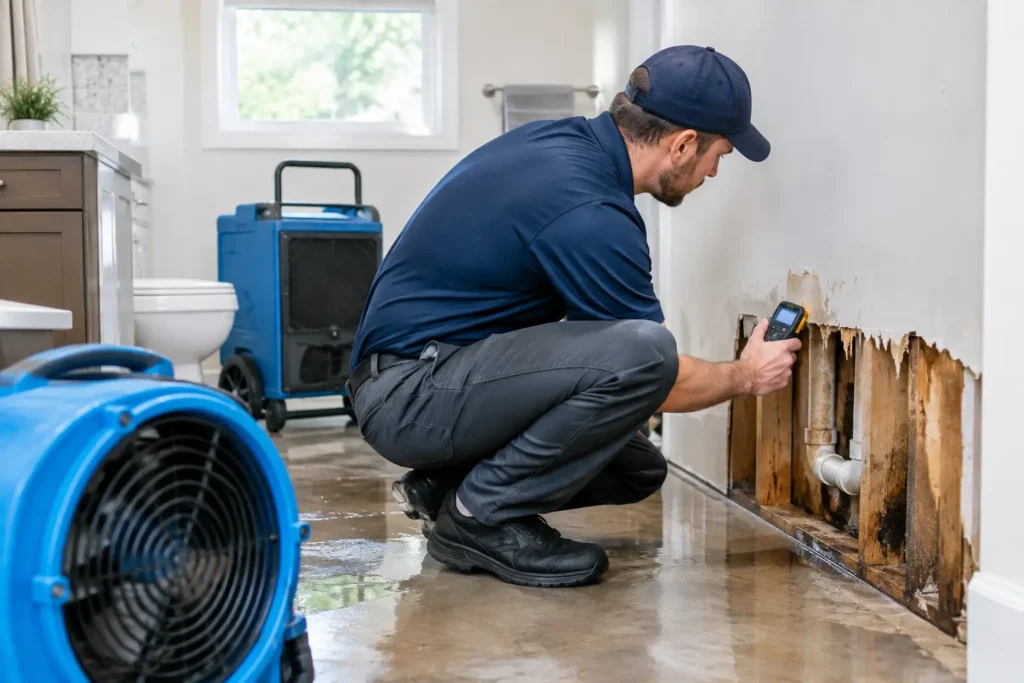
Carpet, baseboards, drywall, cabinetry, and stored belongings can absorb contaminated water quickly. Even if the visible water recedes, moisture and contamination may remain beneath flooring or inside wall cavities. This is why a surface wipe-down or fan-only approach is not enough after a confirmed sewage event.
In Southern California, homes with older sewer laterals or properties with mature landscaping can be vulnerable to line issues. Heavy rain can also place pressure on public sewer systems and reveal drainage problems that were not noticeable during dry weather. The source still needs to be identified, but your first priority is preventing further exposure and damage inside the home.
What to Do When You Suspect a Backup
Act quickly, but do not put yourself at risk. Stop using toilets, showers, sinks, dishwashers, and washing machines if water is backing up. Each additional gallon sent into the plumbing can worsen the overflow.
Keep children, pets, and anyone not involved in the response away from the affected area. Avoid walking through contaminated water, touching soaked materials, or using household equipment near standing water. If water has reached electrical outlets, appliances, or the electrical panel area, keep clear and seek immediate professional guidance.
If it is safe to do so without entering contaminated water, take a few photos or videos of the visible damage for your records. Note the time you first noticed the issue, which fixtures were affected, and whether there was rain or recent plumbing work. This information can help a plumber, restoration team, and insurance representative understand what happened.
Then contact qualified professionals. A plumber can diagnose and address the drainage or sewer-line cause. A certified restoration team can assess the contaminated areas, remove affected water and materials as needed, clean and disinfect the space, dry structural components, monitor moisture, and document the damage. These are connected but distinct parts of a safe recovery.
Why Fast Professional Cleanup Matters
Sewage water can migrate farther than the visible puddle. It can travel beneath flooring, wick into drywall, soak insulation, and affect contents stored close to the ground. Waiting can increase the number of materials that need removal and create conditions that complicate the restoration process.
A professional assessment should identify the extent of the affected area, not just what is easy to see. Proper sewage cleanup may involve containment, extraction, removal of unsalvageable porous materials, detailed cleaning, disinfection, controlled drying, and moisture verification before repairs begin. The right scope depends on where the water traveled, how long it was present, and what materials it contacted.
For homeowners already dealing with the stress of an overflow, clear communication matters. SOS Restoration provides emergency sewage cleanup and water damage mitigation support designed to move from urgent containment through drying, documentation, and restoration with as little added hassle as possible.
When to Treat the Situation as an Emergency
Call for emergency help right away when wastewater is actively entering the home, multiple drains are backing up, sewage has reached finished living areas, or the water is near electrical hazards. The same urgency applies when contaminated water has affected carpet, drywall, cabinets, or personal belongings.
Do not wait for an odor to fade or for standing water to disappear on its own. A backup that seems small can still leave contamination and hidden moisture behind. Early action gives restoration professionals a better opportunity to protect unaffected areas and limit secondary damage.
The most helpful step is simple: trust the warning signs. When drains communicate with each other, wastewater comes up instead of going down, or a sewer odor appears inside your home, stop using the plumbing and bring in experienced help before a manageable problem becomes a larger recovery.