
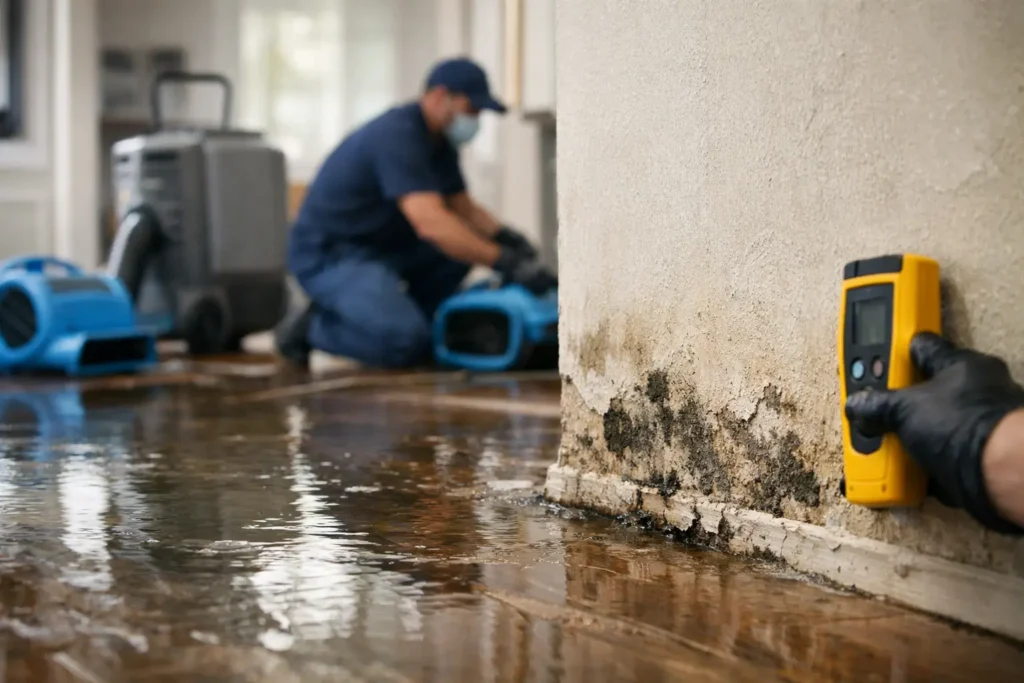
A puddle from a leaking appliance, an overflowing sink, or a storm-related intrusion can look manageable at first. But can standing water cause mold? Yes. When water remains in a home, it can soak into porous materials and create the moisture conditions mold needs to grow – often before there is a musty odor or visible spotting.
The immediate goal is not simply to remove water you can see. It is to stop the source, protect the affected area, and make sure the structure and contents dry thoroughly. That is the difference between a contained water incident and a larger restoration problem involving damaged flooring, walls, insulation, or mold.
Can Standing Water Cause Mold? Yes, and Timing Matters
Mold spores are naturally present in outdoor and indoor air. They become a concern when they find sustained moisture, a food source, and favorable temperatures. Building materials such as drywall, carpet backing, wood framing, paper-faced insulation, fabrics, and dust can all provide a surface where mold may grow after water exposure.
Standing water is especially concerning because it does not stay in one place. It can travel beneath flooring, wick up drywall, seep through baseboards, enter wall cavities, and saturate carpet padding. Even after the visible water is gone, moisture can remain trapped where household fans and surface cleaning cannot reach.
Under favorable conditions, mold growth can begin within 24 to 48 hours of a water event. The exact timeline depends on the amount of water, the material affected, ventilation, humidity, and how quickly professional drying begins. A small spill on a sealed tile floor is very different from a supply-line leak that soaks carpet and drywall overnight.
What Happens After Water Sits in a Home
During the first several hours, water spreads through the lowest and most absorbent areas. Carpet padding acts like a sponge, wood can swell, and drywall may pull moisture upward from the floor. If the source is still active, the affected area can expand quickly.
After a day or two, damp materials may begin to produce a musty odor. Flooring can feel soft or buckle, paint may bubble, and baseboards can separate from walls. These are signs that water may have moved beyond the surface.
As moisture remains, the risk shifts from ordinary water damage to secondary damage. Materials can deteriorate, hidden cavities can stay damp, and mold may develop behind finishes where it is not immediately visible. Waiting for obvious mold spots is not a safe or cost-effective strategy. By then, the affected area may be larger than the original puddle suggests.
Where Standing Water Creates the Highest Mold Risk
Any wet area deserves attention, but some materials and locations are more vulnerable than others. Carpeted rooms, wood floors, bathrooms, kitchens, laundry rooms, crawl spaces, and areas below a roof or plumbing leak commonly hold moisture out of sight.
A few situations require particular urgency. Water beneath vinyl or laminate flooring may be concealed while the underlayment stays wet. Water that reaches drywall can be absorbed above the visible waterline. Cabinets around sinks and dishwashers may trap moisture against walls and subfloors. In a garage or utility room, stored boxes, furniture, and fabrics can hold moisture long after a leak is addressed.
Southern California homes can also face water intrusion after heavy rain, plumbing failures, or appliance leaks. Dry outdoor weather does not guarantee indoor materials will dry on their own. A closed room with damp flooring or wall materials may retain moisture even when the home feels comfortable.
Signs You May Have Hidden Moisture or Mold
Visible standing water is clear evidence that action is needed. Once it is removed, homeowners should still watch for changes that point to moisture below the surface. A persistent musty smell, discoloration on walls or ceilings, warped floors, peeling paint, soft drywall, or recurring dampness near a fixture can all signal a problem.
Mold may appear as small dark, green, white, or gray spots, but color alone does not confirm the type or extent of growth. More importantly, visible growth can be only part of the issue. If water has traveled behind a wall or under flooring, a professional inspection can help determine whether materials are dry or whether further mitigation is needed.
Do not rely on smell alone. Some water-damaged areas have no noticeable odor, especially early on. Moisture meters, thermal imaging, and targeted inspection allow restoration technicians to evaluate conditions that cannot be confirmed by looking at the floor or touching a wall.
Why Removing the Puddle Is Not Always Enough
A mop, wet vacuum, or towels can help with a small, contained surface spill, but they do not confirm that the building materials underneath are dry. The concern is not just the water in the room. It is the moisture that has entered the materials that make up the room.
Professional water mitigation typically includes extraction, moisture assessment, strategic removal of unsalvageable materials when necessary, commercial drying equipment, dehumidification, and ongoing moisture monitoring. Drying equipment is positioned based on where water traveled, not just where the puddle was found. This approach helps reduce the chance that damp materials become a long-term mold source.
There is a trade-off in every water event. Removing affected materials too aggressively can create unnecessary disruption, while leaving saturated materials in place can allow damage to continue. A trained restoration team evaluates the water source, the extent of absorption, the condition of the materials, and whether they can be dried safely and effectively.
What to Do When You Find Standing Water
First, address immediate safety. If water is near outlets, electrical equipment, or a ceiling that appears to be sagging, keep people away from the area and avoid handling electrical items. If it is safe to do so, stop the water source, such as turning off the fixture supply valve or the home’s main water supply for an active plumbing leak.
Next, contact a water damage restoration professional promptly, especially when water has affected carpet, drywall, wood flooring, cabinets, multiple rooms, or an unknown area beneath a surface. Fast response helps limit how far moisture travels and gives technicians a better chance to dry and restore materials before mold takes hold.
Take photos of the affected area and damaged belongings before major cleanup or repairs begin when possible. Clear documentation can support the assessment and help with the insurance claim process. A restoration provider can also document moisture readings, affected materials, and the work completed to support a more organized recovery.
If the water came from a sewage backup or another contaminated source, treat it as an urgent sanitation concern. Keep people and pets out of the affected area and arrange for professional cleanup rather than attempting to handle contaminated water yourself.
When to Call for Professional Help Right Away
A rapid response is warranted whenever standing water has been present for more than a short period, the amount of water is significant, or the source is uncertain. It is also wise to call when water has reached porous materials, there is a musty odor, or you see changes to flooring, walls, or cabinetry.
SOS Restoration provides 24/7 emergency water damage mitigation for homeowners facing leaks, flooding, and standing water. Certified technicians can assess the damage, extract water, dry affected materials, monitor moisture, and address mold concerns when conditions require it. For homeowners already managing the stress of a water loss, having one team coordinate mitigation, restoration, and claim documentation can make the next steps much more manageable.
Standing water is a warning sign, not something to wait out. Acting quickly gives your home the best chance of drying properly, protects the materials you want to save, and helps keep a water emergency from becoming a more disruptive mold problem.