A rented fan can make a wet room feel better while moisture remains trapped where it causes the most damage. That is the central difference in professional drying versus rental equipment: water damage restoration is not simply about moving air. It is about finding hidden moisture, controlling humidity, drying materials to an appropriate standard, and documenting that the structure is actually dry.
After a burst pipe, appliance leak, roof leak, or overflow, homeowners understandably want to act fast. Removing visible water and protecting belongings are smart first steps. But relying on rental equipment alone can leave moisture in subfloors, wall cavities, cabinets, insulation, and padding – places that may not look wet until warping, odors, staining, or mold growth appear later.
Why Water Damage Needs More Than a Fan
Drying is a controlled process. Water moves from wet building materials into the air, and that moisture must then be removed from the indoor environment. If the air is already humid, a fan may circulate damp air without producing meaningful drying. In some situations, poor equipment placement can even push moisture into unaffected areas or create uneven drying.
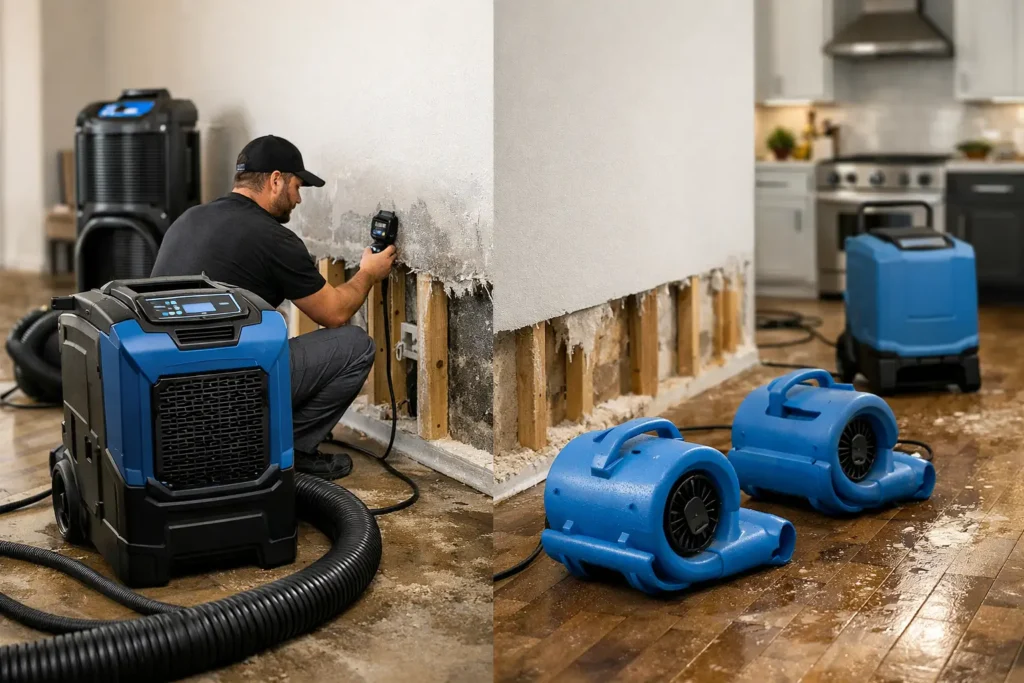
Professional restoration teams begin by assessing the water source, how long materials were exposed, and which building components are affected. They use moisture meters, thermal imaging, hygrometers, and other monitoring tools to establish a drying plan based on conditions inside the home, not on how dry a surface feels to the touch.
That assessment matters because materials dry at different rates. Drywall, hardwood, baseboards, insulation, concrete, cabinets, and carpet assemblies each hold and release water differently. A room can look normal while the materials behind the finished surface remain too wet.
Professional Drying Versus Rental Equipment: The Key Differences
Rental equipment can be useful for limited household needs, but it is not a substitute for a complete mitigation plan after significant water intrusion. The distinction is not just the size of the machines. It is the combination of equipment, measurements, training, and daily adjustment.
Equipment is selected for the actual conditions
A rental store may offer an air mover or dehumidifier, often without a full picture of the affected materials, the size of the wet area, or the humidity conditions in the home. Professional crews calculate the equipment needed for the space and situation. They may use commercial extractors to remove water from carpet and padding, high-capacity dehumidifiers to lower humidity, air movers to direct evaporation, and specialized drying systems for difficult assemblies.
Extraction is especially important. Removing liquid water before drying begins can substantially reduce the drying burden. A fan cannot replace extraction from carpet, padding, flooring, or other saturated materials.
Moisture is measured, not guessed
The most important difference is verification. Restoration technicians take moisture readings from affected materials and compare them with appropriate dry standards. They also monitor temperature and relative humidity because both influence drying progress.
These readings guide equipment placement and help determine whether the drying process is working. If a wall cavity is holding moisture or a cabinet base remains wet, the plan can be adjusted before secondary damage develops. When drying is complete, documentation provides a clear record of conditions and work performed, which can also be helpful when communicating with an insurance carrier.
Hidden moisture gets attention
Visible water is only part of the problem. Water can travel beneath laminate flooring, wick up drywall, enter wall cavities, collect under cabinets, and migrate through ceiling assemblies. A wet spot on the ceiling below a bathroom leak may represent a larger affected area above it.
Professional moisture detection helps identify these hidden conditions with as little unnecessary removal as possible. When materials cannot be dried safely or effectively, technicians can explain why targeted removal is needed and help protect the rest of the structure.
The work accounts for health and contamination risks
Not all water losses are the same. Clean water from a recently broken supply line presents different concerns than water affected by sewage, flooding, or other contaminants. The source, duration of exposure, and materials involved influence the appropriate cleanup and drying approach.
A professional team evaluates those conditions before setting equipment. This protects the home from avoidable cross-contamination and helps ensure damaged materials are handled according to recognized restoration practices. If mold is discovered during the process, it should be evaluated and addressed as part of a proper remediation plan rather than covered up or dried around.
When Rental Equipment May Be Reasonable
There are situations where a rental fan or dehumidifier may help with a small, contained moisture issue after the source has been stopped. For example, a minor spill on a hard, nonporous surface that is cleaned promptly may not require full restoration services.
The decision changes when water reaches porous materials, spreads beyond a small area, sits for an unknown amount of time, comes from a contaminated source, or affects walls, floors, cabinets, or ceilings. It also changes when there is standing water, a persistent musty smell, bubbling paint, warped flooring, or visible staining.
The risk is not that rental equipment never dries anything. The risk is assuming a room is dry because the air feels dry or the surface no longer looks wet. Without moisture monitoring, it is difficult to know whether the problem has been resolved below the surface.
What Professional Structural Drying Looks Like
A qualified restoration response follows the damage, rather than applying the same equipment setup to every home. The process often begins with stopping or isolating the water source, inspecting affected areas, and documenting damage. Crews then remove standing water and salvageable contents as needed before setting drying equipment.
During the following days, technicians return to monitor moisture levels, temperature, humidity, and equipment performance. They reposition or add equipment when readings show that materials need a different approach. This ongoing monitoring is why professional drying is active restoration work, not a one-time equipment drop-off.
Once materials reach drying goals, the team can determine the next steps. Depending on the loss, that may mean cleaning, repairs, reconstruction, or coordination with the insurance claim process. Clear records of affected areas, moisture readings, and mitigation work can make a stressful situation easier to understand.
Questions to Ask Before You Rely on Rental Equipment
Before bringing equipment into a water-damaged home, consider whether you can answer a few practical questions: Where did the water come from? How far did it travel? What materials got wet? Is there moisture beneath the flooring or behind the wall? What readings will confirm that those materials are dry?
If those answers are uncertain, a professional inspection is the safer next move. Waiting to see whether a room develops an odor or visible damage can turn a manageable loss into a larger repair project.
For homeowners facing an active leak, flooding, or water that has entered building materials, SOS Restoration provides 24/7 emergency response, moisture assessment, extraction, structural drying, and support throughout the recovery process. Fast action protects more than finishes and furnishings – it helps protect the place your family calls home.
When water damage is involved, choose the response that gives you evidence, not just airflow. A properly measured drying plan can bring clarity to a difficult moment and help your home move forward with confidence.