
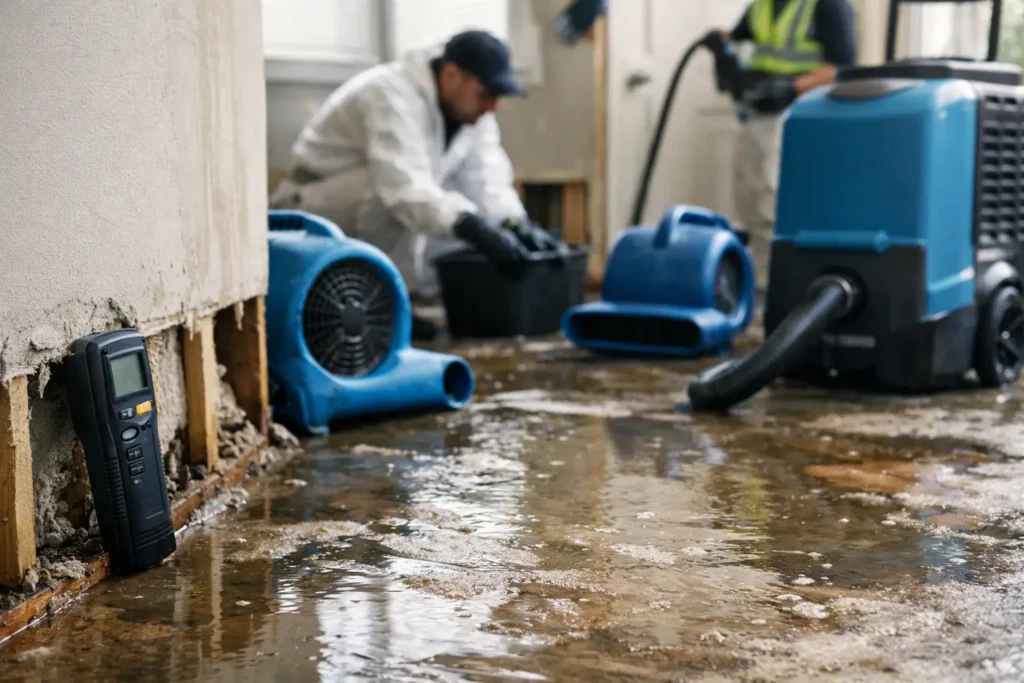
Floodwater can turn a familiar room into an unsafe space in a matter of minutes. Knowing how to handle contaminated floodwater starts with one rule: do not assume the water is clean because it looks clear. Water from outdoor flooding, sewer backups, overflowing drains, or a storm-damaged property may carry bacteria, sewage, chemicals, sharp debris, and other hazards that are not visible from the surface.
When your home has been affected, the first priority is protecting the people inside it. The second is limiting further damage without putting yourself at risk. Fast, careful action can reduce the chance of contamination spreading through your home and help make the restoration process less stressful.
Treat Unknown Floodwater as Contaminated
Restoration professionals categorize water damage based on its source and level of contamination. A clean supply-line leak may begin as relatively clean water, but it can become contaminated after sitting in a damaged home, moving through building materials, or mixing with soil and debris. Floodwater entering from outside and water from a sewer backup should be treated as contaminated from the start.
This distinction matters because contaminated water can affect much more than the visible floor. It can soak into carpet padding, drywall, insulation, baseboards, furniture, and subflooring. Porous materials may not be safely restorable after significant contamination, even if they appear dry later.
Do not wade into standing water to investigate the source or begin cleanup. Electrical hazards, hidden objects, unstable flooring, and contamination can make an otherwise simple task dangerous. Keep children, pets, and anyone not directly involved in emergency response away from the affected area.
What to Do First When Floodwater Enters Your Home
If there is an immediate threat to life, fire, or electricity, leave the area and contact emergency services. Do not enter a flooded room if water is near outlets, appliances, electrical panels, extension cords, or other electrical equipment. Only shut off electricity or water if you can do so without entering a wet or unsafe area.
Once everyone is safe, take a moment to prevent additional exposure. Close interior doors leading to unaffected rooms if doing so is safe, and avoid tracking floodwater through the home. If floodwater has entered through a broken window, roof opening, or damaged door, do not attempt a risky temporary repair during active severe weather.
Contact a qualified water damage restoration team as soon as possible. Contaminated water requires more than extraction. The affected structure needs a careful assessment, controlled removal of damaged materials when necessary, cleaning and disinfection, professional drying, and moisture monitoring. Delays can allow contamination to spread and moisture to remain behind walls or under flooring.
How to Handle Contaminated Floodwater Without Spreading It
The safest approach is to avoid direct contact and leave extraction and cleanup to trained professionals with appropriate protective equipment. If you must briefly enter an affected area for an urgent reason, such as retrieving essential medication from a dry, accessible location, avoid contact with the water and do not disturb it unnecessarily. Do not use household vacuums, fans, or mops on contaminated standing water.
A few actions can help contain the situation while you wait for help:
- Keep people and pets out of affected rooms.
- Do not run your HVAC system if water may have reached ducts, vents, or mechanical equipment.
- Avoid moving wet furniture, carpeting, or debris through clean areas of the home.
- Do not use electrical appliances in or near the flooded area.
- If it is safe from a dry location, photograph standing water, damaged finishes, and affected belongings before major cleanup begins.
Opening windows may help in some situations, but it depends on outdoor conditions. During high humidity, rain, wildfire smoke, or extreme heat, bringing outside air indoors may not support effective drying. Professional dehumidification and air movement are designed to dry materials in a controlled way without spreading contaminants into unaffected spaces.
Document Damage for Your Insurance Claim
Flood damage moves quickly, and good documentation helps create a clear record of what happened. From a safe location, take photos or video of the water source if visible, standing water levels, damaged rooms, and affected belongings. Capture wide shots of each room as well as close-ups of damaged flooring, walls, cabinets, furniture, and personal property.
Make a simple written inventory of damaged items when you can. Include the room, item, and visible condition. Do not throw away damaged belongings until you have documented them and received guidance from your insurer or restoration professional, unless the materials create an immediate safety concern.
Notify your insurance carrier promptly and keep a record of claim numbers, adjuster information, and conversations. Coverage depends on your policy and the source of the water, so avoid making assumptions about what will or will not be covered. A restoration team can provide damage documentation, moisture readings, photographs, and an organized scope of work to support the claims process.
What Usually Needs Professional Removal or Cleaning
Contaminated floodwater does not affect every material the same way. Nonporous surfaces, such as some metal, glass, and hard plastic items, may be cleaned and disinfected when they are structurally sound. However, porous materials can trap contaminants and retain moisture where it is difficult to verify complete cleanup.
Carpet and padding exposed to contaminated water often require removal. Drywall, insulation, particleboard furniture, mattresses, upholstered items, and paper goods may also need specialized evaluation or disposal depending on the extent of exposure. Hardwood flooring, cabinets, and engineered flooring can be more complicated. Some may be salvageable, while others may swell, delaminate, trap moisture, or suffer contamination below the visible surface.
This is why a visual inspection alone is not enough. Certified technicians use moisture meters, thermal imaging when appropriate, and controlled drying equipment to identify where water traveled. The goal is not simply to make a room look dry. It is to address moisture and contamination before they create longer-term damage.
Why Fast Drying Still Matters After Extraction
Removing standing water is only the first phase of recovery. Water can remain in wall cavities, beneath flooring, inside cabinets, and within structural materials. If that moisture is not properly addressed, affected areas can develop odors, material deterioration, and conditions that support mold growth.
A professional restoration process typically includes water extraction, removal of unsalvageable contaminated materials, detailed cleaning, controlled drying, dehumidification, and regular moisture monitoring. Depending on the loss, technicians may establish containment to keep affected dust and contaminants from moving into clean parts of the home.
For Southern California homeowners, a dry climate does not eliminate the need for professional drying. Moisture trapped behind walls or beneath flooring can persist even when the room feels dry to the touch. Equipment and moisture verification provide a more reliable path to a safe, lasting restoration.
When to Call for Emergency Restoration Help
Call for professional help immediately when floodwater came from outdoors, a sewer line, a toilet overflow with contamination, a drain backup, or an unknown source. The same applies when water has reached multiple rooms, soaked carpet or drywall, entered cabinets, affected electrical areas, or remained standing for more than a short time.
SOS Restoration provides 24/7 emergency response for homeowners facing contaminated water damage. A trained team can assess the affected areas, contain the loss, extract water, document damage, and create a clear plan for cleaning, drying, and rebuilding damaged spaces. That support can be especially valuable when you are trying to protect your home while managing an insurance claim and the disruption to daily life.
Flooding is stressful enough without guessing what is safe to touch, save, or remove. Keep your distance from contaminated water, protect your household, document what you can safely document, and bring in qualified restoration help early. The right response is not about rushing into cleanup – it is about taking the next safe step toward getting your home back.