
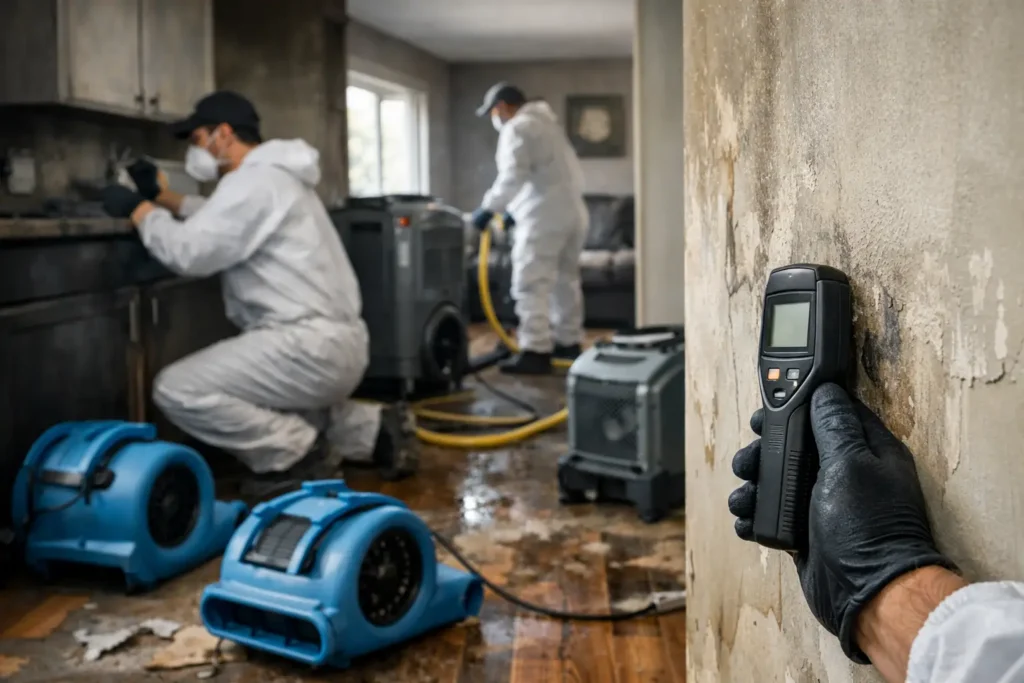
When wildfire smoke settles inside a home, the damage is not always obvious from the doorway. A light gray film on windowsills, a lingering campfire odor, or dark residue around vents can signal that smoke particles have traveled throughout the property. Smoke damage cleanup after wildfire should begin promptly because soot and odor-causing particles can continue to affect surfaces, furnishings, and indoor comfort long after the fire is out.
For Southern California homeowners, the first priority is protecting the home without creating more damage. That means documenting conditions, limiting unnecessary contact with contaminated surfaces, and bringing in qualified restoration help when smoke has entered the building.
The First 24 Hours After Wildfire Smoke Exposure
Before cleaning, take clear photos and videos of affected rooms, exterior surfaces, contents, vents, and visible residue. Photograph damaged belongings before moving or discarding them. This documentation can help establish the condition of the property and support communication with your insurance carrier.
If officials have issued evacuation, re-entry, or air-quality instructions, follow them before returning to the property. Once it is safe to enter, open doors or windows only when outdoor air conditions allow. Running the HVAC system without inspection can circulate particles already present in ductwork or on filters.
Avoid wiping soot with dry rags, sweeping affected floors, or using a household vacuum. These actions can smear oily residue, scratch finished surfaces, and push fine particles back into the air. Do not attempt to wash walls or upholstered furniture with random household products before the materials have been evaluated. Smoke residue reacts differently depending on what burned, how long the building was exposed, and whether moisture was involved during firefighting efforts.
Why Wildfire Smoke Can Affect More Than One Room
Wildfire smoke is made up of very small particles and gases that can enter through gaps around doors and windows, attic vents, open garage doors, damaged roofing, and HVAC systems. It does not stay in one place. Air movement can carry residue into bedrooms, closets, cabinets, insulation, electronics, and soft materials such as carpet, drapes, and upholstery.
The odor can be equally frustrating. Smoke odor is not simply “in the air.” Odor-causing particles may be embedded in porous materials or trapped in spaces behind walls, beneath flooring, and inside ventilation components. Covering the smell with fragrance products does not remove the source. In some cases, it makes it harder to tell whether proper cleaning has actually taken place.
The right scope of work depends on the level of exposure. A home located several miles from a wildfire may need detailed surface cleaning and HVAC attention, while a property closer to the burn area may require contents cleaning, sealing of affected structural materials, removal of unsalvageable materials, and reconstruction. A professional inspection helps identify the difference before unnecessary work begins.
Smoke Damage Cleanup After Wildfire: The Professional Process
A qualified restoration team starts with a detailed assessment rather than a one-size-fits-all cleaning plan. Technicians inspect visible soot patterns, affected rooms, air pathways, building materials, contents, and potential water damage from suppression efforts. They also identify materials that can be cleaned safely and those that may need removal or specialized restoration.
Containment and detailed cleaning
The goal is to keep residue from spreading while cleaning begins. Depending on the property, technicians may establish contained work areas and use specialized filtration equipment. Dry soot removal methods are often used before wet cleaning because adding moisture too early can drive residue deeper into certain surfaces.
Walls, ceilings, trim, floors, fixtures, and hard contents each require the right cleaning approach. Smoke residue can be acidic and may discolor, corrode, or stain materials over time. Prompt, careful cleaning helps preserve surfaces that might otherwise need replacement.
Contents, textiles, and electronics
Belongings require individual attention. Clothing, linens, artwork, documents, furniture, and electronics may all respond differently to smoke exposure. A restoration team can sort contents for on-site cleaning, specialized treatment, storage, or documentation as needed.
Electronics deserve particular caution. Even when devices appear to work, residue can settle in vents and internal components. Avoid repeatedly powering on smoke-exposed equipment until it has been evaluated, especially if there is visible soot or a strong odor nearby.
HVAC and odor-source treatment
An HVAC system can spread smoke particles through the home if it ran during the wildfire event. Filters, returns, supply vents, and accessible system components should be assessed as part of the restoration plan. Simply replacing a filter may not address contamination in every situation.
Once physical residue has been removed, odor treatment can address particles that remain in affected materials and concealed spaces. Effective odor control is tied to source removal. It should not be treated as a quick finishing spray.
What Homeowners Should Do and Avoid
While waiting for a restoration inspection, a few careful actions can help protect the property and make the process easier:
- Keep children, pets, and unnecessary foot traffic away from visibly affected rooms.
- Take photos of residue, damaged contents, and affected exterior areas before cleaning or moving items.
- Turn off the HVAC system if you suspect it pulled in smoke, unless doing so would create another safety concern.
- Place clean clothing, important papers, and unaffected valuables in sealed containers away from contaminated areas.
- Save receipts for reasonable emergency expenses and keep notes on conversations with your insurer and restoration provider.
Avoid using fans to blow odor out of the house if they will stir settled soot. Do not paint over smoke-stained surfaces before proper cleaning and preparation. Paint can temporarily hide staining while odor and residue remain beneath it. Also, do not throw away damaged belongings until they have been documented and your insurer has had an opportunity to review the loss.
Protecting Your Insurance Claim Without Adding Stress
Wildfire smoke claims can involve visible damage, hidden contamination, contents losses, and repairs that are not immediately apparent. Clear documentation and professional estimates can make the conversation more manageable.
Report the loss to your insurance carrier as soon as practical and ask about the next steps for emergency mitigation. Keep a simple claim file with your claim number, adjuster contact information, photographs, a written inventory of affected belongings, and copies of any estimates or invoices.
A restoration company can document the condition of the property, explain the recommended scope of cleaning and repair, and communicate with the insurance process when requested. Insurance coverage and claim decisions ultimately depend on the policy and carrier, but organized records help prevent avoidable confusion during an already stressful time.
When to Call for Professional Wildfire Smoke Cleanup
Professional help is especially valuable when there is visible soot, persistent odor, smoke exposure in multiple rooms, contamination around vents, damage to furnishings, or any concern that the home also experienced water intrusion. It is also a practical choice for homeowners who need a clear assessment before filing or advancing an insurance claim.
SOS Restoration provides 24/7 emergency response for wildfire-related smoke damage, with certified technicians who can assess conditions, contain affected areas, clean salvageable materials, address odor sources, and support the path from emergency cleanup to repairs. For homes across Southern California, fast action can reduce the chance that smoke residue becomes a larger restoration project.
Your home does not need to show dramatic fire damage to deserve professional attention. If the smoke smell remains after airing out the space, or residue keeps appearing on surfaces, treat that as a reason to get a clear inspection and a practical plan for restoring a clean, comfortable home.