
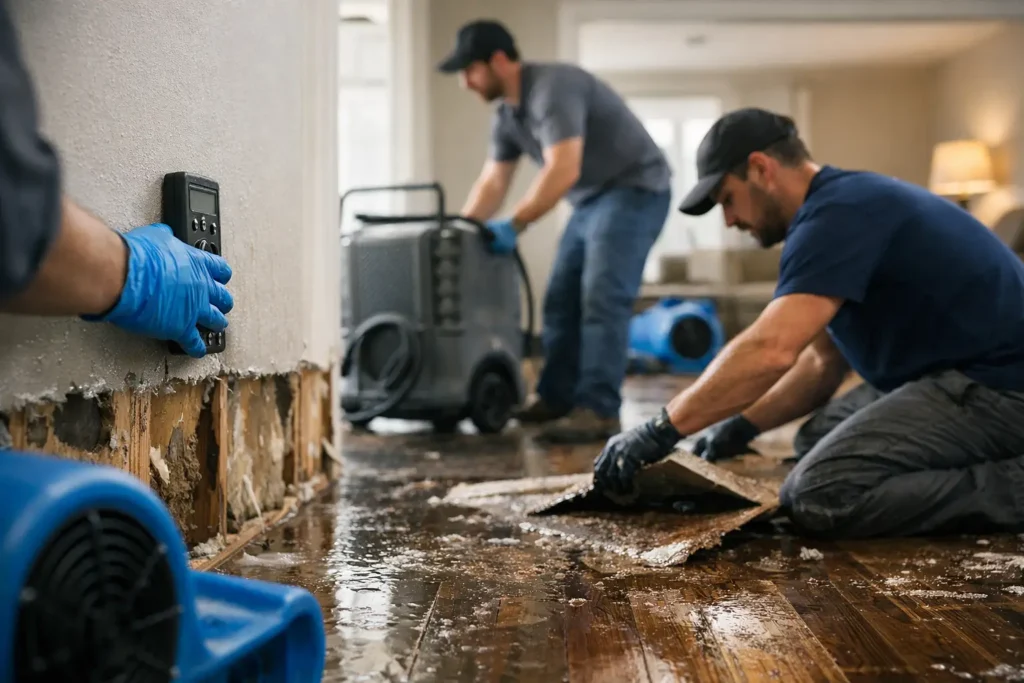
A few inches of water can change a home quickly. Flooring swells, drywall absorbs moisture, furniture wicks water upward, and hidden dampness can remain long after the visible puddles are gone. Effective flood cleanup is about more than removing water. It is about protecting your home, your belongings, and the air your family breathes while preventing a manageable loss from becoming a larger restoration project.
The first hours matter most. Whether water entered through a burst pipe, appliance leak, roof opening, slab leak, or storm-related flooding, a fast, organized response gives materials the best chance of being saved.
Start With Safety Before Flood Cleanup
Do not walk into standing water until you know the area is safe. If water is near electrical outlets, appliances, or the electrical panel, stay out of the affected space and contact a qualified professional. If there is a possibility that sewage, outdoor floodwater, or other contamination is present, avoid contact entirely. This type of loss needs professional containment, cleaning, and sanitation.
If it is safe to do so, stop the source of the water. Shut off the home’s main water supply for a plumbing failure, turn off an appliance valve, or place a temporary container beneath an active drip. Do not attempt roof work during rain or unsafe weather conditions.
Move people, pets, and dry belongings away from the affected area. Rugs, books, electronics, and upholstered furniture can continue absorbing water even after the source is controlled. Take clear photos and videos before moving items when possible. Documentation can be useful when reporting the loss to your insurance carrier.
The First 24 Hours Set the Direction of Recovery
Water does not stay where it first appears. It can travel below flooring, behind baseboards, through wall cavities, and into adjacent rooms. A wet spot on a ceiling may indicate moisture has spread across a much larger area above it. That is why extracting visible water is necessary, but it is not the full job.
Professional flood cleanup begins with an assessment of the water source, the materials affected, and the potential for contamination. Technicians use moisture meters and thermal imaging tools to identify damp areas that are not obvious from the surface. This helps determine what can be dried in place, what needs removal, and where controlled drying equipment should be positioned.
The goal is to return affected structural materials to an appropriate dry standard, not simply make the room look dry. Carpet may feel dry on top while its pad and subfloor remain wet. A wall can look normal while insulation behind it holds moisture. Missing these areas can lead to odors, material deterioration, and mold growth later.
Remove Water Quickly, but Avoid Spreading It
Extraction is often the most urgent step. Specialized pumps and extraction equipment remove standing water from floors, carpets, and other affected surfaces far more effectively than household wet vacuums or towels. Faster extraction usually reduces the amount of water absorbed by building materials.
Avoid carrying saturated items through dry parts of the home if possible. Water can spread through foot traffic and drip from furniture, creating new areas that require attention. If belongings need to be moved, place them in a dry, well-ventilated area and separate wet items from unaffected ones.
For clean-water losses caught immediately, homeowners may be able to remove small personal items and promote airflow while help is on the way. But fans alone are not a substitute for professional drying. In Southern California, a warm day can make surfaces seem dry while moisture remains trapped in materials below.
Drying Requires Measurement, Not Guesswork
After extraction, restoration teams set up air movers and commercial dehumidifiers to control evaporation and remove moisture from the air. The placement of this equipment matters. Drying a hardwood floor, a carpeted room, and a wall cavity each require a different approach.
Technicians should monitor moisture levels throughout the process, adjusting equipment as materials dry. This step protects against both under-drying and unnecessary demolition. Some materials can be saved when drying starts quickly and is carefully managed. Others, especially heavily saturated insulation, swollen particleboard, or contaminated porous materials, may need to be removed for a safe, lasting result.
It depends on the source of water, how long it sat, and which materials were affected. A clean supply-line leak discovered within an hour presents different restoration options than rainwater that entered a home for several days or a sewage backup. A professional inspection can clarify the right path without making assumptions based on appearances.
When Floodwater Is Contaminated
Not all water losses should be handled the same way. Water from a clean plumbing source can become contaminated if it remains in the home long enough. Water from backed-up drains, toilets, outdoor flooding, or unknown sources should be treated with much greater caution.
Contaminated water can affect flooring, drywall, insulation, contents, and the subfloor beneath them. Professional crews use containment measures, appropriate protective equipment, and detailed cleaning procedures to prevent contaminants from spreading to unaffected areas. In many cases, porous materials exposed to sewage or significant floodwater cannot be safely restored and need removal.
Do not rely on surface disinfectant to solve a contamination problem. Effective cleanup requires addressing the materials and hidden spaces the water reached, then drying the structure thoroughly.
Protect Belongings Without Delaying Structural Drying
Personal belongings are often the most stressful part of a flood loss. Start by separating dry items from wet ones and documenting damaged contents. Avoid stacking wet books, photos, clothing, or textiles. Separate layers gently so air can circulate, but do not force apart items that may tear or smear.
Electronics should remain unplugged and should not be powered on after exposure to water. Wood furniture may be salvageable depending on construction, finish, and duration of exposure, while particleboard furniture often breaks down quickly once saturated. A restoration professional can help identify contents that may be cleaned, dried, or moved to protect them during the structural restoration process.
The trade-off is speed versus handling. It is understandable to want everything moved immediately, but rushing through a wet area without a plan can spread water, damage fragile contents, or interfere with insurance documentation. Prioritize safety, photographs, and removal from active moisture.
Insurance Documentation Can Make the Process Easier
Contact your insurance carrier as soon as practical after the emergency is stabilized. Keep a record of the date and time the loss was discovered, the apparent source, photos of affected areas, and receipts for reasonable emergency expenses. Do not discard damaged materials until they have been documented and your carrier has provided direction, unless removal is necessary to protect health or prevent additional damage.
A restoration company can provide moisture readings, photos, drying records, and a detailed scope of work that helps show what occurred and what was required to stabilize the property. Insurance policies and coverage decisions vary, so clear documentation is valuable even when the cause of loss seems straightforward.
SOS Restoration helps homeowners through the practical side of this process, from emergency water extraction and moisture monitoring to repair planning and insurance-claim documentation. The focus is to reduce disruption while keeping you informed about what is happening inside your home.
Signs Your Home May Still Need Professional Attention
Sometimes a flood appears minor at first, especially when water is limited to one room. Watch for damp baseboards, cupping or buckling floors, peeling paint, soft drywall, persistent musty odors, stained ceilings, or humidity that remains unusually high after the area has been cleaned. These may indicate moisture is still present behind finished surfaces.
Do not wait for visible mold or major material failure before asking for an inspection. Early moisture detection can allow targeted drying and limited repairs instead of a more extensive reconstruction later. This is particularly useful for homes with wood flooring, older plumbing, enclosed wall cavities, or rooms where water traveled beneath cabinets or built-in fixtures.
Call for Help When the Scope Is More Than Surface Water
A mop can handle a small spill. Flooding, standing water, wet walls or flooring, contaminated water, and water that has been present for more than a short time require a more complete response. A 24/7 restoration team can assess the source, extract water, establish drying conditions, monitor progress, and explain what needs to happen next.
When water enters your home, focus first on safety and stopping the source. Then let measured, professional flood cleanup protect the parts of your property you cannot see yet. Quick action now can preserve more of your home and give your family a clearer path back to normal.