
- ✓ Open 24 hours, 7 days a week
- ✓ Serving Los Angeles County, Orange County, Riverside County and 195 more areas
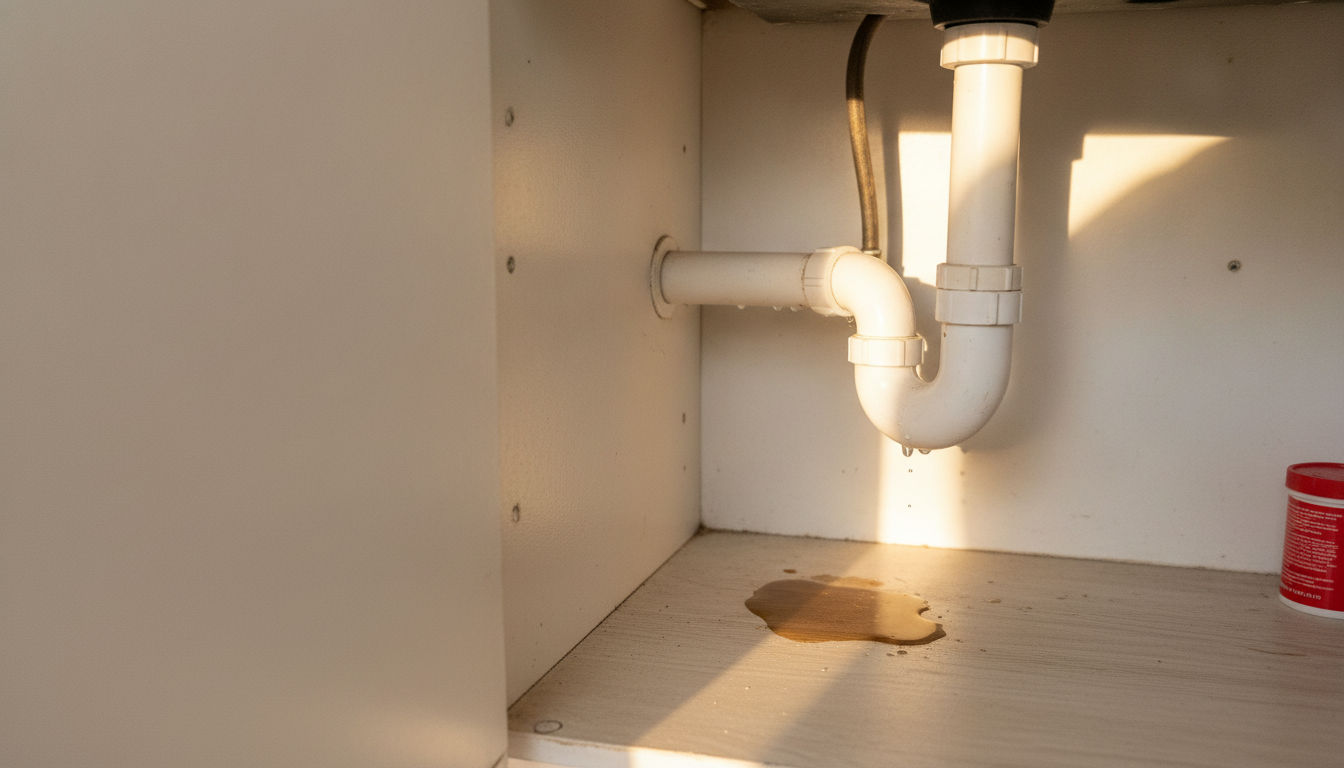
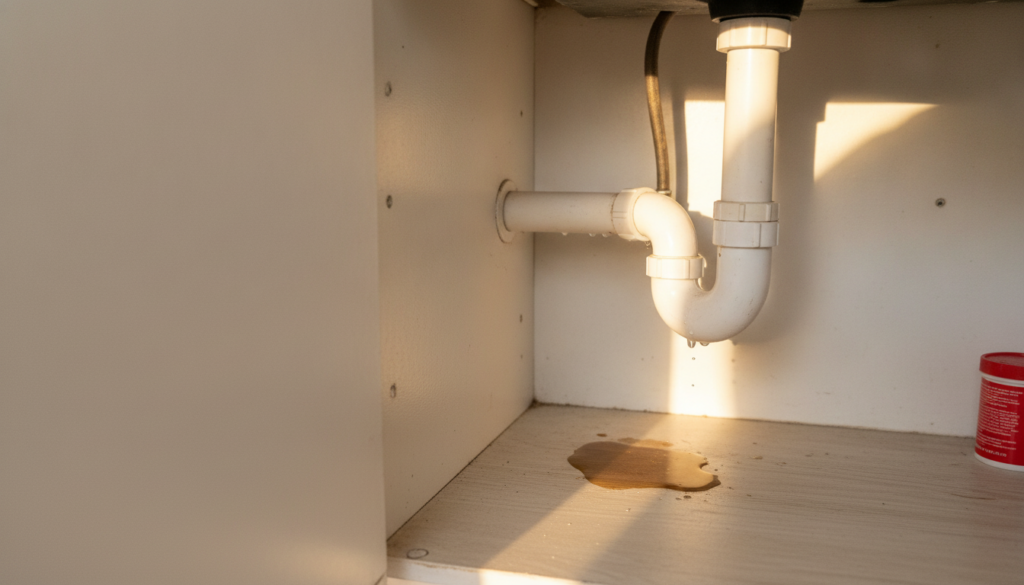
Make a brief visual check part of finishing any water-related task: before leaving, look at the surrounding floor and surfaces for unexpected water. If something looks different, pause, note what you see, and seek help rather than treating the check itself as a solution.
1. Attach the check to something you already do
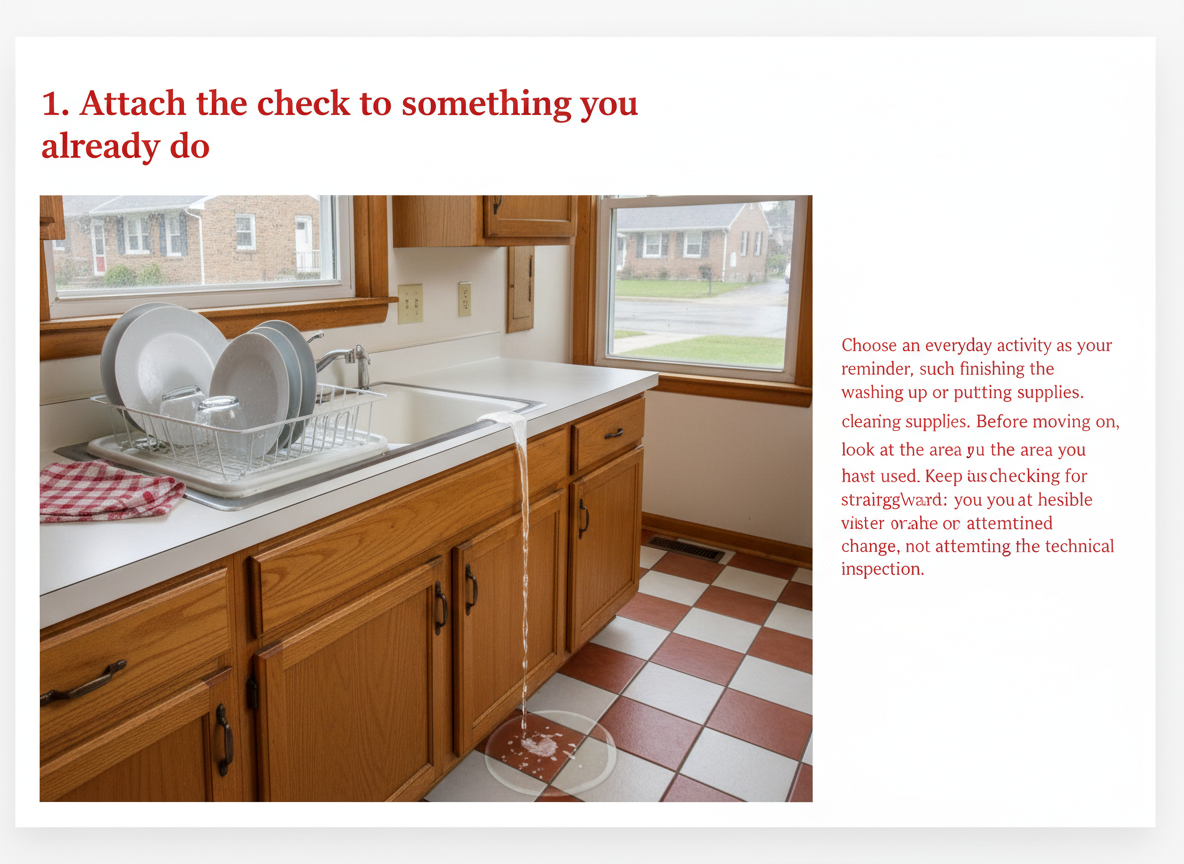
Choose an everyday activity as your reminder, such as finishing the washing up or putting away cleaning supplies. Before moving on, look at the area you have just used. Keep the habit straightforward: you are checking for visible water or an unexplained change, not attempting a technical inspection.
Give your attention to the property itself. Look at the floor beside the area you used, the surface immediately underneath it where accessible, and any visible water you were not expecting. Avoid dismantling anything or reaching into an unfamiliar space just to complete your check.
Choose a routine you are willing to repeat, rather than setting yourself an elaborate inspection schedule. The practical takeaway is a simple instruction: finish the task, take a look, and decide whether anything needs attention. Do not turn that instruction into a promise that a quick glance will prevent every water problem.
2. Use a clear view, not a technical diagnosis
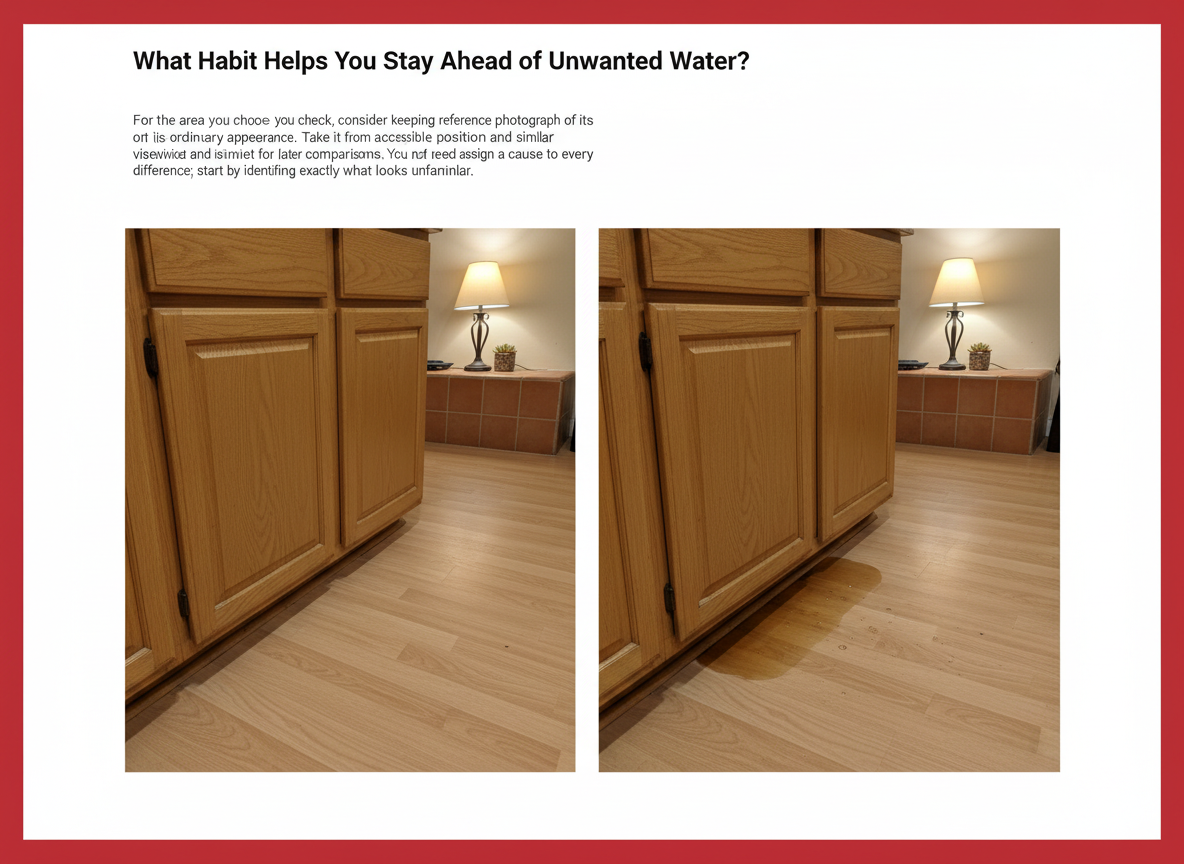
For the area you choose to check, consider keeping a reference photograph of its ordinary appearance. Take it from an accessible position and use a similar viewpoint for later comparisons. You do not need to assign a cause to every difference; start by identifying exactly what looks unfamiliar.
Describe observations in ordinary language. “Water on the floor beside the cabinet” is a more direct account than a guess about what has failed. Note whether you saw a puddle, droplets, or a change in the appearance of a surface, and distinguish those observations from anything you suspect.
Resist the urge to label the whole situation from a single view. Instead, prepare questions: Where should I avoid going? Does this need water extraction? What should happen next? Ask for guidance about your particular situation rather than treating your visual check as an assessment of the property.
3. Decide in advance what you will do if you find water
Set yourself a simple rule: unexpected water deserves a deliberate next step. Do not make finishing your routine the priority once you notice something that concerns you. Pause the task and decide whether you need professional help.
Use this short sequence to organise your response—not as a cleanup procedure:
Pause
Stop the routine activity rather than continuing as though nothing has changed.
Observe from an accessible position
Note the visible water and surrounding condition without entering an area you are unsure about.
Record what you know
Write down where you noticed it, when you noticed it, and what you were doing beforehand.
Ask for guidance
Describe the situation and ask what steps are appropriate before attempting unfamiliar work.
Avoid setting an arbitrary threshold for yourself, such as waiting for a puddle to reach a particular size. When you are uncertain, make that uncertainty part of your question. You do not need to settle on a diagnosis before asking about water extraction.
4. Ask about extraction without assuming the whole scope
SOS Restoration offers water extraction, water damage restoration, flood cleanup, and structural drying. When you contact the business, explain the visible condition first, then ask which services are relevant to your situation. Do not turn the service list into a self-selected treatment plan.
Keep the request specific: “I found water on this floor; can you help me understand the next step?” Ask what information to provide and what to avoid doing while arranging help. If you are concerned about other affected areas, mention those separately rather than assuming they are included in the same task.
SOS Restoration also offers contents cleaning and restoration and commercial damage restoration. If belongings or a commercial property are part of your concern, include that context in your enquiry. Ask about the scope of assistance you need rather than assuming every service applies.
5. Prepare a useful handover
Before calling, gather your observations into a short account. Include the location within the property, the time you first noticed the water, and any relevant activity immediately beforehand. Clearly separate what you personally observed from what someone else reported.
If you can take photographs from an accessible position, use a wider view for context and a closer view of the visible condition. Do not move into an area you are uncomfortable entering just to obtain a better picture. Ask how to share photographs before sending them.
Finish your enquiry with practical questions about access, the next step, and anything you should leave alone. SOS Restoration is open 24 hours a day, seven days a week. Ask about availability for your situation rather than assuming an arrival time.
Frequently asked questions
What is the simplest habit to start with?
Before leaving an area where you have used water, look at the surrounding floor and visible surfaces. If you notice unexpected water, pause and decide what attention it needs rather than automatically continuing your routine.
Should I identify the source before asking for help?
Describe what you know without guessing. Give the location, your observations, and when you noticed them, then ask what further information would be useful.
Does SOS Restoration offer services beyond water extraction?
Yes. Its services include water damage restoration, structural drying, flood cleanup, and contents cleaning and restoration. Ask which services are relevant to the condition you describe.
Can I contact SOS Restoration outside normal business hours?
Yes. SOS Restoration is open 24 hours a day, every day of the week.
For help with water extraction, call SOS Restoration at 888-817-1650.
Related services
Areas we serve
- ● Los Angeles County
- ● Orange County
- ● Riverside County
- ● San Bernardino County
- ● Ventura County
- ● Santa Barbara County
- ● Agoura Hills
- ● Alhambra
- ● Arcadia
- ● Artesia
- ● Avalon
- ● Azusa
- ● Baldwin Park
- ● Bell
- ● Bell Gardens
- ● Bellflower
- ● Beverly Hills
- ● Bradbury
- ● Burbank
- ● Calabasas
- ● Carson
- ● Cerritos
- ● Claremont
- ● Commerce
- ● Compton
- ● Covina
- ● Cudahy
- ● Culver City
- ● Diamond Bar
- ● Downey
- ● Duarte
- ● El Monte
- ● El Segundo
- ● Gardena
- ● Glendale
- ● Glendora
- ● Hawaiian Gardens
- ● Hawthorne
- ● Hermosa Beach
- ● Hidden Hills
- ● Huntington Park
- ● Industry
- ● Inglewood
- ● Irwindale
- ● La Cañada Flintridge
- ● La Habra Heights
- ● La Mirada
- ● La Puente
- ● La Verne
- ● Lakewood
- ● Lancaster
- ● Lawndale
- ● Lomita
- ● Long Beach
- ● Los Angeles
- ● Lynwood
- ● Malibu
- ● Manhattan Beach
- ● Maywood
- ● Monrovia