
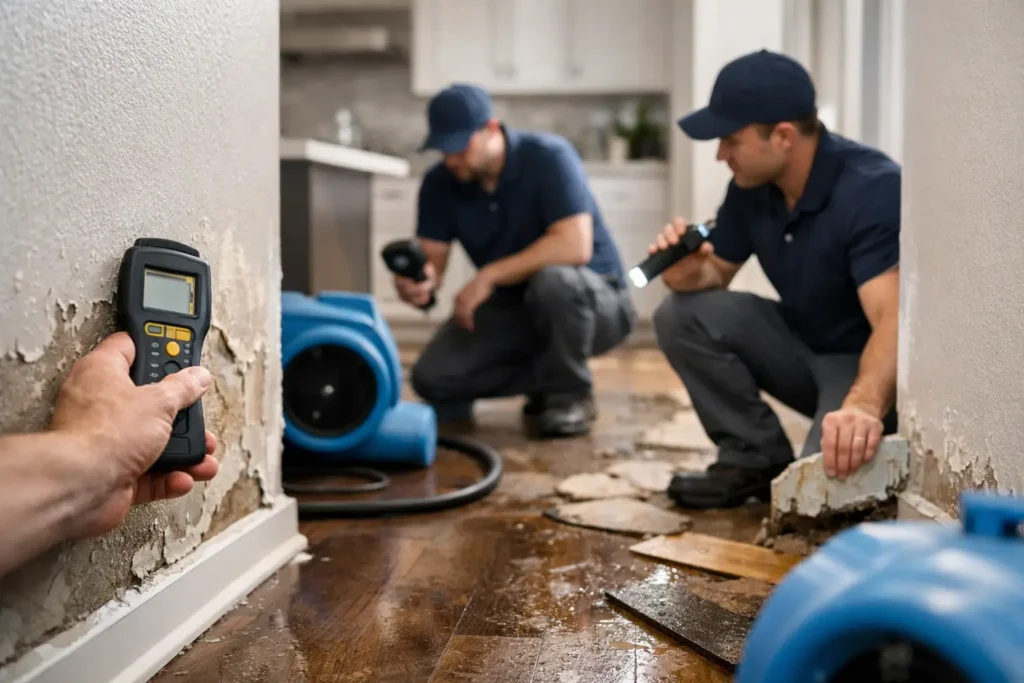
A wet ceiling spot after last night’s rain, a dishwasher leak beneath the cabinets, or water pooling near a water heater can feel like a problem you should handle later. Often, later is when the damage becomes more expensive and disruptive. A free water damage inspection gives you a clear picture of what is wet, what may be at risk, and what should happen next before moisture has more time to travel.
For Southern California homeowners, the visible water is only part of the concern. Water can move under flooring, behind baseboards, through wall cavities, and into insulation long after the source is shut off. A professional inspection helps separate a small, contained issue from one that needs immediate extraction, drying, cleaning, or repair.
When to Schedule a Free Water Damage Inspection
If there is standing water, an active burst pipe, sewage backup, or water entering the home during a storm, treat the situation as an emergency. Shut off the water source if it is safe to do so, avoid electrical hazards, and contact a restoration professional right away. Fast action can limit how far water reaches into building materials and belongings.
An inspection is also useful when the signs are quieter. You may notice a musty smell in one room, peeling paint, warped flooring, bubbling drywall, damp carpet, discoloration around a window, or a utility bill that suddenly climbs without explanation. These symptoms do not always mean a major loss, but they deserve a careful look. Small leaks can create persistent moisture conditions that damage materials over time.
A free inspection is especially helpful after a leak has been repaired. Fixing the source stops new water from entering, but it does not confirm that the surrounding area is dry. Drying and moisture verification are separate steps, and both matter for a lasting recovery.
What Happens During a Water Damage Inspection?
The goal is not to guess from a stain on the wall. A qualified technician evaluates the affected area, traces likely water movement, and looks for conditions that could lead to further property damage or indoor contamination.
The process typically begins with questions about what happened: when you first noticed the issue, where the water came from, whether the water is still active, and which rooms may be affected. That history helps direct the inspection. For example, clean water from a supply line calls for a different response than water from a drain backup or outdoor flooding.
Next comes a visual assessment of visible surfaces and nearby rooms. Technicians check ceilings, walls, floors, cabinets, trim, carpet, appliances, and accessible plumbing areas for signs of wetness or material damage. They may also inspect areas below the source, because water follows gravity and can travel farther than expected.
Moisture Detection Goes Beyond What You Can See
Professional moisture meters and thermal imaging equipment can help identify wet materials that look normal from the outside. A wall may feel dry to the touch while its insulation, framing, or lower drywall remains damp. Likewise, water can sit beneath vinyl flooring or migrate under cabinets without creating an immediate puddle.
These tools are useful, but they are not a substitute for judgment. Readings need to be interpreted alongside the type of material, the location of the leak, the time since the loss, and the condition of surrounding surfaces. The purpose is to establish the affected area accurately, not to remove materials unnecessarily.
The Inspection Identifies the Right Scope of Work
After evaluating the area, the technician can explain whether the situation may require water extraction, controlled drying, dehumidification, cleaning, material removal, mold assessment, or reconstruction support. Some losses can be addressed with targeted drying and monitoring. Others require a broader response because water has reached porous materials, multiple rooms, or contaminated areas.
You should receive straightforward guidance about urgency, safety considerations, and the recommended next steps. In an emergency, mitigation often needs to begin immediately to reduce secondary damage. For a slow, limited leak, you may have more time to review the findings and plan repairs. It depends on the source of water, how long materials were wet, and how far the moisture spread.
Why Early Inspection Can Protect Your Home
Water does not stay neatly where it lands. A leak under an upstairs sink can affect the vanity, subfloor, ceiling below, wall insulation, and adjacent flooring. Water inside a wall can weaken drywall, cause wood materials to swell, and create conditions where mold may develop if moisture remains.
The sooner affected materials are identified, the more options there may be for drying and preserving them. Waiting can turn a localized issue into damage that involves flooring, cabinets, walls, or personal contents. Early assessment also provides documentation of the visible conditions, moisture readings, and recommended work, which can be valuable when you need to communicate with your insurance carrier.
Insurance decisions vary by policy and cause of loss, so no restoration company can promise coverage. Still, organized photos, notes, and a professional damage assessment can make the claims process less confusing. SOS Restoration can help homeowners document the loss and communicate the restoration scope clearly while they work through their claim.
What You Can Do Before the Technician Arrives
Your first priority is safety. If water is near outlets, appliances, or your electrical panel, do not walk through the area or attempt to move electrical equipment. If you can safely stop the source at a shutoff valve, do so. For an active roof leak or storm intrusion, move people and valuable items away from the affected area rather than placing yourself at risk.
You can take a few photos or short videos of the source and visible damage before cleanup begins. If water is clean and the area is safe, remove small belongings from wet floors and place aluminum foil or wood blocks under furniture legs to help prevent staining. Avoid using household fans on a contaminated water loss, and do not assume a surface is dry just because the standing water is gone.
Try not to pull up flooring, open walls, or discard damaged materials before the inspection unless a professional advises it or an immediate safety issue requires action. Those materials can help show the path of water and the extent of damage. More importantly, improper removal can disturb contamination or make the drying plan harder to evaluate.
Questions to Ask During Your Inspection
A good inspection should leave you with more than a vague recommendation. Ask where moisture was found, what materials are affected, whether the water source has been fully controlled, and how the team will verify drying. You can also ask which belongings need attention, what work must begin quickly, and what documentation will be provided for your records.
If mold is visible or a persistent odor is present, ask whether additional assessment or remediation is recommended. Mold concerns should be evaluated carefully because the correct response depends on the amount of affected material, moisture conditions, and the source of the problem. The underlying water issue must be corrected for remediation to hold.
Clear answers matter when your home is disrupted. You should understand the plan, the expected sequence of work, and who will keep you informed as conditions change.
Free Inspection Does Not Mean a Rushed Inspection
The value of a free inspection is the chance to make an informed decision without delaying the assessment simply because you are unsure what the problem will involve. It should provide a real evaluation of the situation, not pressure to commit before you understand the work.
For urgent losses, speed and thoroughness need to work together. Water extraction may need to start quickly, while moisture monitoring continues over the following days to confirm materials are reaching an appropriate drying condition. A careful team explains what it finds, protects the affected areas, and adjusts the plan when readings show that more attention is needed.
If you see water, smell dampness, or suspect a hidden leak, getting answers now can protect both your property and your peace of mind. Schedule a free inspection so you can replace uncertainty with a practical plan for moving your home toward a clean, dry, lasting recovery.