
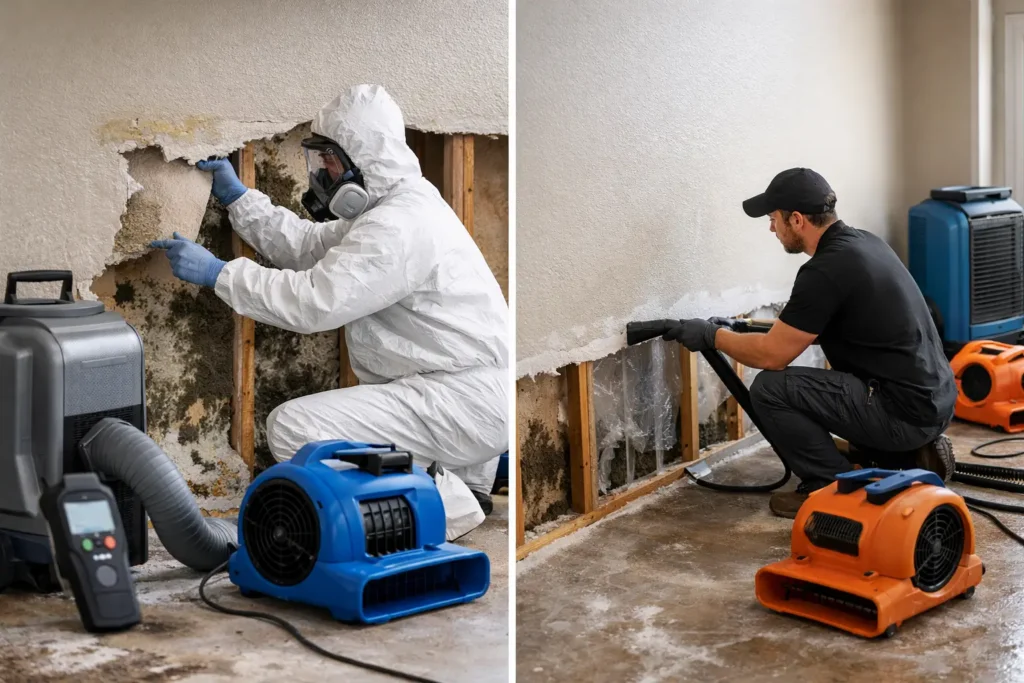
A dark patch behind a bathroom vanity or a musty odor after a leak can make any homeowner worry about what is happening inside the walls. When comparing mold remediation vs mold removal, the terms may sound interchangeable, but they describe different expectations. Understanding that difference can help you choose a response that protects your property, addresses the source of the damage, and prevents a small moisture issue from becoming a larger restoration project.
Mold Remediation vs Mold Removal: The Core Difference
Mold removal generally refers to physically taking visible mold-contaminated materials out of a home. Depending on the condition of the affected area, that may include removing damaged drywall, insulation, carpeting, baseboards, or other porous materials that cannot be safely cleaned and restored.
Mold remediation is the broader, more complete process. It includes identifying the moisture source, containing the affected area, removing or cleaning contaminated materials as appropriate, treating remaining surfaces, drying the structure, and verifying that moisture conditions have been corrected. The goal is not simply to make mold disappear from sight. It is to return the affected area to a normal, controlled condition where mold is not likely to continue growing.
That distinction matters because mold is naturally present in outdoor and indoor environments. A restoration team cannot promise to remove every microscopic mold spore from a property. What professionals can do is remove active growth and contaminated materials, reduce the spread of particles during the work, and eliminate the water or humidity conditions that allowed the growth to take hold.
Why “Removal” Alone May Not Solve the Problem
If a plumber repairs a leaking pipe but water has already soaked into the wall cavity, the visible stain is only part of the damage. Moisture may remain in framing, insulation, subflooring, or drywall long after the surface feels dry. Removing a section of stained drywall without properly drying and inspecting the surrounding materials can leave the underlying condition unresolved.
The same issue can occur after roof leaks, appliance overflows, slab leaks, window intrusion, or flooding. Southern California homes can face mold concerns after seasonal storms, hidden plumbing failures, and humidity trapped in poorly ventilated spaces. A musty smell often signals that moisture has lingered where it should not.
Effective remediation begins with answering a practical question: where is the water coming from, and has it truly stopped? Once the source is corrected, technicians use moisture meters, thermal imaging when appropriate, air movement, dehumidification, and ongoing moisture monitoring to dry materials to an acceptable condition. This is the work that helps limit repeat mold growth.
What Professional Mold Remediation Usually Includes
The scope of a remediation project depends on how much area is affected, what materials are involved, and whether the moisture source has been active for a long time. A qualified restoration provider starts with an inspection rather than assuming every situation requires the same solution.
A typical professional process includes several connected stages:
- Assessment and moisture investigation: Technicians inspect visible conditions and look for wet or affected materials beyond the obvious area. They identify likely moisture pathways and document damage for the property owner.
- Containment: When needed, the work area is isolated to help keep disturbed particles from spreading to unaffected rooms. This may involve protective barriers and controlled airflow equipment.
- Removal and cleaning: Non-salvageable porous materials may be removed. Structural surfaces and items that can be restored are cleaned using methods appropriate to the material and level of contamination.
- Drying and monitoring: Air movers and dehumidifiers support structural drying, while moisture readings help confirm that materials are moving toward dry standards.
- Repair and restoration: After remediation is complete, the damaged area may need reconstruction, including drywall replacement, painting, flooring repair, or other work to return the space to normal use.
This is why the phrase “mold removal” can be incomplete. Removal may be one necessary step within remediation, but it does not describe the full moisture-control and recovery process.
When Materials Can Be Cleaned and When They May Need Removal
Not every mold-affected material requires demolition. Nonporous or semi-porous surfaces, such as certain metal, tile, glass, or sealed surfaces, can sometimes be professionally cleaned and restored if the surrounding moisture issue has been addressed.
Porous materials are different. Drywall, carpet padding, insulation, ceiling tiles, and unfinished wood can absorb water and hold contamination below the surface. If those materials are significantly affected or cannot be properly dried and cleaned, removing them may be the safer, more reliable choice.
The trade-off is straightforward. Preserving materials can reduce reconstruction needs when they are genuinely salvageable. But attempting to save materials that remain damp or contaminated can create more disruption later. A careful inspection helps determine the appropriate scope based on conditions in the home, not just what is visible from the room.
The Role of Containment and Air Quality Controls
Mold work should not be treated like ordinary debris cleanup. Disturbing mold-affected materials can release particles into the air, especially when walls, flooring, or insulation must be removed. Professional containment helps isolate the work zone and protect unaffected portions of the property.
Technicians may use plastic barriers, negative air equipment, HEPA-filtered air scrubbers, and protective procedures suited to the project. These controls are particularly valuable when the affected area connects to living spaces, bedrooms, HVAC pathways, or other occupied areas of the home.
A remediation plan should also account for belongings near the affected space. Some contents can be cleaned, while others may require separate evaluation based on their material, condition, and exposure. Clear documentation during this stage can also be helpful when a homeowner is working through a property damage claim.
Signs It Is Time to Request an Inspection
You do not need to wait for a large, obvious patch of mold before calling for help. Mold growth often begins in concealed spaces after water damage, and early action can reduce the extent of demolition and repairs needed later.
Consider scheduling a professional inspection if you notice a persistent musty odor, visible discoloration, recurring condensation, peeling paint near a leak, warped materials, water stains, or dampness that remains after a water event. It is also wise to assess areas affected by a burst pipe, roof leak, overflowing appliance, sewage backup, or floodwater once immediate water mitigation is underway.
Fast response matters because moisture moves. Water can travel under flooring, behind cabinets, and into wall cavities, even when the source appears limited. The sooner drying and moisture monitoring begin, the better the chance of limiting secondary damage.
What to Expect From a Restoration Partner
A trustworthy remediation provider should explain what was found, what materials are affected, what steps are recommended, and why each step is necessary. You should not be left guessing whether the moisture source has been addressed or whether the work area needs repairs afterward.
For homeowners already managing a stressful water loss, a full-service restoration team can coordinate the process from emergency water extraction and structural drying through mold remediation and reconstruction. SOS Restoration provides 24/7 emergency response, certified restoration service, moisture monitoring, and support with damage documentation so homeowners can make informed decisions without added confusion.
It also helps to ask how the team will protect unaffected rooms, monitor drying progress, and communicate project updates. Mold remediation is not just a cleanup task. It is a controlled property-recovery process that should leave you with a clearer understanding of your home’s condition.
The Better Question to Ask
Rather than asking only, “Can you remove this mold?” ask whether the moisture source has been identified, whether hidden materials have been evaluated, and how the affected area will be dried and restored. Those answers reveal whether you are getting a surface-level fix or a plan designed to address the full problem.
When moisture and mold are involved, prompt, informed action gives your home the best path back to a clean, dry, usable condition. A professional inspection can replace uncertainty with a practical recovery plan and help protect the space your family depends on every day.