
A flooded kitchen, garage, or living room can change by the minute. Water moves beneath flooring, into drywall, and through cabinets long before the full extent of the damage is visible. A fast emergency flood response protects more than belongings – it helps limit structural damage, reduce mold risk, and give your family a safer path back to normal.
The first priority is always safety. Do not enter standing water if electrical outlets, appliances, wiring, or the electrical panel may be affected. If the water source is still active and you can safely reach the shutoff valve, turn it off. Then move people, pets, and dry valuables away from the affected area. Once everyone is safe, professional water mitigation should begin as soon as possible.
Emergency Flood Response Starts With Containment
Not all floodwater is the same, and the source shapes the response. Water from a clean supply line may begin as relatively clean, but it can quickly become contaminated after traveling across floors, through walls, or into building materials. Water from an overflowing toilet, sewage backup, storm runoff, or outdoor flooding requires more careful handling because it may contain contaminants.
Avoid walking through unknown water without protective footwear, and keep children and pets out of the area. Do not use a household vacuum to remove standing water, and do not run fans or your HVAC system if water may have reached electrical components or ductwork. These actions can create additional hazards or spread moisture and contaminants into other areas of the home.
If the flooding came from a burst pipe, appliance supply line, roof leak, or plumbing failure, take photos and short videos from a safe location before extensive cleanup begins. Capture the affected rooms, visible water, damaged personal property, and the suspected source if possible. Documentation can help establish a clear record for your insurance claim, but it should never delay urgent extraction and drying.
A restoration team can identify the water category, inspect affected materials, and set a plan for removing water safely. The goal is not simply to make the room look dry. It is to stop water migration and locate moisture where it cannot be seen.
What Professional Flood Cleanup Looks Like
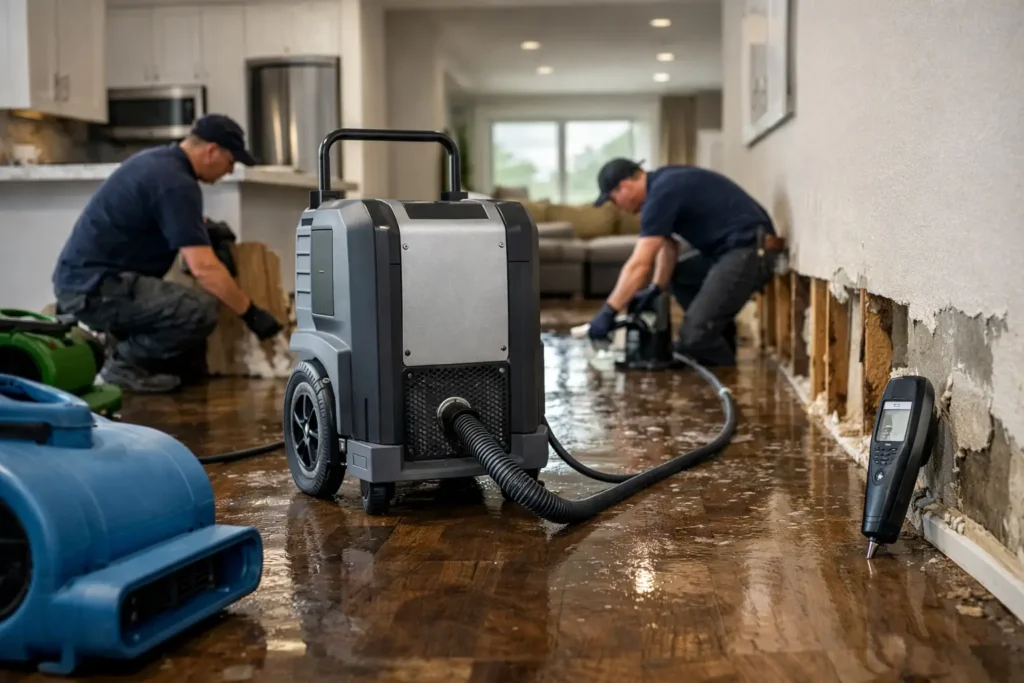
A proper emergency flood response follows the conditions inside the property, not a one-size-fits-all checklist. After an initial assessment, technicians typically begin with water extraction using commercial equipment designed to remove standing water quickly. The faster water is removed, the better the chance of preserving flooring, baseboards, cabinetry, and other building materials.
Next comes detailed moisture detection. Water can travel under vinyl plank flooring, behind walls, beneath carpet padding, and into subflooring. Moisture meters and thermal imaging help technicians determine where drying equipment is needed and whether certain materials can be dried in place or need to be removed.
Air movers and dehumidifiers are then positioned to create controlled drying conditions. This part of the process matters because surface dryness can be misleading. A floor may feel dry underfoot while moisture remains inside the subfloor or wall cavity. Professional monitoring tracks moisture levels over time, allowing the drying plan to be adjusted until affected materials reach an appropriate dry standard.
For homes with contamination from sewage or external floodwater, the response also includes controlled removal of unsalvageable materials and cleaning of affected structural surfaces. This is not a situation to treat as ordinary water cleanup. Specialized containment, cleaning methods, and protective practices help prevent contaminants from spreading through the property.
The First 24 Hours Matter Most
You do not need to decide every repair detail on the day of the flood. You do need to act quickly on the decisions that protect the property from getting worse. Prompt extraction, drying, and moisture monitoring can make a meaningful difference in the scope of the restoration.
During the first day, focus on stopping the source, protecting occupants, documenting visible damage, and arranging professional mitigation. If it is safe to do so, relocate dry furniture, artwork, electronics, and important documents away from the wet area. Place aluminum foil or plastic blocks beneath furniture legs only when it can be done without walking through unsafe water or causing further damage.
Be cautious about pulling up flooring, opening walls, or moving heavily saturated furniture yourself. Some materials may be salvageable with the right approach, while others may require removal. Premature demolition can make it harder to document the loss or preserve materials that could have been restored.
Drying Is Not the Same as Waiting for Water to Evaporate
Southern California homeowners sometimes assume that warm weather will solve a water problem on its own. Open windows and warmer temperatures may help in a small, uncomplicated spill, but they are not a substitute for controlled structural drying after a significant flood.
Humidity, material type, the amount of water involved, and how long water has been present all affect the drying process. Dense materials such as hardwood, cabinets, insulation, drywall, and subfloors can retain moisture even when the room no longer appears wet. In some cases, opening a wall section or removing wet baseboards allows air circulation and inspection without unnecessary demolition. In other cases, more extensive removal is needed because the materials are too damaged or contaminated to restore.
This is why moisture monitoring is so valuable. It replaces guesswork with measurable information and helps avoid closing up a wall or reinstalling finishes before the structure is properly dry.
Protecting Your Home and Your Insurance Claim
Flood damage creates two parallel concerns: preventing additional damage and keeping a clear record of what happened. A restoration provider can help document affected areas, damaged materials, moisture findings, and mitigation work for the insurance process. That documentation can support communication with your insurer, although coverage and claim decisions depend on your specific policy and the cause of loss.
Keep a simple record of conversations, claim numbers, photos, and receipts for emergency expenses. If you need to dispose of damaged belongings, photograph them first when practical. Do not wait for an adjuster to begin emergency mitigation if water is actively damaging the home. Most insurers expect reasonable steps to prevent further loss, and standing water is rarely something that should be left in place.
Clear communication also helps reduce stress. Ask your restoration team what is wet, what can likely be saved, what equipment is being used, and what the next milestone will be. You deserve straightforward answers while your home is being restored.
When to Call for Emergency Flood Help
Call for professional help immediately when there is standing water, a burst pipe, a sewage backup, water entering from a storm, a leak affecting ceilings or walls, or flooding that has reached carpet, wood flooring, cabinets, or drywall. The same urgency applies if water has been present for more than a few hours or you notice swelling materials, staining, musty odors, or water spreading beyond the original area.
SOS Restoration provides 24/7 emergency property restoration for homeowners facing water damage across Southern California. Certified technicians can assess the situation, remove water, set drying equipment, monitor moisture, and guide you through the recovery process with clear, practical communication.
Common Emergency Flood Response Questions
Should I call a plumber or a restoration company first?
If a plumbing failure is actively releasing water, a plumber may be needed to repair the source. A restoration company addresses the water already inside the property by extracting it, drying affected materials, and documenting damage. In many cases, homeowners need both services, and the order depends on whether the source has been stopped.
Can wet carpet be saved after flooding?
It depends on the water source, how long the carpet was wet, and the condition of the padding and subfloor. Clean-water events caught quickly may allow for drying and restoration. Carpet exposed to sewage, outdoor floodwater, or prolonged saturation may need to be removed for safety and sanitation reasons.
How long does flood drying take?
Drying time varies with the extent of water intrusion, the materials involved, humidity, and how quickly mitigation begins. Technicians use moisture readings throughout the process rather than relying on a fixed timeline. The goal is to dry the structure thoroughly, not simply remove equipment as soon as surfaces feel dry.
When water enters your home, fast action can preserve more of what matters. Focus first on safety, stop the source when possible, and bring in qualified help so the recovery can begin with care and confidence.