
A pipe bursts behind a wall at 2 a.m. Rainwater enters through a damaged roof. Smoke from a nearby wildfire settles throughout the house. In these moments, searching for an emergency restoration company los angeles homeowners can rely on is about more than cleanup. It is about stopping damage from spreading, protecting the people in the home, and getting a clear path forward when everything feels uncertain.
The first few hours after water, fire, smoke, or sewage damage can shape the scope of the recovery. A qualified restoration team helps contain the immediate problem, document conditions, and begin the work needed to return the property to a safe, stable condition. The right response is fast, but it should never be careless.
When an Emergency Requires Immediate Restoration
Not every household issue requires an emergency dispatch, but visible water, contamination, smoke residue, or a sudden loss of essential building function should be treated seriously. Water can move under flooring, into wall cavities, and through ceilings before the full extent is visible. Smoke particles can settle in rooms far from the original source. Sewage backups create a contamination concern that calls for professional handling.
Call for emergency support when there is standing water, an active leak that cannot be safely stopped, a burst pipe, an overflowing appliance, sewage intrusion, fire-related debris, or persistent smoke odor after a fire event. If a roof leak or flooding is affecting electrical areas, ceilings, or multiple rooms, prompt assessment is especially important.
Before technicians arrive, prioritize personal safety. Move people and pets away from affected areas, avoid standing water near electrical equipment, and do not enter a room with a sagging ceiling. If it is safe to do so, shut off the water source or electricity only when you know how to do it without risk. Then let the restoration team take over the damage-control work.
What a Professional Emergency Response Should Look Like
A dependable restoration response is not simply a crew arriving with fans. Effective recovery follows a sequence designed to address both visible damage and moisture or contamination that may be hidden.
Rapid assessment and source control
The first priority is identifying the cause and stabilizing the property. With water damage, that may mean locating the leak, determining where water traveled, and assessing affected materials. With fire or smoke damage, it may include evaluating soot conditions, odor migration, and areas requiring protection from further exposure.
A thorough assessment gives homeowners a more accurate understanding of what happened and what needs to happen next. It also creates documentation that can be useful when communicating with an insurance carrier.
Extraction, cleanup, and containment
Standing water must be removed quickly to limit further absorption into flooring, drywall, cabinetry, and structural materials. Depending on the loss, technicians may use commercial extraction equipment, controlled demolition of unsalvageable materials, and containment measures to keep affected areas isolated.
For sewage cleanup, mold remediation, and fire-related debris, containment is equally important. The goal is to prevent contaminants or particles from moving into unaffected rooms while the damaged area is professionally cleaned and treated.
Structural drying and moisture monitoring
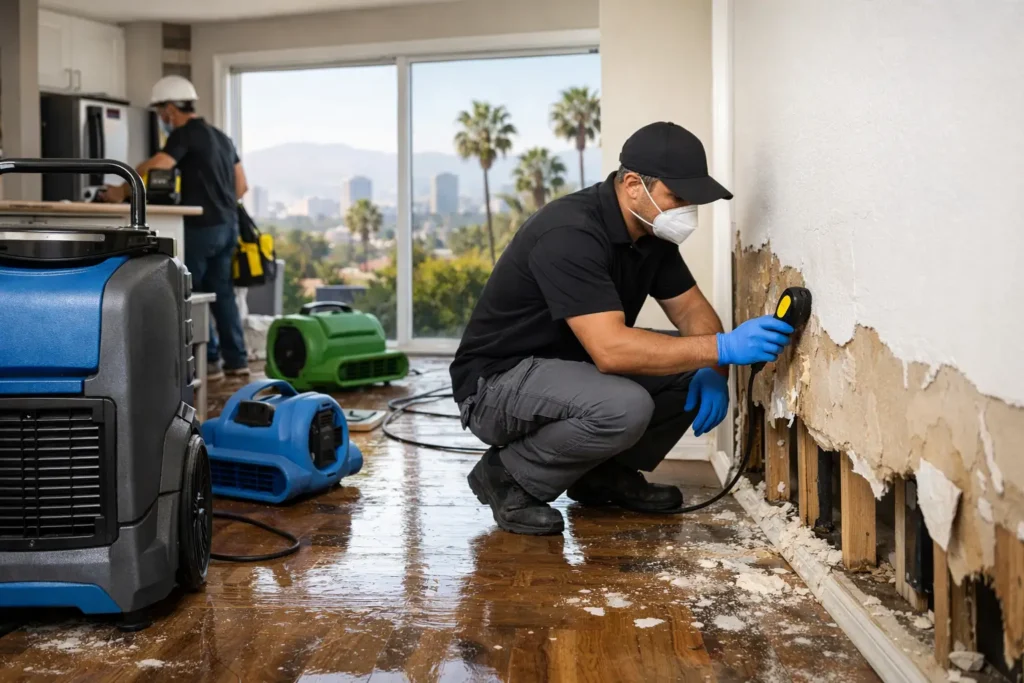
A room can look dry while moisture remains beneath flooring or inside walls. That is why professional drying involves more than placing equipment and leaving it running. Technicians use moisture-detection tools, air movement, dehumidification, and regular monitoring to verify that affected materials are drying as intended.
Drying time depends on the source of water, the materials involved, how long moisture was present, and the size of the affected area. Removing materials too quickly can create unnecessary disruption, while waiting too long can allow damage to worsen. A careful assessment helps determine the appropriate approach.
Cleaning, restoration, and reconstruction
Once emergency conditions are controlled, the work shifts from mitigation to recovery. This may include cleaning smoke-affected contents, repairing damaged drywall, replacing flooring, restoring cabinets, treating mold-affected areas, or coordinating reconstruction after a major loss.
Working with one restoration partner through these stages can reduce handoffs and confusion. SOS Restoration supports homeowners from urgent containment through restoration and reconstruction, with a focus on clear communication at every stage.
How to Choose an Emergency Restoration Company in Los Angeles
Los Angeles County properties face a wide range of risks, from plumbing failures and appliance leaks to storm-related water intrusion and wildfire smoke. When choosing a company, availability matters, but it is not the only factor. You need a team that can explain the process, protect your home, and document work responsibly.
Look for a company that provides 24/7 emergency response and has trained, certified technicians. Restoration work requires knowledge of water categories, drying science, smoke and soot cleanup, containment practices, and moisture measurement. IICRC-based service standards are a meaningful indicator that a provider follows established restoration practices.
Communication is another major part of the experience. During an emergency, homeowners should not have to chase down updates or guess what equipment is doing in their living room. A good team explains the immediate plan, identifies any safety concerns, shares what may be salvageable, and keeps you informed as drying or remediation progresses.
It also helps to ask how the company handles insurance documentation. While no restoration provider can promise what a policy will cover, organized photos, readings, scope details, and communication can make the claims process easier to understand. A team experienced in insurance-supported restoration can help you provide the information your carrier may need.
Why Waiting Can Increase the Scope of Damage
Delaying a response after water damage can turn a manageable issue into a larger restoration project. Water may wick upward into drywall, cause wood materials to swell, weaken ceiling materials, and create conditions that support mold growth. Even a small leak can affect areas beyond the original wet spot.
The same principle applies after a fire or smoke event. Soot and smoke residues can continue to affect surfaces and indoor air quality if they are not properly addressed. Odors may also persist when smoke particles have settled into fabrics, insulation, or HVAC-connected areas.
Fast action does not always mean extensive demolition. In many cases, early extraction and targeted drying can preserve more materials. The right approach depends on the type of damage, the materials affected, and the conditions found during inspection. That is why a professional evaluation is valuable before assumptions are made.
What to Expect During the First Visit
The first visit should bring order to a chaotic situation. Technicians typically inspect the affected spaces, identify the likely source and path of damage, document visible conditions, and begin stabilization. You may see extraction equipment, air movers, dehumidifiers, containment barriers, or moisture-monitoring tools depending on the loss.
Ask questions while the plan is being explained. You should understand which rooms are affected, what equipment is being used, how long initial drying may take, and what follow-up monitoring is expected. If materials need to be removed for safety or access, the reason should be clearly communicated.
Keep any photos, receipts, and incident details you have available, especially if you intend to file an insurance claim. If possible, avoid moving damaged items until they have been documented, unless they pose a safety risk or need to be moved to prevent further damage.
A Calmer Next Step After Property Damage
Property emergencies rarely happen at a convenient time, but your response can be organized. Focus first on safety, stop the source when it is safe to do so, and bring in trained restoration professionals before hidden moisture, smoke residue, or contamination has more time to spread.
A caring emergency restoration team should leave you with more than drying equipment and a checklist. You should have a clear explanation of what is happening in your home, what comes next, and who is helping protect it. When the situation is urgent, that clarity is often the first step toward feeling at home again.