
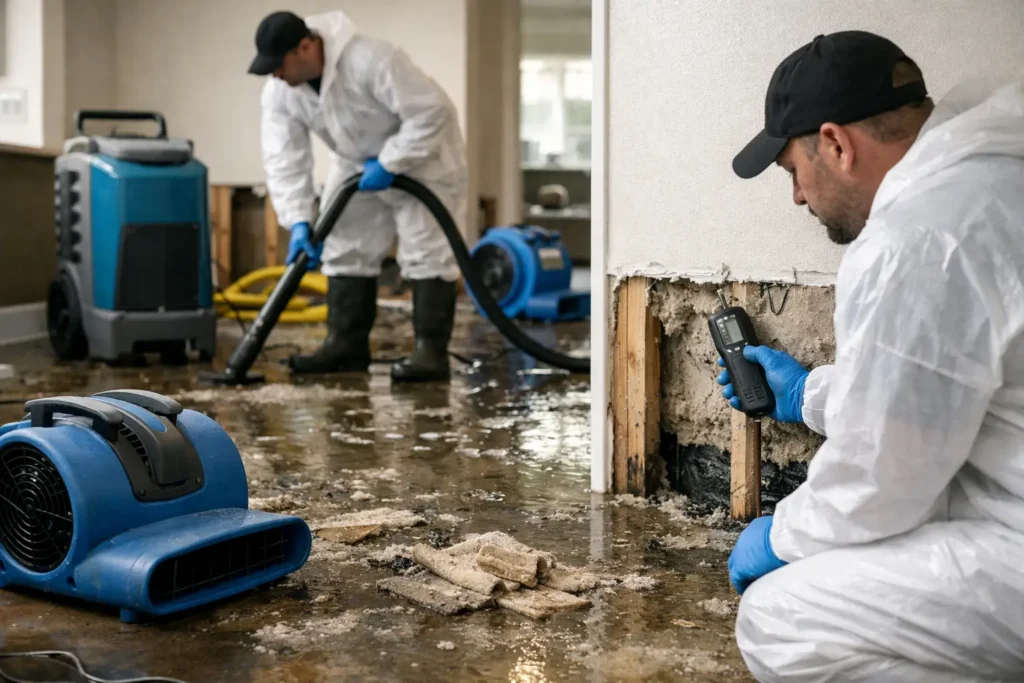
A sewage backup is one of the few home emergencies where waiting can make a difficult situation much worse. Sewage backup cleanup is not simply about removing dirty water. It is about containing contamination, protecting affected areas, documenting damage, and restoring the home with the care needed to prevent lingering odors, moisture problems, and unsafe materials.
For homeowners, landlords, and families, the first hours are stressful. The good news is that a clear response plan can limit damage and make the recovery process more manageable.
What to Do When Sewage Backs Up
The priority is to keep people and pets away from the affected area. Sewage water can carry contaminants, and porous belongings or building materials may need professional evaluation before they can be safely cleaned or restored.
If it is safe to do so, stop the source of water. Avoid flushing toilets, running sinks, using showers, or operating appliances connected to the drain system until the cause has been identified. A backup caused by a blocked sewer line, overwhelmed municipal system, or plumbing failure can continue spreading if water is still entering the drains.
Take these immediate steps while arranging professional help:
- Keep children, pets, and unnecessary foot traffic out of the contaminated area.
- Avoid touching standing water or moving contaminated belongings through clean parts of the home.
- Turn off electricity to the affected area only if it can be done safely from a dry location. Do not enter standing water to reach a panel or outlet.
- Move unaffected valuables away from the area when possible without crossing through sewage water.
- Photograph visible damage from a safe distance for your insurance records before cleanup begins.
Do not use a household vacuum, shop vacuum, fans, or other ordinary equipment to remove sewage water. These tools are not designed to manage contaminated water or dry concealed building cavities. Improper handling can spread contamination into other areas and leave moisture behind where mold can develop.
Why Sewage Backup Cleanup Requires Professional Care
Not all water damage is the same. A clean supply-line leak may sometimes affect limited materials, but sewage involves a different level of contamination and requires a more controlled restoration process.
Professional sewage backup cleanup begins with an assessment of where the water traveled, which materials were affected, and whether moisture reached subfloors, wall cavities, cabinets, insulation, or adjacent rooms. What looks like a small overflow in a bathroom can spread beneath flooring or behind baseboards. Without moisture monitoring, that hidden damage may be missed.
Certified restoration technicians use appropriate extraction equipment, containment methods, cleaning products, and drying systems to address the affected space. Depending on the extent of the backup, the work may involve removing unsalvageable porous materials, cleaning and disinfecting structural surfaces, drying the area with commercial-grade equipment, and verifying that moisture levels return to acceptable conditions.
This process is not about making a room look clean quickly. It is about making informed decisions about what can be restored, what should be removed, and what needs repair before the space is put back together.
Materials That Often Need Closer Evaluation
Hard, nonporous surfaces may be cleaned and treated when they are structurally sound. However, absorbent materials can retain contaminants and moisture. Carpet padding, insulation, untreated wood products, particleboard cabinets, drywall, upholstered furniture, and paper goods may require specialized evaluation.
The right approach depends on how long the water was present, how far it spread, the type of material involved, and whether the material can be effectively cleaned and dried. Removing materials unnecessarily can increase disruption, but trying to save contaminated items that cannot be restored can create bigger problems later. A careful inspection helps strike the right balance.
The Restoration Process After a Sewage Backup
A qualified restoration team should explain what it finds, what work is needed immediately, and what may be required later for repairs or reconstruction. Clear communication matters because sewage losses often involve several stages rather than one visit.
First comes containment and extraction. The goal is to prevent contaminated water and debris from spreading into unaffected rooms. Technicians remove standing water using professional equipment and identify the full area impacted by the backup.
Next comes cleaning, treatment, and removal of materials that cannot be safely restored. This may include lifting affected flooring, removing damaged drywall at an appropriate height, or addressing compromised cabinetry and insulation. The scope should match the actual damage, not just what is visible on the surface.
Then the structure is dried. Commercial air movement, dehumidification, and moisture monitoring help remove water from building materials and the air. Drying is particularly important in Southern California homes, where a warm climate can create a false sense that a wet room will dry on its own. Hidden moisture does not always announce itself with a puddle.
Once the affected area is clean and dry, the restoration plan can move into repairs. This may include replacing drywall, flooring, baseboards, cabinets, or other damaged finishes. A full-service team can coordinate the work from emergency mitigation through reconstruction, reducing the need for homeowners to manage multiple contractors during an already difficult time.
Insurance Documentation Can Make Recovery Easier
Sewage backups can be confusing from an insurance standpoint because coverage may depend on the policy and the source of the loss. Rather than assuming what will or will not be covered, document the event promptly and contact your insurer to begin the claim process.
Photos, videos, notes about when the backup was discovered, and a record of damaged contents can all be helpful. Professional restoration documentation may also support the claim by showing the affected areas, moisture findings, emergency services performed, and materials removed during mitigation.
SOS Restoration can help homeowners navigate the documentation side of a restoration project and communicate clearly about the work being performed. That does not replace your insurer’s coverage decision, but it can reduce confusion and help keep the recovery process organized.
Common Mistakes That Increase Damage
The most common mistake is delaying the response because the backup appears limited. Contamination and moisture can travel farther than expected, particularly under flooring and inside wall systems. Prompt assessment gives restoration professionals a better chance to contain the loss before it reaches more of the home.
Another mistake is trying to mask odors with air fresheners or opening windows without addressing the source. Odor is often a sign that contaminated materials or moisture remain. The remedy is proper cleaning, removal when necessary, and controlled drying – not fragrance.
Homeowners should also avoid discarding every affected item before it has been photographed and assessed. Some belongings may be restorable through specialized contents cleaning, while others may need to be documented before removal. An experienced team can help distinguish between the two.
When to Call for Emergency Help
Call for professional assistance immediately if sewage water is standing in the home, has reached carpet or flooring, has overflowed from a toilet or drain repeatedly, or has affected walls, cabinets, or personal belongings. The same urgency applies if water has entered a garage, crawl space, or lower level, where hidden structural materials can hold moisture out of sight.
A fast response protects more than the appearance of your home. It gives you a clearer picture of the damage, helps contain the disruption, and creates a practical path toward repairs. When a sewage backup happens, keep the area isolated, document what you can safely see, and let trained restoration professionals take on the work of making your home whole again.