
A fire can be out in minutes, yet the damage it leaves behind can continue to affect your home for days. The fire damage restoration process is designed to stop that damage from spreading, protect the property, and create a clear path from an unsafe, smoke-affected space to a home that is clean, repaired, and ready to use again.
For Southern California homeowners, that process may follow a kitchen fire, an electrical fire, or wildfire smoke that enters the home even when flames never reach the structure. Each situation is different, but fast, organized action matters in every one.
First, protect the property and the people in it
Do not re-enter a fire-damaged home until fire officials say it is safe. Structural materials may be weakened, electrical systems can be hazardous, and soot can travel farther than visible burn damage suggests. Smoke residue may settle inside cabinets, HVAC components, furniture, and rooms that appear untouched at first glance.
Once the property is cleared for entry, the first restoration priority is stabilizing it. This can include securing damaged doors and windows, boarding up openings, covering a compromised roof, and addressing immediate water damage caused by firefighting efforts. These steps help prevent rain, wind, trespassing, and additional moisture from turning a difficult loss into a larger one.
Homeowners can also help preserve the claim and recovery process by taking photographs when it is safe, saving fire-related receipts, and avoiding the urge to throw away damaged belongings right away. A restoration team may be able to identify cleanable contents or document losses before disposal.
Step 1: A detailed fire damage assessment
The restoration process begins with an inspection, not a cleanup crew simply arriving with supplies. Certified technicians assess the full scope of damage, including burned materials, soot patterns, water intrusion, smoke odor, and likely contamination in hidden areas.
The assessment usually considers the source and type of fire because residue behaves differently depending on what burned. A protein fire from cooking, for example, can leave a nearly invisible but stubborn odor. A fast-burning paper or wood fire may leave dry soot that spreads easily. Fires involving plastics, synthetic fabrics, or other manufactured materials can create sticky residues that require more specialized cleaning methods.
Technicians also inspect ceilings, wall cavities, insulation, flooring, appliances, ducts, and contents. The purpose is to build a restoration plan that addresses the actual damage, rather than only the areas that look worst. A clear plan should explain what can be cleaned, what needs removal, what requires repair, and what documentation may be useful for your insurer.
Step 2: Emergency mitigation prevents secondary damage
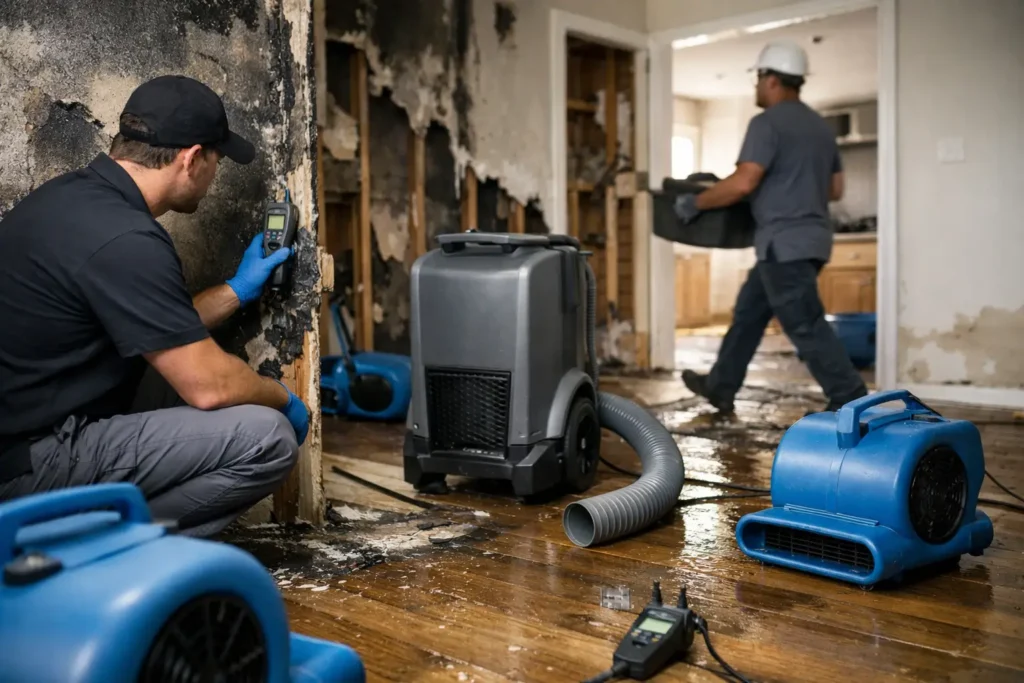
Mitigation is the work that limits further loss before full repairs begin. If water was used to extinguish the fire, extraction and structural drying may need to happen immediately. Wet drywall, carpet padding, insulation, and framing can deteriorate quickly if moisture is left behind.
This phase often includes water removal, placement of drying and dehumidification equipment, moisture monitoring, and removal of materials that cannot be safely restored. Technicians may isolate affected rooms to keep soot and odors from moving into cleaner areas of the house.
Timing matters here. Soot is acidic and can permanently discolor painted surfaces, metals, plastics, upholstery, and glass if it sits too long. Moisture from suppression efforts creates another concern, particularly in enclosed spaces where surfaces do not dry evenly. Addressing both fire residue and water damage early reduces the chance of avoidable repairs later.
Step 3: Smoke and soot cleanup requires the right method
Smoke cleanup is rarely a one-product, one-room job. Restoration professionals select cleaning methods based on the material, the residue, and whether the surface can tolerate moisture or agitation. Dry soot may be removed with specialized vacuuming and dry-cleaning techniques, while oily or sticky residues can require wet cleaning agents and careful hand cleaning.
Porous materials deserve special attention. Drywall, unfinished wood, insulation, fabric, and some types of flooring can absorb smoke odor below the surface. In some cases, cleaning is effective. In others, removal and replacement are the more dependable choice. The right decision depends on the intensity of exposure, the condition of the material, and whether odors can be fully controlled.
HVAC systems should also be evaluated before they are operated normally. Running a system too soon can circulate smoke particles and odors throughout the home. When appropriate, technicians clean affected components and replace filters so the system is not reintroducing contaminants into restored rooms.
Odor removal is more than covering the smell with fragrance. Professional deodorization targets odor-causing particles through methods selected for the property and materials involved. The goal is to eliminate the source as thoroughly as possible, not to make the home smell temporarily cleaner.
Step 4: Contents cleaning and salvage decisions
A fire affects more than walls and floors. Furniture, clothing, documents, electronics, artwork, and keepsakes may all need evaluation. Some items can be cleaned on-site, while others may need specialized off-site contents cleaning and storage during reconstruction.
This part of the process can feel especially personal. Restoration teams should document items carefully, identify what may be salvageable, and communicate before major disposal decisions are made. Sentimental value does not always align with an item’s replacement cost, so clear conversations matter.
Not every item can or should be restored. Severe charring, absorbed smoke odor, water saturation, and safety concerns may make replacement the practical option. Still, a careful contents assessment can prevent homeowners from losing items that could have been cleaned or preserved.
Step 5: Repairing and rebuilding the damaged space
Once the property is dry, cleaned, and cleared of damaged materials, reconstruction can begin. This may be as limited as replacing drywall, repainting, and installing new flooring. More extensive losses can require framing repairs, roof work, electrical updates, cabinetry replacement, or a full rebuild of affected rooms.
The best restoration plans connect mitigation and reconstruction rather than leaving homeowners to coordinate multiple stages alone. That continuity helps reduce delays, keeps documentation organized, and makes it easier to understand what work is happening next.
Before repairs move forward, homeowners should review the scope of work and material choices. Availability, insurance approvals, permit requirements, and the extent of hidden damage can affect the timeline. A trustworthy contractor will explain those variables directly instead of promising an unrealistic completion date.
How insurance support fits into the fire damage restoration process
A fire claim can add pressure at a time when homeowners are already trying to protect their family and property. Restoration documentation helps create a record of conditions, emergency services, affected materials, photographs, and recommended repairs. This information can support communication with the insurance adjuster and help keep the recovery process organized.
Insurance policies and coverage decisions vary, so no restoration company can promise what a carrier will approve. What a qualified team can do is provide timely, detailed information, help document the loss, and communicate clearly about the work needed to stabilize and restore the home.
For many homeowners, direct assistance with claim documentation is valuable because it reduces the number of moving parts they must manage while their home is disrupted.
How long does fire restoration take?
A small, contained fire may require days or a few weeks of cleanup and repair. A larger structural fire, widespread smoke damage, or a loss involving substantial water damage and reconstruction can take much longer. The timeline depends on the severity of damage, material availability, permit needs, insurance coordination, and whether hidden problems are found during demolition.
The most useful question is not simply, “How fast can this be finished?” It is, “What needs to happen now to prevent more damage, and what is the next clear milestone?” Regular updates make a stressful process more manageable.
When a fire disrupts your home, you deserve more than a cleanup crew. You need a steady restoration partner that protects the property, explains the work, and helps move recovery forward. SOS Restoration provides 24/7 emergency response and full-service support to help homeowners take the next step with confidence.