
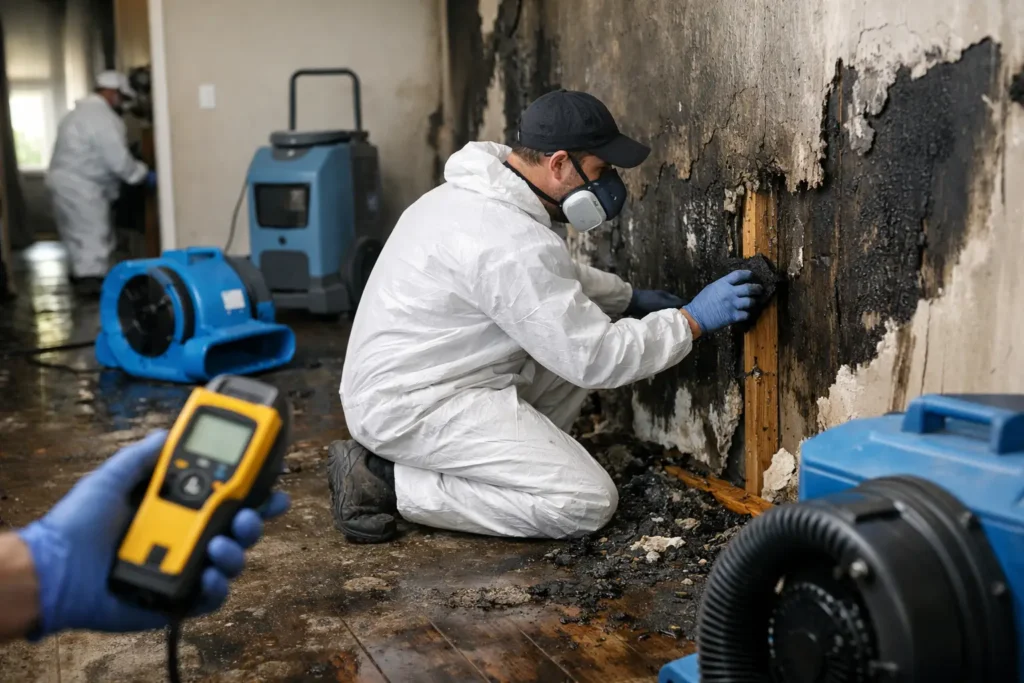
Smoke odor is not just an unpleasant reminder of a fire. It can settle into drywall, insulation, flooring, furniture, and HVAC components long after visible soot is gone. Knowing how to remove smoke odor starts with understanding that the smell is made up of microscopic smoke particles, not simply stale air that can be covered with a fragrance.
After a small kitchen fire, an electrical fire, or wildfire smoke intrusion, acting quickly can limit how deeply those particles penetrate your home. But the right response depends on the source, the size of the affected area, the materials involved, and whether soot or water damage is also present.
Start With Safety and Damage Documentation
Before cleaning, make sure the fire source has been fully addressed and the property is safe to enter. If there is structural damage, exposed wiring, persistent smoke, heavy soot, or water from firefighting efforts, avoid disturbing the area until it has been assessed. Walking through damaged rooms can spread soot to unaffected spaces and grind particles into carpet and upholstery.
Take clear photos and videos of affected rooms, belongings, walls, ceilings, and visible residue before removing anything. This documentation can be helpful when reporting a loss to your insurance carrier. Keep damaged items when possible until they have been reviewed or evaluated.
If the odor is from a wildfire rather than an indoor fire, close windows and doors while outdoor air quality remains poor. Replace HVAC filters only after the system has been inspected if you suspect smoke was pulled through the ductwork. Turning on a contaminated system can recirculate odor and particles throughout the home.
Why Smoke Odor Is So Difficult to Remove
Smoke moves quickly and settles in places that are easy to overlook. It can travel through open doors, gaps around vents, closets, attic spaces, and cabinet interiors. Heat from a fire can also drive smoke residue deeper into porous materials.
Hard surfaces may look clean after wiping, yet still hold a faint odor if residue remains in seams, textured finishes, or behind fixtures. Softer materials such as carpet padding, drapes, mattresses, insulation, and unfinished wood can absorb smoke much more deeply. In some cases, cleaning is effective. In others, replacement is the more reliable option.
The type of fire matters, too. A protein fire, such as food left burning on a stove, can produce a strong, difficult-to-see residue. Fires involving plastics, synthetic fabrics, or electrical components can leave sticky residues and sharp chemical odors. Wildfire smoke often affects large areas of a home even when there was no direct flame damage.
How to Remove Smoke Odor From Surfaces
For a limited smoke event with no heavy soot or structural damage, careful cleaning may reduce odors significantly. Work from the cleanest areas toward the most affected rooms so you do not spread residue. Wear appropriate protective gear and ventilate the space only when outdoor conditions allow.
Begin by removing loose soot with a HEPA-filter vacuum. Do not use a regular household vacuum, broom, or dry cloth on soot-covered materials. These methods can push fine particles into the air or smear residue across surfaces. Keep the vacuum nozzle slightly above the surface rather than pressing it into the material.
Next, clean washable hard surfaces using a cleaning method suited to the material. Walls, ceilings, trim, cabinets, doors, and nonporous furniture often need more than one pass. Avoid soaking drywall, wood, and other absorbent materials, especially if water damage is present. Excess moisture can create an additional problem inside wall cavities or beneath flooring.
Wash washable fabrics according to their care labels. Curtains, removable cushion covers, bedding, and clothing may require repeated laundering or professional textile cleaning, depending on the exposure level. Do not place heavily soot-covered items directly into a washing machine, as soot can transfer to other fabrics and damage the appliance.
For items with sentimental or high replacement value, pause before attempting aggressive cleaning. Artwork, photographs, antique furniture, electronics, and specialty textiles can be permanently damaged by the wrong product or technique. Contents cleaning professionals can evaluate what is salvageable and use methods designed for delicate materials.
Do Not Mask the Odor With Fragrance
Candles, air fresheners, scented sprays, and fragrance plug-ins may make a room smell different for a few hours, but they do not remove smoke residue. In a recently fire-damaged home, burning candles or incense also adds more combustion particles to the air.
Odor absorbers can be useful for mild, short-term smells in contained areas, but they are not a substitute for source removal. If the odor returns when the house warms up, humidity rises, or the HVAC system runs, smoke particles are likely still present in materials or hidden building areas.
Ozone-generating devices are another concern. They are often marketed as a simple odor solution, but improper use can damage certain materials and may create indoor air concerns. Smoke odor treatment should be selected based on the property conditions, not on whichever machine is easiest to rent.
Check the Places Smoke Commonly Hides
A home can continue to smell smoky after visible surfaces are cleaned because residue remains in overlooked locations. Pay close attention to the HVAC system, return vents, filter compartments, interior cabinets, closets, window coverings, light fixtures, and the tops of doors and cabinets.
Carpet and padding are frequent odor reservoirs. A light smoke exposure may respond to professional cleaning, while a heavier loss may require removal of carpet, padding, and sometimes portions of the subfloor treatment. The same principle applies to upholstered furniture and mattresses: the decision to clean or replace depends on how far odor and residue have penetrated.
Attics, crawl spaces, and wall cavities deserve special attention after a larger fire or wildfire smoke event. Smoke can enter through vents and openings, then settle on insulation and framing. If odor continues after surface cleaning, hidden areas should be inspected rather than repeatedly deodorized from inside the living space.
When Professional Smoke Restoration Is the Better Choice
Professional help is recommended when there is visible soot, a persistent odor, a fire that affected more than one room, or smoke exposure throughout the property. It is also the safer choice when fire suppression water, damaged building materials, contaminated HVAC equipment, or electrical damage are involved.
A qualified restoration team begins with an assessment of the source and extent of contamination. That may include identifying affected materials, checking concealed spaces, documenting damage, and determining whether cleaning, deodorization, sealing, or removal is appropriate. The goal is not to make the home smell temporarily better. It is to remove the residue causing the odor and restore affected materials correctly.
Professional smoke restoration can involve HEPA air filtration, detailed soot removal, contents cleaning, HVAC evaluation, specialized odor treatment, and sealing or reconstruction where materials cannot be restored. Each step matters because skipping source removal can leave odors trapped behind fresh paint, new flooring, or cleaned furnishings.
For Southern California homeowners, wildfire smoke can create this same need even when the home was never directly touched by flames. A free inspection can clarify whether the odor is limited to cleanable surfaces or has reached deeper materials that need restoration attention.
Prevent Smoke Odor From Spreading During Cleanup
Keep unaffected rooms closed off when possible and avoid moving smoky belongings through clean areas. If an item must be moved, place it in a contained bag or bin first. Change HVAC filters as directed after an inspection, and do not assume a new filter alone has cleaned the system.
Avoid repainting or remodeling before odor-producing residue has been removed. Paint can trap odors temporarily, but smoke may continue to migrate through porous materials or return through ventilation pathways. If sealing is needed, it should be part of a planned restoration process after proper cleaning.
Most importantly, do not wait for the smell to disappear on its own. The longer smoke residue remains on surfaces and inside materials, the more difficult it can be to remove.
When your home still smells like smoke after the visible mess is gone, that is a signal to look beyond the surface. SOS Restoration can assess fire and smoke damage, explain the next steps clearly, and help protect the home you are working hard to get back to normal.