
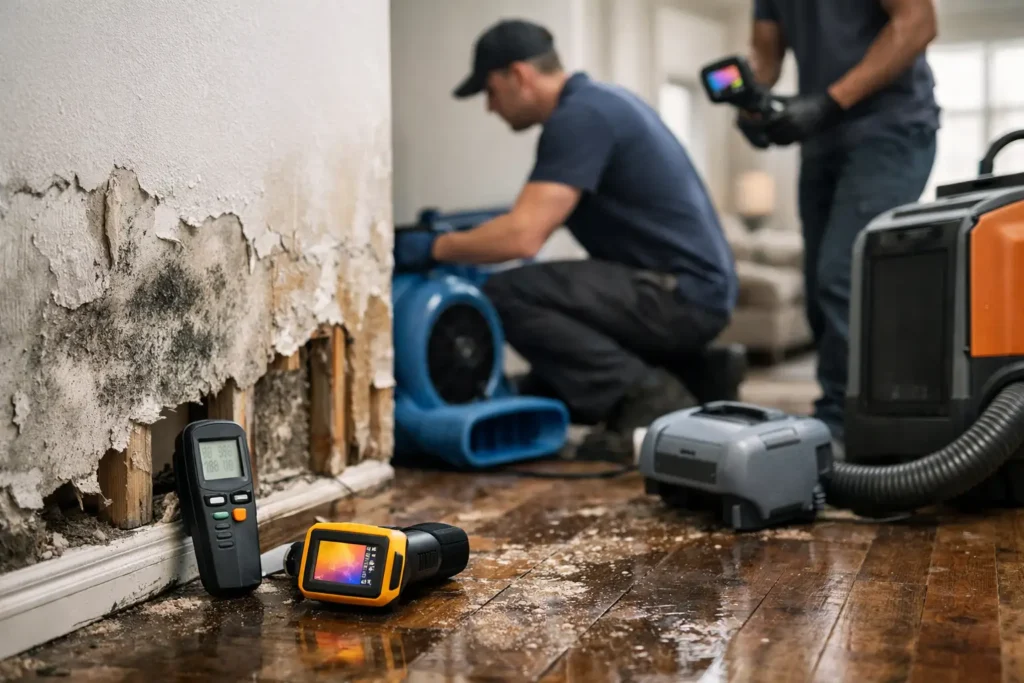
A water leak can look minor on the surface while moisture continues moving behind drywall, under flooring, or into insulation. A mold inspection after water leak helps determine whether the affected area was fully dried and whether hidden conditions could support mold growth. For homeowners, landlords, and families, that clarity can prevent a small plumbing problem from becoming a larger restoration project.
The right time to act is usually sooner than people expect. Mold does not need a dramatic flood to become a concern. A slow supply-line leak, an overflowing sink, a roof leak after rain, or water from an upstairs bathroom can all leave materials damp long after visible water is gone.
When Is a Mold Inspection After a Water Leak Necessary?
Not every leak requires mold remediation, and not every damp spot needs extensive testing. The deciding factors are the amount of water, how long materials remained wet, what materials were affected, and whether proper drying was completed.
A professional inspection is especially worthwhile when water was present for more than a day or two, the source was hidden, or the affected area includes porous materials such as drywall, carpet padding, insulation, cabinets, or wood flooring. These materials can retain moisture where a homeowner cannot see it.
You should also schedule an inspection if a leak returns after a repair, if there is a persistent musty odor, or if staining and paint changes appear days or weeks later. A repaired pipe stops new water from entering the home, but it does not automatically dry the building materials that were already affected.
In Southern California, homeowners may underestimate water damage because warm weather can make a room feel dry quickly. Surface dryness is not the same as structural dryness. Moisture can remain trapped in wall cavities, beneath flooring, and around cabinetry even when the room looks normal.
Signs that call for a closer look
A mold inspection can help identify the source and extent of a problem when you notice several warning signs, including:
- A musty or earthy smell near the leak area, closet, cabinet, or wall
- Bubbling paint, peeling baseboards, warped flooring, or swollen cabinets
- New discoloration on ceilings, walls, grout, or around vents
- Damp carpet, soft drywall, or condensation that returns after the area seems dry
- A past leak with no documented drying process or moisture readings
Visible mold is a clear reason to contact a qualified remediation professional. Avoid disturbing or scrubbing suspect growth, especially if the area is extensive or water damage may have spread behind finished surfaces. Disturbance can release particles into the air and make containment more difficult.
What a Professional Mold Inspection Looks For
A useful inspection is more than a quick visual check. The goal is to understand where water traveled, whether materials remain wet, and whether mold-like conditions are present in accessible or concealed areas.
A trained restoration technician begins with the water event itself. They will ask where the leak started, when it was discovered, how long it may have been active, what repairs were made, and what cleanup or drying has already occurred. That history matters because a pinhole pipe leak that ran inside a wall for weeks presents a different risk than a sink overflow cleaned up within minutes.
The inspection typically includes a visual assessment of affected rooms and adjacent spaces. Water follows gravity, but it can also travel along framing, behind baseboards, under thresholds, and through openings around plumbing. The room below a second-floor bathroom leak may be affected even if the bathroom floor appears dry.
Moisture detection tools are central to the process. Technicians may use moisture meters, thermal imaging, and hygrometers to identify elevated moisture in materials and surrounding air. These tools help locate areas that need further evaluation without opening every wall unnecessarily.
When conditions warrant it, the inspection may include limited removal of damaged materials or access to concealed cavities. This is not about creating disruption for its own sake. It is about confirming whether wet insulation, drywall backing, subflooring, or framing needs to be dried, cleaned, removed, or restored.
Inspection, testing, and remediation are different services
Homeowners often use the words inspection, testing, and remediation interchangeably, but they serve different purposes. An inspection evaluates the property, water pathway, visible conditions, and moisture levels. Sampling or laboratory testing may be appropriate in certain situations, but it is not always needed when moisture damage and visible growth already show what must be addressed.
Remediation is the controlled process of containing affected areas, removing damaged materials when necessary, cleaning remaining surfaces, and correcting the moisture issue that allowed growth. The best next step depends on the findings, not on a one-size-fits-all response.
Why Fast Drying Changes the Outcome
The most effective mold prevention step after a leak is prompt professional water mitigation. Water extraction, targeted structural drying, dehumidification, and daily moisture monitoring address the conditions mold needs to develop.
Drying is not simply placing a few fans in the room. Proper equipment and placement depend on the materials affected, the amount of water involved, the room layout, and current humidity. Moving air without controlling humidity can be ineffective, while drying too aggressively in certain situations can create other material concerns. Certified technicians monitor the process and adjust equipment as moisture readings improve.
Fast action also helps preserve materials. Drywall, cabinetry, flooring, and insulation may be salvageable when water is addressed early. When moisture remains trapped, those same materials can deteriorate, spread damage into adjacent areas, and require more extensive removal later.
If the leak involved sewage, outdoor floodwater, or another potentially contaminated source, the response needs additional safety controls. These events require professional assessment because the issue is not only moisture but also contamination.
What to Do While You Wait for Help
Your first priority is safety. If water is near electrical outlets, appliances, or a ceiling that is sagging, stay clear of the area and contact a qualified professional right away. If you can safely stop the water source, such as shutting off a fixture valve or the main water supply, do so.
Take clear photos and videos of the leak source, standing water, damaged belongings, stains, and affected rooms before major cleanup begins. Keep any invoices, plumbing reports, and drying records. Documentation can help establish the timeline of the loss and support conversations with your insurance carrier.
Remove small, dry belongings from the affected area if it is safe to do so. Do not pull up wet carpet, open walls, or handle suspected mold growth without professional guidance. Those actions can spread contamination or make it harder to determine the full extent of damage.
Insurance Documentation and the Value of Clear Records
Water damage claims can feel complicated, particularly when the leak was hidden or discovered after damage had spread. A detailed inspection and moisture documentation can give you a clearer picture of what happened, what was affected, and what restoration work may be needed.
Coverage depends on your policy, the cause of loss, and the specific circumstances. A restoration team can document conditions, provide photos and drying records, and help you communicate the scope of damage to your insurer. That support does not replace your insurer’s coverage decision, but it can reduce confusion during an already stressful time.
Choose a Team That Can See the Recovery Through
After a water leak, it helps to work with a restoration provider that can respond to the immediate emergency and manage the next steps if hidden moisture or mold is found. The process may involve extraction, drying, moisture monitoring, mold remediation, repairs, and reconstruction. Having clear communication throughout matters as much as having the right equipment.
SOS Restoration provides 24/7 emergency support for homeowners facing water damage and mold concerns across Southern California. A prompt assessment can identify whether your property needs focused drying, a mold inspection, or a more complete restoration plan.
A leak does not have to become a lingering problem. If water reached materials you cannot fully inspect, arrange a professional evaluation while the evidence is still clear and the opportunity to limit damage is greatest.