
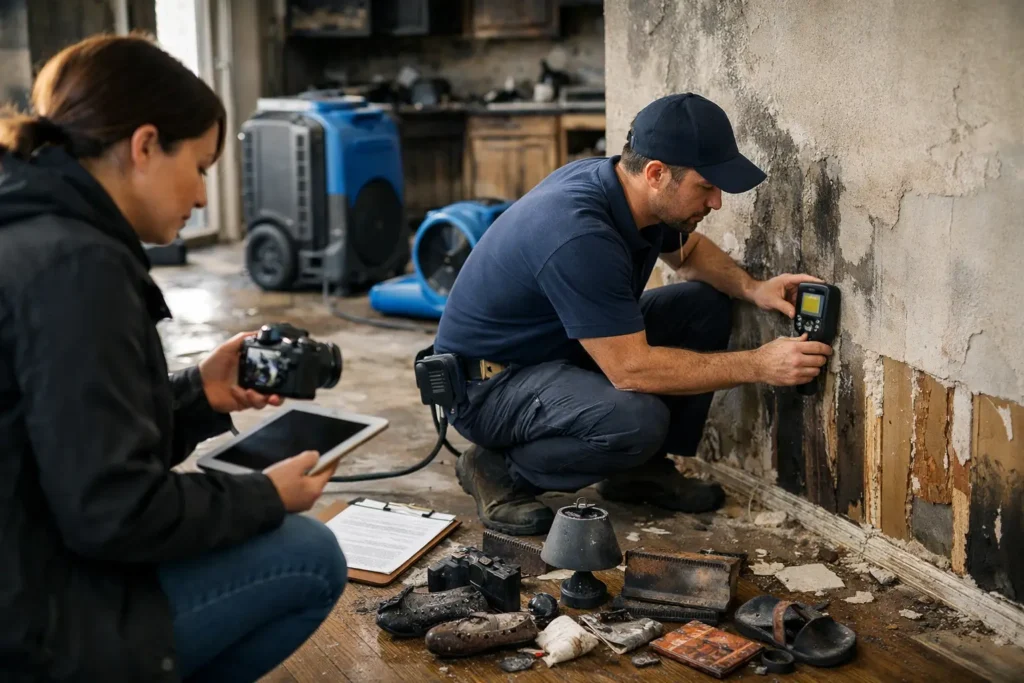
After a fire, the visible damage is only part of what your household has lost. Clothing in closets, kitchen tools, electronics, furniture, keepsakes, and items stored in the garage may all be affected by flames, soot, smoke, or firefighting water. A thorough fire loss inventory gives you an organized record of those losses and can make the insurance claim process far less overwhelming.
The best inventory is not perfect. It is honest, detailed enough to be useful, and built without putting anyone at risk. Start after the fire department and your insurance carrier say it is safe to enter the property. If conditions are unsafe, wait for qualified professionals. Protecting your family comes before documenting belongings.
Start Your Fire Loss Inventory With the Big Picture
Before moving, cleaning, discarding, or removing damaged items, document each affected room as it is. Use your phone to take wide photos and video from several angles. Capture ceilings, walls, floors, cabinets, closets, and major belongings in place. This establishes the condition of the property and helps show where items were located.
Then photograph individual items or groups of similar items. Take close-up images of burn damage, soot residue, melted surfaces, water exposure, and manufacturer labels when available. If a television, appliance, or electronic device has a model or serial number, photograph that label before it is removed for cleaning, evaluation, or disposal.
Smoke can travel well beyond the room where a fire began. A bedroom, pantry, or storage area that looks mostly untouched may still have soot contamination or a strong smoke odor. Include those spaces in your initial documentation. A restoration inspection can help identify affected materials and contents that are not obvious at first glance.
What to Include in a Fire Loss Inventory
Create one inventory entry per item when practical. For lower-value household goods, it may make sense to record similar items together, such as everyday towels, basic kitchen utensils, or a set of matching dishes. For major purchases, electronics, furniture, jewelry, tools, collectibles, and specialized equipment, individual entries are usually more helpful.
For each entry, record the item description, brand, model, estimated age, purchase price if known, estimated replacement cost, and its condition before the fire. Add the room where it was kept and a short note explaining the damage. For example: “Living room, gray fabric sectional, purchased 2021, heavy soot and water exposure, odor throughout cushions.”
If you do not know the exact price or purchase date, do not guess wildly. Use a reasonable estimate and mark it as an estimate. Old receipts, emailed order confirmations, bank or credit card statements, warranty paperwork, user manuals, and product photos may help fill in gaps later.
A practical inventory often includes these categories:
- Furniture, rugs, window coverings, and décor
- Clothing, shoes, linens, and personal care items
- Appliances, electronics, computers, and media equipment
- Kitchenware, food, small appliances, and household supplies
- Tools, garage contents, outdoor equipment, and hobby materials
- Jewelry, artwork, collectibles, documents, and sentimental belongings
For irreplaceable items, describe their significance as well as their physical condition. A handwritten family recipe book, framed photographs, or inherited furniture may need specialized contents cleaning, document recovery, or careful evaluation. Even when an item cannot be restored, clear documentation helps preserve its place in the record of your loss.
Use a Simple Room-by-Room Method
Trying to remember every possession at once can feel impossible. Work room by room, beginning with the most severely affected areas. Complete the kitchen before moving on to the living room, then bedrooms, bathrooms, closets, garage, attic, and exterior storage.
Open cabinets, drawers, and closets only if the structure has been cleared as safe. Photograph the inside before removing contents. Pay special attention to places that are easy to overlook, including linen closets, medicine cabinets, under-sink storage, built-in shelving, and boxes in the garage.
Keep a running list in a spreadsheet, notes app, or paper notebook. A spreadsheet is useful because it allows you to sort items by room, category, value, or claim status. If you prefer paper, take photos of each completed page and save them in more than one location.
Separate Damaged, Questionable, and Undamaged Items
Do not throw away damaged property until your insurer has documented it or given direction, unless it creates an immediate health or safety hazard. When items must be removed, photograph them first and keep any available identifying information, such as tags, labels, serial numbers, or packaging.
It can help to organize belongings into three groups: clearly damaged items, items that may be salvageable but need professional evaluation, and items that appear unaffected. Avoid attempting to clean soot from delicate fabrics, artwork, electronics, or porous belongings on your own. Improper cleaning can spread residue, set stains, or cause additional damage.
A professional restoration team can document affected contents, evaluate what may be cleaned or restored, and help create a clear record of items removed from the property. This is especially valuable after a smoke loss, where contamination may be present without obvious charring.
Support Your Claim With Photos and Records
Photos are powerful, but supporting records add context. Gather any documents that show ownership, age, or value. Receipts are useful, but they are not the only proof. Product registration records, manuals, maintenance invoices, appraisal documents, old home listing photos, holiday photos, and videos taken inside your home can all help confirm what you owned.
Check cloud photo storage, social media archives, email inboxes, and retailer accounts. A photo from a birthday party may show the dining set, artwork, television, or other belongings in the background. Save copies of helpful images in a folder labeled for the claim.
Keep all fire-related paperwork together as well. This may include your claim number, adjuster contact information, fire department documentation, temporary repair invoices, restoration estimates, hotel or temporary housing records, and receipts for necessary expenses. Your insurance carrier can explain which documents it needs and how it wants the inventory submitted.
Be Careful With Values and Descriptions
Your inventory should reflect what you owned, not what you wish you had owned. Use accurate descriptions and explain uncertainty when necessary. If a piece of jewelry was inherited and you do not know its value, note that it was inherited and look for an appraisal, prior insurance schedule, or clear photographs.
Policy language can affect how items are evaluated, including whether payment is based on actual cash value or replacement cost. Ask your insurance representative how your policy handles contents, depreciation, restoration, and documentation requirements. Clear answers early can prevent confusion as your list grows.
Do Not Let Cleanup Erase Your Evidence
After a fire, fast action matters. Soot is acidic, smoke odors can penetrate materials, and water used to suppress the fire can create additional damage. Yet cleanup should be coordinated with documentation, not rushed in a way that destroys evidence of loss.
Take photos before restoration work begins, and continue documenting throughout the process. If contents are packed out for cleaning or storage, request an itemized record of what was removed and where it is being kept. Keep copies of communications with your restoration provider and insurance carrier.
At SOS Restoration, certified technicians can help document fire and smoke damage while protecting the property from further deterioration. The goal is to give homeowners a clear picture of what can be cleaned, what needs further evaluation, and what information may be useful for the claim process.
A Fire Loss Inventory Is Easier With Support
Fire recovery asks a lot of homeowners at once: protect the home, communicate with insurance, make temporary living arrangements, and account for years of belongings. It is normal to miss items on the first pass. Keep updating your inventory as you remember purchases, locate records, and inspect additional areas safely.
Store your photos, videos, inventory, and receipts in at least two places, such as cloud storage and an emailed copy to yourself. Give the file a simple name with the property address and fire date so it is easy to find when an adjuster, restoration professional, or family member needs it.
A careful record will not undo the disruption of a fire, but it can replace some of the uncertainty with a clear next step: one room, one item, and one documented decision at a time.