
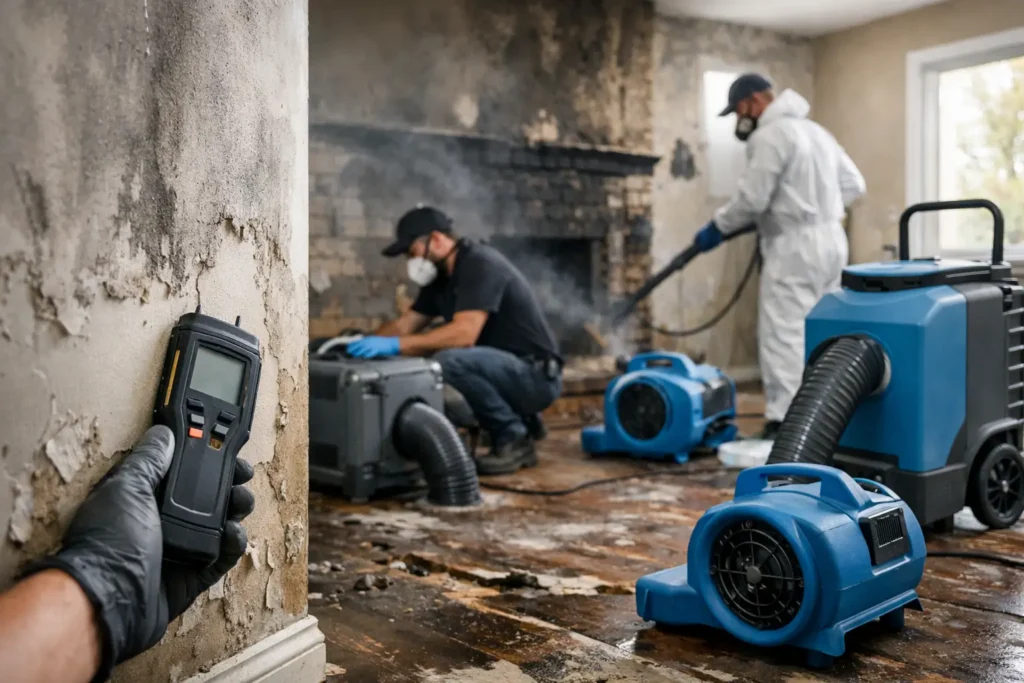
A fire can be out before the damage is over. In Southern California, smoke from a kitchen fire, neighboring structure fire, or wildfire can enter a home through open windows, vents, and tiny gaps around doors. Smoke remediation is the process of identifying that impact, removing soot and odor-causing residues, and restoring affected materials so your home can be safe, clean, and comfortable again.
The right response depends on what burned, how long the smoke was present, the type of surfaces affected, and whether water or firefighting chemicals were also involved. What looks like a light layer of dust may contain residues that spread easily, stain finishes, corrode electronics, and leave a persistent smell behind. Fast, professional assessment helps prevent that damage from becoming more difficult to correct.
What Smoke Damage Can Leave Behind
Smoke does not behave the same way in every loss. A small cooking incident may leave an oily film concentrated near the kitchen. A larger structural fire can send fine soot through multiple rooms, ductwork, closets, and contents. Wildfire smoke can travel far from the flames and settle indoors even when a home has not burned.
Residue can be dry and powdery, sticky and oily, or nearly invisible. Each type calls for a different cleaning approach. Wiping the wrong surface with the wrong product can smear soot deeper into paint, fabric, grout, or unfinished wood. It can also turn a cleanable item into one that needs more extensive repair or replacement.
Odor is another concern. Smoke particles are small enough to settle in upholstery, carpet, insulation, wall cavities, and HVAC components. Simply covering the smell with fragrance does not remove its source. Effective restoration focuses on the residue and the materials holding it, not just the odor you notice when you walk through the door.
Smoke Remediation Starts With a Careful Assessment
A restoration team begins by documenting the affected areas and determining the source and extent of contamination. This includes visible soot, discoloration, odor pathways, contents, and hidden areas where smoke may have traveled. If the incident involved firefighting efforts, the assessment also looks for moisture that could create secondary damage or mold conditions.
This step matters because not every surface should receive the same treatment. Painted walls, natural stone, wood cabinetry, metal fixtures, electronics, textiles, and HVAC systems all respond differently to smoke residue and cleaning methods. A thorough inspection creates a clear plan for what can be cleaned, what needs specialized handling, and what may require reconstruction.
For homeowners filing a property claim, detailed photographs, notes, and itemized documentation can also make the process easier to understand. Insurance coverage and claim decisions vary by policy and circumstance, but organized damage records help support productive conversations with an adjuster. SOS Restoration can assist with the restoration documentation and communication that often follows a loss.
The Professional Smoke Remediation Process
There is no single spray or machine that solves every smoke problem. Professional restoration typically combines containment, specialized cleaning, odor treatment, and verification based on the materials involved.
Containment and surface protection
Technicians first work to limit the spread of particles while protecting unaffected areas. This may include separating work zones, using controlled airflow, and covering materials that are not damaged. Careful containment is especially valuable when fine soot has spread beyond the room where the incident began.
Soot and residue removal
Dry removal methods are often used before wet cleaning because rubbing soot into a surface can make staining worse. Depending on the residue and material, technicians may use HEPA-filtered vacuuming, dry cleaning sponges, detailed hand cleaning, and appropriate cleaning agents. The goal is to lift and capture residue rather than move it around.
Hard surfaces may be cleaned and deodorized, while cabinets, trim, ceilings, walls, and fixtures receive methods suited to their finishes. Some porous materials can be restored with specialized treatment. Others may hold contamination too deeply or have damage that makes removal the more practical option. A trustworthy restoration plan explains that distinction clearly.
Contents cleaning and evaluation
Smoke often affects more than the structure. Clothing, furniture, documents, artwork, appliances, and personal items may need separate evaluation. Contents cleaning can involve careful packing, inventory, off-site treatment, or in-place cleaning depending on the item and condition.
Sentimental items deserve particular attention, but outcomes depend on material type and the degree of exposure. Early handling is helpful because residue can become more difficult to remove over time. Avoid aggressively wiping valuable or delicate belongings before they have been evaluated, especially if soot is visible.
Odor source removal and treatment
Once residues are addressed, professional deodorization targets the source of the smoke odor. Treatments vary based on the space, materials, and the type of smoke present. In some cases, restoration requires cleaning inside HVAC components, treating structural cavities, sealing affected surfaces, or removing materials that cannot be adequately restored.
Odor treatment works best after physical cleaning. If soot and smoke residues remain, an odor can return even after a room initially smells better. The process should be measured, not rushed, particularly after wildfire exposure that may have affected several areas of a home.
Repairs and reconstruction
Smoke can damage paint, drywall, flooring, insulation, cabinetry, and other building materials. Once cleaning and deodorization are complete, repairs return the home to a finished condition. Having mitigation, restoration, and reconstruction coordinated under one plan reduces the number of handoffs during an already stressful time.
What to Do While You Wait for Help
Your first priority is safety. Do not re-enter a fire-damaged home until local authorities say it is safe to do so. Once entry is permitted, a few careful actions can help limit additional damage without attempting to clean the loss yourself.
- Take clear photos of visible damage and affected rooms before moving items, if it is safe to do so.
- Avoid touching or wiping soot-covered walls, ceilings, upholstery, or electronics, since residue can smear and cause further damage.
- Keep children and pets away from affected areas, and limit foot traffic that can track particles through the home.
- Turn off your HVAC system if you suspect it drew smoke into the home, unless emergency personnel or a qualified technician instruct otherwise.
If the property also has standing water, wet materials, or a damaged roof or window, prompt mitigation becomes even more urgent. Moisture and smoke damage can overlap, requiring a plan that addresses both conditions instead of treating them as separate problems.
When Fast Response Makes the Biggest Difference
A rapid inspection is especially valuable after a structural fire, a wildfire smoke event, or any incident that leaves visible soot or a lasting odor indoors. It is also wise to schedule an assessment if you notice irritated-looking finishes, residue on window sills, smoke smell in closets, or HVAC odors when the system runs.
Waiting can allow corrosion, staining, and odor absorption to progress. At the same time, not every smoke exposure requires major demolition. A qualified inspection helps identify the actual scope of work, so homeowners can make decisions based on conditions in the property rather than assumptions.
SOS Restoration provides 24/7 emergency response and free inspections for homeowners facing fire and smoke damage. Certified technicians can assess the affected areas, explain the restoration steps in plain language, and help move the recovery forward with less uncertainty.
After smoke enters your home, the most helpful next step is not guessing what will come clean. It is getting a clear assessment, protecting what can be saved, and giving your property the careful restoration it needs to feel like home again.