
A toilet overflow is not automatically a sewage emergency, but a backup from a drain line, sewer main, or flooded street may be. This guide to sewage contamination categories explains how restoration professionals identify the water involved, why the source changes the cleanup plan, and what homeowners should do first to protect the property and people inside it.
The most urgent rule is simple: treat unknown water as potentially contaminated. Water can spread below flooring, wick into drywall, soak insulation, and carry contaminants into rooms that initially look untouched. Quick action helps limit damage, but the wrong response can spread contamination further.
What sewage contamination categories mean
Restoration professionals commonly use three water categories to describe the condition and likely contamination level of water affecting a structure. The categories are based on the source of the water and its potential to contain harmful substances. They are not the same as water-damage classes, which describe how extensively water has affected materials in a room or building.
This distinction matters because a small amount of highly contaminated water can require more protective cleanup than a large clean-water leak. Category identification guides decisions about containment, personal protective equipment, removal of affected materials, cleaning methods, drying, and documentation for an insurance claim.
Water conditions can also change over time. Clean water that sits for an extended period, travels through dirty building materials, or mixes with waste can become more contaminated. That is one reason prompt professional assessment is valuable after any significant indoor water event.
Category 1: Clean water from a sanitary source
Category 1 water begins as clean water from a sanitary source. Common examples include a broken supply line, an overflowing sink with clean tap water, a failed water heater, or rainwater entering through a clean opening before it contacts contaminated materials.
“Clean” describes the source at the start of the loss, not a promise that the affected area is safe to ignore. A Category 1 loss can still damage flooring, cabinets, drywall, and belongings. Moisture behind walls or under flooring can support mold growth if it is not found and dried correctly.
Category 1 water may be handled differently when it is caught immediately and remains confined to clean, nonporous surfaces. But once it passes through a dirty area, contacts damaged materials, or remains standing, the original category may no longer reflect the actual conditions. A trained technician evaluates the current condition of the water and materials, not just the initial cause.
Category 2: Water with significant contamination
Category 2 water contains a level of contamination that can cause discomfort or illness if people are exposed to it. It is often called gray water, although that informal term can make the situation sound less serious than it is.
Typical Category 2 sources include discharge from appliances such as washing machines or dishwashers, toilet overflows containing urine but no visible fecal matter, and water that has mixed with cleaning products, food waste, or other contaminants. Category 2 water can also result when a Category 1 loss has been left untreated long enough to degrade.
Porous materials affected by Category 2 water require careful evaluation. Carpet padding, insulation, some upholstered contents, particleboard, and saturated drywall can retain contamination and moisture even after visible water is removed. The proper scope depends on where the water traveled, how long it sat, the materials involved, and whether it has progressed to Category 3 conditions.
Category 3: Grossly contaminated water and sewage
Category 3 is the highest contamination category. It includes water that is grossly unsanitary and may contain sewage, pathogens, chemicals, or other hazardous contaminants. A sewer backup, toilet overflow with fecal matter, failed septic system, rising floodwater, and water from an overflowing storm drain are common Category 3 scenarios.
This is the category most homeowners mean when they say they have a sewage backup. The visible mess may be limited to a bathroom, laundry room, or lower-level space, but the affected area can extend farther through flooring systems, walls, adjacent rooms, and belongings. Water can be carried by foot traffic, pets, or items moved out of the affected area.
Category 3 cleanup calls for trained handling, controlled removal of unsalvageable porous materials, detailed cleaning and disinfection of appropriate structural surfaces, drying, and verification that hidden moisture has been addressed. The goal is not to make the room look clean quickly. It is to remove contamination and restore the space safely and thoroughly.
Why the source matters more than the appearance
Clear water is not always clean water. Sewer water may look diluted after mixing with fresh water, while a dark-colored appliance leak might not be Category 3. Sight and smell can provide clues, but they are not reliable enough to determine the category or the required scope of work.
A professional assessment considers the source, travel path, time since the loss, affected materials, and conditions inside concealed spaces. For example, a toilet overflow may remain a more limited Category 2 issue if the source is known and promptly contained. If the toilet is backed up because of a sewer-line obstruction, or if the water includes waste, it should be treated as Category 3.
Flooding during heavy Southern California rain also deserves caution. Water that enters from outdoors can pick up soil, vehicle fluids, debris, and sewage as it travels. Even if it appears to be rainwater at the point of entry, its path determines the risk.
What to do when sewage enters your home
Do not enter standing sewage water or begin cleanup without proper protection and a clear understanding of the source. If it is safe to do so without approaching contaminated water, keep people and pets away from the affected area and prevent traffic into clean rooms.
Take these immediate steps while arranging professional help:
- Stop the source if possible, such as by discontinuing water use or shutting off a fixture that is actively overflowing.
- Avoid flushing toilets, running appliances, or using sinks if you suspect a drain or sewer backup.
- Move uncontaminated valuables away from the area only if they can be reached without crossing affected surfaces.
- Turn off electricity to the affected area only when it can be done safely from a dry location.
- Document visible damage from a safe distance with photos or video for your records and potential insurance claim.
Do not assume fans or household cleaning products will resolve the problem. Fans can move contaminated air and spread odors, while surface cleaning alone does not address water trapped beneath materials. Sewage-affected carpet, padding, insulation, and other porous items may need removal based on the level of contamination and extent of exposure.
What professional sewage cleanup should include
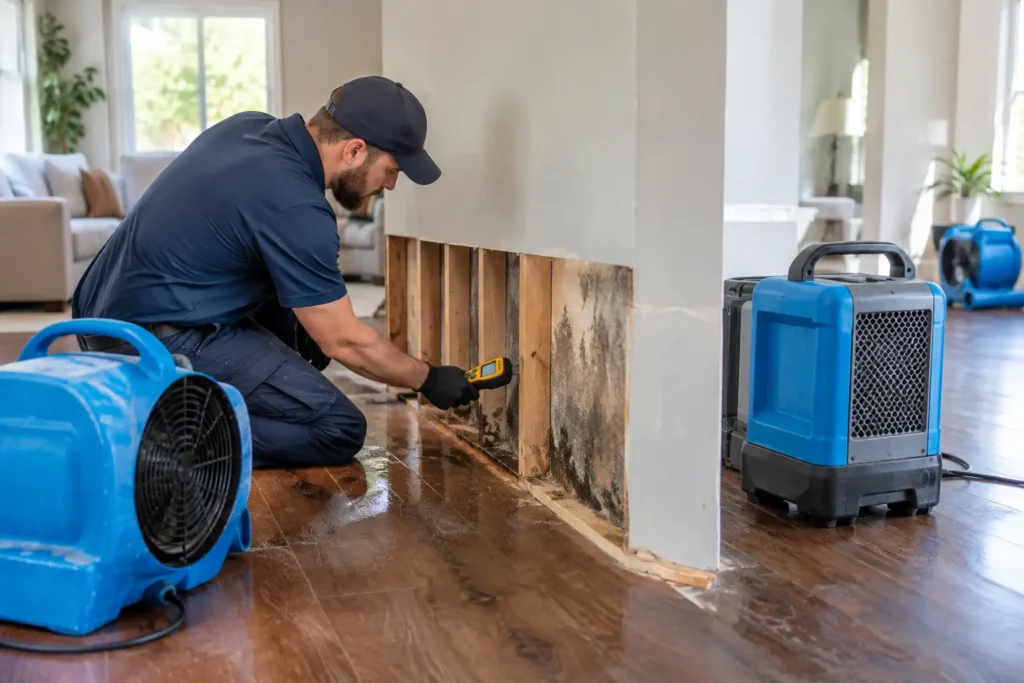
A qualified restoration team begins by locating the source and identifying the contamination category. The crew establishes containment when needed, extracts standing water, removes affected materials that cannot be safely restored, and cleans and disinfects remaining appropriate surfaces. Specialized drying equipment and moisture monitoring help ensure the structure is drying beyond what is visible.
Documentation is part of the process as well. Clear records of affected rooms, moisture readings, removed materials, and restoration work can help homeowners understand the scope of damage and communicate with their insurance carrier. Coverage depends on the individual policy and cause of loss, so it is wise to report the event promptly and keep all related records.
For homes in Los Angeles County and surrounding Southern California communities, fast response is especially useful when sewage backs up into finished living space. SOS Restoration provides emergency water and sewage damage response with certified technicians who can assess conditions, contain the loss, and guide the recovery process with clear communication.
A fast response protects more than finishes
Sewage contamination is not a wait-and-see problem. Even when the affected area looks small, water can move into materials and spaces that are difficult to inspect without the right equipment. Acting promptly gives the restoration team a better chance to limit secondary damage, protect the home’s indoor environment, and help your household move from a stressful emergency toward a clean, usable space again.