
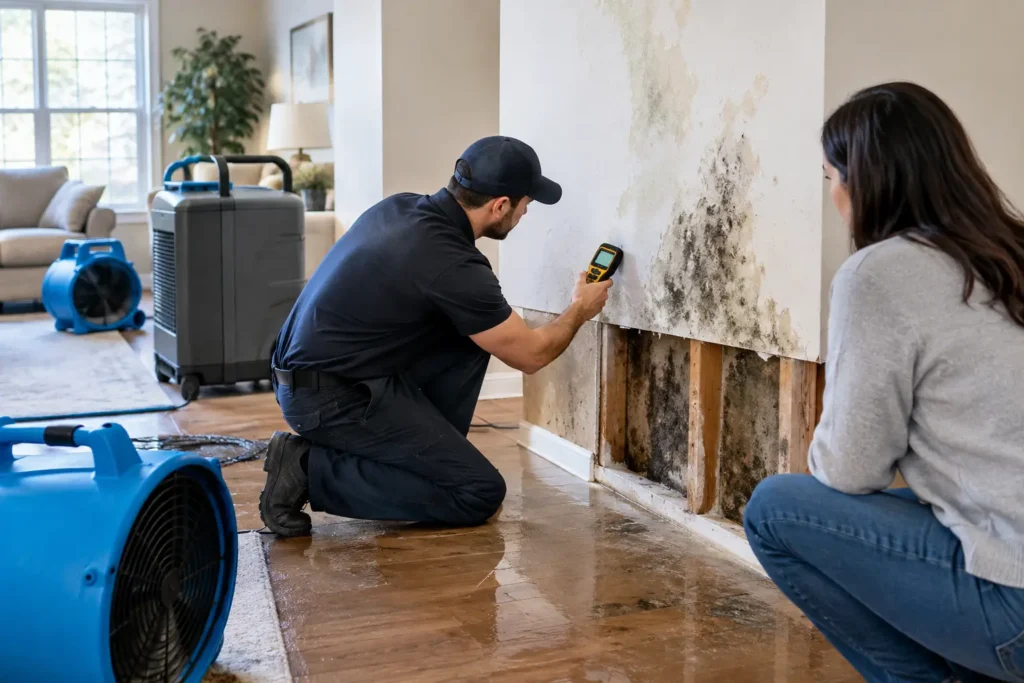
A musty odor after a plumbing leak can leave you with a frustrating question: Is there mold behind the wall, or is the smell coming from something else? Understanding mold testing vs inspection helps you choose the right next step without losing time while moisture damage spreads.
A mold inspection looks for the source, extent, and conditions that allow mold to grow. Mold testing analyzes samples from the air or a surface. They can work together, but they are not interchangeable. In many homes, a thorough inspection provides the most useful starting point because it identifies what needs to be addressed right away.
Mold Testing vs Inspection: The Core Difference
A mold inspection is a property assessment performed by a trained professional. The goal is to locate visible growth, hidden moisture, water-damaged materials, and building conditions that may support mold. An inspector may examine areas around plumbing, windows, roofs, HVAC components, crawl spaces, attics, cabinets, and recently flooded rooms. Moisture meters, thermal imaging, and humidity readings can help reveal concerns behind finished surfaces without unnecessary demolition.
Mold testing involves collecting a sample and sending it for analysis. Air samples may be used to compare conditions in different areas, while surface samples can help identify material found on a wall, ceiling, or household item. A report may describe the types and relative levels of mold detected in that sample.
The key distinction is practical: testing tells you what was present in the sample at a particular time. Inspection helps explain why mold may be present, where moisture is entering or remaining, how far damage may extend, and what restoration work is needed to correct the problem.
When a Mold Inspection Is Usually the Right First Call
If you can see staining, fuzzy growth, peeling paint, warped flooring, or water damage, the priority is not simply naming the mold. The priority is stopping the moisture source and determining whether affected materials need cleaning, removal, drying, or repair.
The same is true after a burst pipe, appliance leak, roof leak, overflow, or flood. Even after standing water is removed, moisture can remain in drywall, insulation, baseboards, subflooring, and cabinets. Mold growth can begin where it is not obvious from the room itself. A professional inspection focuses on finding that retained moisture before it becomes a larger repair.
An inspection is also useful when there is a persistent earthy or musty odor but no visible mold. Odor alone does not confirm mold, and a test result alone may not identify the source. A careful property assessment can narrow the search to likely areas, such as a vanity cabinet with a slow supply-line leak or a wall cavity affected by a past plumbing issue.
For Southern California homeowners, hidden moisture is easy to underestimate. A small leak can go unnoticed during dry weather, while coastal humidity, condensation, or storm-driven roof leaks can compound the problem. The longer damp materials remain in place, the more complicated restoration can become.
When Mold Testing Can Add Useful Information
Mold testing can be appropriate when the inspection findings need additional documentation or when visible conditions and occupant concerns do not match. For example, a professional may recommend testing when there is a recurring odor but the source is unclear, when a property has a history of water damage with limited visible evidence, or when comparing indoor and outdoor air conditions could provide helpful context.
Testing may also be requested before or after certain restoration work as part of a property owner’s documentation process. The value depends on the question being asked. A meaningful testing plan should be based on the building conditions, not used as a substitute for a visual and moisture-focused assessment.
There are limitations to keep in mind. Mold levels in air can change with ventilation, weather, cleaning activity, open windows, HVAC operation, and the timing of sampling. A single air sample is a snapshot, not a complete map of every hidden cavity in the house. Surface samples only represent the exact spot that was sampled.
That is why a lab report should be interpreted alongside inspection findings. If a wall is wet and visibly damaged, waiting for a report should not delay moisture control and professional remediation planning. Conversely, a test that does not detect elevated levels does not automatically rule out concealed moisture or mold elsewhere in the property.
What Happens During a Professional Mold Inspection
A good inspection is methodical, not a quick walk-through. The technician begins by asking what happened: when the leak, flooding, odor, staining, or humidity problem began; which rooms are affected; and whether repairs have already been attempted. This history often points to the most likely pathways for hidden water.
Next comes a visual assessment of accessible areas and materials. The technician looks for discoloration, swelling, deteriorated drywall, damaged caulking, condensation, deteriorated insulation, and signs of prior water intrusion. Moisture detection tools can then help confirm whether materials are still damp or whether a suspected area deserves closer evaluation.
The inspection should result in clear, usable guidance. That may include identifying the water source that needs repair, outlining affected materials, explaining whether containment may be needed, and recommending drying, cleaning, removal, or reconstruction steps. If testing would genuinely clarify the situation, the recommendation should explain what will be sampled and why.
At SOS Restoration, the goal of an inspection is to give homeowners a clear path forward, not add confusion during an already stressful situation. When moisture damage is involved, rapid assessment and drying can help limit secondary damage to the home.
Do You Need Both Mold Testing and Inspection?
Sometimes. If mold is visible after water damage and the source is clear, an inspection and remediation plan may be all that is needed to move forward. The condition of the materials, the extent of moisture, and the scope of affected areas are generally more useful than a test result alone.
In a less clear situation, testing can complement the inspection. This may be the case when there is no visible growth, when the property has experienced repeated leaks, or when a homeowner needs more information about what an inspector has found. The best approach depends on the building, the moisture history, and the purpose of the evaluation.
Be cautious of anyone who treats every mold concern as a testing-only problem. A sample cannot fix a leak, dry wet materials, or tell you exactly how far moisture traveled behind walls. A quality assessment centers on the condition of your property and the actions required to protect it.
Questions to Ask Before Approving Testing or Remediation
Before moving ahead, ask what moisture source was identified, what areas were inspected, and whether moisture readings were taken. You should also understand whether testing is being recommended, what question it is intended to answer, and how the result will affect the work plan.
If remediation is needed, ask how the affected area will be contained, how damaged materials will be handled, how remaining moisture will be monitored, and what repairs may follow. Homeowners dealing with an insurance claim can also benefit from clear documentation of the water event, affected areas, mitigation work, and restoration recommendations. Coverage decisions remain with the insurer and policy terms, but organized records can make the process easier to follow.
Act on Moisture, Not Just the Odor
The most useful decision in mold testing vs inspection is often the one that gets a hidden water problem found and corrected promptly. If you have visible water damage, a persistent musty smell, or concerns after a leak or flood, arrange a professional inspection before the issue has more time to spread. Clear answers start with locating the moisture and creating a practical plan to restore the space safely.