
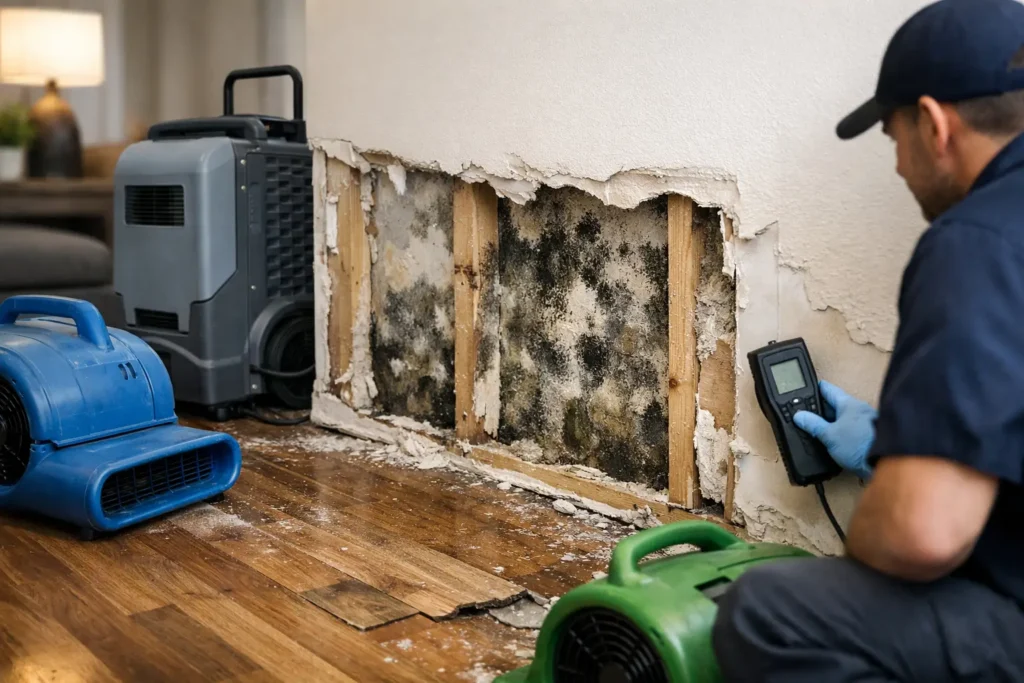
A wall can look completely normal while moisture and mold are spreading behind it. That is what makes the signs of hidden mold walls so easy to miss after a leak, plumbing issue, roof damage, or flood. For Southern California homeowners, acting on early clues can help prevent a small moisture problem from turning into a larger restoration project.
Mold needs moisture and a material it can feed on, such as drywall paper, wood framing, insulation, carpet backing, or dust. It does not always appear as a visible dark patch. In many cases, the first warning is a change in smell, paint, texture, or how a room feels.
1. A Persistent Musty Odor in One Area
A stale, earthy, or musty smell that keeps returning is one of the most common warning signs. You may notice it most when entering a room that has been closed up, opening a closet, or standing near a particular wall.
Air fresheners and open windows may temporarily cover the odor, but they do not remove its source. If the smell remains after ordinary cleaning, especially following water damage, it is worth having the wall and surrounding materials assessed. Moisture can remain behind drywall long after a visible puddle or stain has disappeared.
2. Paint That Bubbles, Peels, or Feels Soft
Paint is often the first layer to show that a wall has a moisture problem. Blistering paint, peeling edges, cracked caulk, or wallpaper that lifts away from the wall can all point to moisture moving through the material behind it.
A single small paint defect is not automatic proof of mold. Age, poor adhesion, and normal humidity can affect finishes too. The concern rises when the damage is concentrated near a bathroom, kitchen, laundry room, window, exterior wall, or a location with a known leak.
Pressing on the area may reveal drywall that feels soft, swollen, or slightly uneven. Avoid opening the wall or scraping suspected growth. Disturbing contaminated material can spread particles into the room and makes it harder to determine the full extent of the problem.
3. Discoloration That Keeps Coming Back
Water stains may look tan, yellow, gray, or brown. Mold can appear in many colors as well, including black, green, gray, white, or orange. The color alone cannot identify what is on a wall, but recurring discoloration deserves attention.
A spot that returns after being painted over is particularly concerning. Painting can hide a stain for a while, but it cannot correct trapped moisture or contamination inside the wall cavity. If the underlying source remains active, the wall may continue to deteriorate out of sight.
Look beyond the most obvious mark. Check nearby baseboards, corners, window trim, ceiling edges, and the opposite side of the same wall. Moisture does not always travel in a straight line, particularly when it follows framing, pipes, or insulation.
4. Warped Baseboards, Swollen Trim, or Buckled Walls
Wood trim and drywall react when they absorb water. Baseboards may separate from the wall, warp, swell, or develop gaps at the floor. A wall may look bowed, rippled, or uneven under certain lighting. In severe cases, drywall can crumble near the bottom edge.
These conditions can result from a recent burst pipe or flood, but slow leaks are often more difficult to recognize. A pinhole plumbing leak behind a wall can release small amounts of water over time, keeping materials damp enough to support hidden mold growth without creating a dramatic emergency.
If you see physical changes in a wall, consider the timing. Did they begin after a dishwasher leak, overflowing tub, heavy rain, roof issue, or water heater problem? That history helps a restoration professional target the inspection and document affected materials.
5. Condensation or Unusual Humidity Near a Wall
Condensation on windows is common in some situations, but repeated moisture on a wall, persistent dampness around window frames, or a room that feels unusually humid can indicate a ventilation or building-envelope issue. Bathrooms, laundry areas, kitchens, and rooms with exterior walls are frequent trouble spots.
Humidity does not always cause hidden mold by itself. However, when humid air meets a cool surface, condensation can form inside wall cavities or behind furniture placed tightly against an exterior wall. In coastal and marine-influenced parts of Southern California, seasonal dampness can add to the risk when ventilation or drainage is poor.
A professional moisture inspection can distinguish between surface humidity and moisture trapped within building materials. That difference matters because the correct solution may involve drying, leak repair coordination, ventilation improvements, selective material removal, or a combination of measures.
6. A Past Leak That Seemed Too Small to Matter
Not every water event leaves an obvious stain. Water can enter behind cabinets, under flooring, around window openings, or inside a wall and remain concealed. A repaired plumbing leak is good news, but the structure may still need drying and moisture verification afterward.
Pay close attention if your home has experienced any of these conditions:
- A supply-line leak, overflowing appliance, toilet backup, or burst pipe
- Roof or window leaks after wind-driven rain
- Water migrating from an upstairs bathroom or neighboring unit
- Flooding, standing water, or a water heater failure
The longer wet materials remain damp, the greater the chance of secondary damage. Drywall and insulation can hold moisture where fans and household ventilation cannot reach. A timely inspection helps identify whether the area is dry or whether hidden conditions need professional remediation.
7. Symptoms in the House, Not Just on the Wall
Sometimes the strongest clue is that a specific space never feels quite right. The room may have a musty odor, visible humidity, recurring stains, or materials that seem to degrade faster than they should. You may also notice that the issue is limited to one closet, bedroom, hallway, or area near plumbing.
These clues do not confirm mold on their own, and they should not be used to diagnose health concerns. They do indicate that the home may need a closer look. The goal is to find and correct moisture at its source, protect the affected area, and avoid letting the condition spread.
What a Professional Hidden Mold Inspection Can Reveal
Hidden mold investigations are not based on guesswork or a quick visual scan alone. A qualified restoration team begins by asking where water entered, when the issue started, and what changes you have noticed. They then inspect likely pathways around pipes, fixtures, windows, rooflines, flooring transitions, and affected walls.
Moisture meters, thermal imaging, and other specialized tools can help locate areas that require closer evaluation. These tools are valuable, but results must be interpreted in context. For example, a cooler area on a thermal image may indicate moisture, missing insulation, or an air gap. Verification is what turns a clue into an informed restoration plan.
If moisture or mold is confirmed, the appropriate scope depends on the location and extent of damage. Some situations require controlled containment, removal of affected porous materials, detailed cleaning, structural drying, and post-remediation verification. Others may involve a smaller, localized repair once the water source is resolved. The right approach protects unaffected parts of the home while addressing the actual cause rather than simply covering the evidence.
When to Call for Help
Call for a professional inspection promptly when you smell persistent mustiness, see recurring stains or bubbling paint, discover a leak, or find soft and warped wall materials. Fast action is especially valuable after flooding or a plumbing failure, when moisture can move behind walls and beneath floors before it becomes visible.
SOS Restoration provides inspections and emergency restoration support for homeowners facing water damage and suspected mold conditions. Certified technicians can assess moisture, explain what they find in clear terms, document damage for the restoration process, and help guide the next steps with minimal hassle.
Your wall does not need to be covered in visible mold before it deserves attention. If something smells off, feels damp, or keeps returning after a repair, treating that signal early can protect your home and bring peace of mind back to the room.