
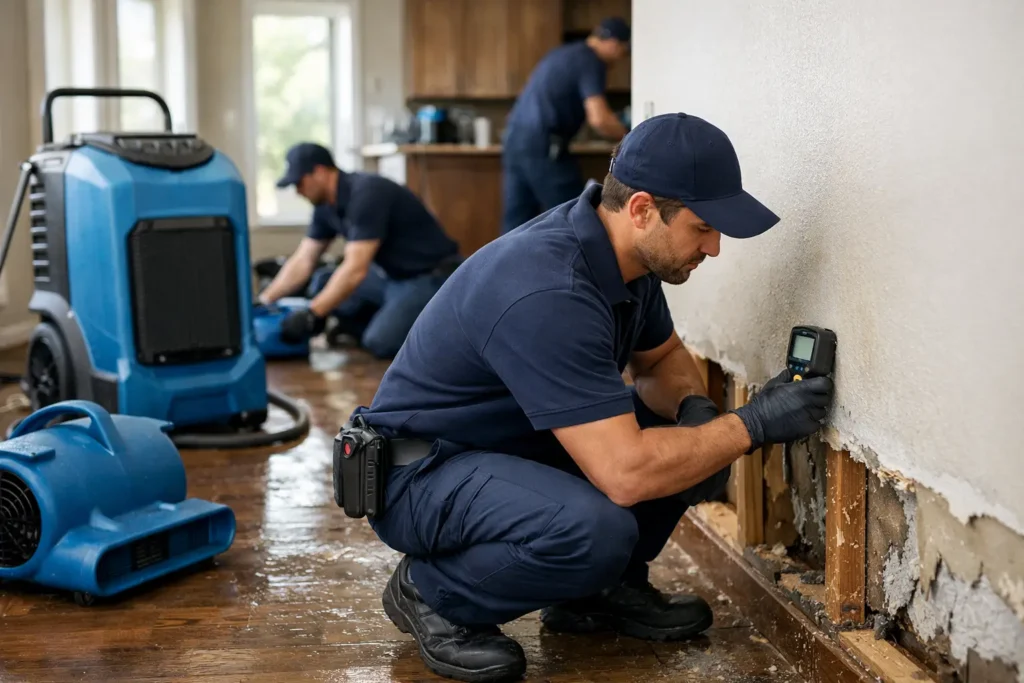
A burst supply line can soak flooring and wall cavities long before the water becomes visible. Wildfire smoke can settle into textiles, vents, and hidden surfaces. A leak under a sink can create damp materials that need prompt attention. In each situation, IICRC certified technicians bring a defined restoration process to a moment when homeowners need clear answers, fast action, and careful work.
Credentials do not make a property emergency less stressful. They do, however, give you a practical way to evaluate whether the people entering your home understand how to assess damage, control conditions, document their work, and make informed decisions about what can be restored.
What IICRC Certification Means in Restoration
The Institute of Inspection, Cleaning and Restoration Certification, commonly called the IICRC, develops standards and certification programs for cleaning, restoration, and inspection professionals. Technicians complete training and pass examinations in specific areas of work. Their certification is not simply a label for a cleanup crew. It reflects education tied to recognized procedures for water damage, fire and smoke damage, mold remediation, and related restoration services.
The distinction matters because property damage is rarely one simple problem. Standing water may be only the visible part of a larger moisture issue. Smoke residue can vary from room to room depending on the fire source, airflow, and materials burned. Mold concerns require containment, source correction, and careful removal practices rather than surface cleaning alone.
A qualified technician begins by determining what happened, what materials were affected, and what conditions could cause additional damage. That assessment shapes the work plan. It also helps a homeowner understand why a crew may need to remove baseboards, place drying equipment, isolate a work area, or return for moisture monitoring.
Why IICRC Certified Technicians Matter in the First Hours
After a water loss, the first few hours often affect the scope of restoration. Materials absorb moisture at different rates. Carpet padding, drywall, insulation, engineered flooring, cabinets, and framing each respond differently. Starting fans without a proper assessment, for example, may not address moisture trapped behind walls or beneath flooring.
IICRC certified technicians use moisture detection tools, extraction equipment, air movement, dehumidification, and ongoing readings to create a controlled drying plan. The goal is not merely to make a room look dry. It is to verify that affected materials are returning to appropriate moisture conditions or to identify materials that cannot be reasonably restored.
For a homeowner, that means a more complete response: stopping the source when possible, removing standing water, protecting unaffected areas, documenting conditions, and checking progress instead of guessing. It can also reduce the chance that a small leak becomes a larger repair project because hidden moisture was missed.
Fire and smoke losses require the same level of judgment. Smoke particles and residue behave differently based on the type of fire and the surfaces involved. Improper cleaning can spread residue, stain a surface permanently, or damage an item that could have been restored with the right method. Certified restoration professionals evaluate the affected materials before selecting cleaning approaches, odor-control measures, and contents-handling procedures.
Certification Supports a Method, Not a Shortcut
Homeowners are right to want a fast response, especially when water is spreading or a home has been affected by smoke. Speed matters, but quality restoration is not a race to place equipment and leave. It requires a sequence of decisions backed by inspection and documentation.
A professional restoration process generally includes an initial assessment, safety review, source control, mitigation, drying or cleaning, monitoring, and repair coordination. The exact steps depend on the loss. A clean-water pipe break in a contained area is not handled the same way as sewage backup, storm-related flooding, or a long-term leak with visible microbial growth.
This is where training helps technicians explain the trade-offs. Sometimes a material can be dried and saved. Sometimes removing a portion of drywall or flooring is the safer, more practical choice because moisture or contamination has affected it beyond the surface. A trustworthy team should explain the reason for that recommendation in plain language, including what they found and what happens next.
Certification also supports consistency across the job. The crew that performs extraction should communicate the conditions found to the team monitoring drying, and the documentation should support the repair and claims process. That continuity can make a difficult situation feel far more manageable.
Questions to Ask Before You Hire a Restoration Company
When your home is affected by water, smoke, or mold, you do not need to become a restoration expert overnight. A few direct questions can tell you whether a company is prepared to handle the work responsibly.
Ask which certifications the technicians assigned to your project hold and whether those certifications relate to your type of damage. Ask how they will locate hidden moisture or evaluate smoke residue. Ask how often they will monitor drying conditions and how they will document the loss for your records and insurance claim.
It is also reasonable to ask who will be your point of contact and how the company will communicate if the scope changes. Property restoration can uncover damage that was not visible during the first inspection. Clear communication does not mean there will never be changes. It means you will understand why a recommendation is being made before work moves forward.
For urgent losses, availability matters as much as credentials. A company with a 24/7 emergency response model can begin containment quickly, helping protect building materials and personal belongings from additional exposure. Still, do not confuse an immediate arrival with a rushed diagnosis. The right response is both prompt and methodical.
What Certified Water Damage Work Looks Like
Water damage restoration is often misunderstood as water removal followed by a few fans. Effective mitigation is more involved. Technicians identify the water source, determine the extent of affected materials, classify the conditions of the loss, remove water, and establish drying goals based on the structure and materials.
They may use moisture meters, thermal imaging, hygrometers, and other diagnostic tools to find water that is not obvious to the eye. Extraction can be especially important because removing liquid water is generally more efficient than trying to evaporate it later. Equipment is then positioned to support controlled evaporation and dehumidification, with readings taken throughout the drying process.
The trade-off is that drying equipment can be disruptive. It may be noisy, and access to certain rooms may be limited while the work is underway. Those inconveniences are temporary, but they should be explained clearly. A technician should tell you what equipment is doing, how long conditions may require monitoring, and what steps can help keep the process moving.
The Role of Documentation and Insurance Support
Property losses create two parallel needs: restoring the home and keeping a clear record of what occurred. Photos, moisture readings, equipment logs, damage notes, and itemized observations can help establish a timeline of the mitigation work.
No restoration company can promise what an insurer will approve or cover. Coverage depends on the policy and the details of the loss. However, organized documentation and direct communication can make it easier for homeowners to provide their insurer with the information requested and keep the claim process from adding unnecessary confusion.
This is particularly valuable after a major event, when homeowners may be managing temporary living arrangements, damaged belongings, and repair decisions all at once. A restoration team should help bring order to the immediate recovery work, not create another layer of uncertainty.
A Local Response Built Around Careful Recovery
For homeowners facing an emergency, credentials are one sign of preparedness. Just as important is how those credentials show up in the work: a technician who takes time to inspect, explains the plan, protects unaffected areas, tracks progress, and treats your home with care.
SOS Restoration provides 24/7 emergency restoration support for homeowners dealing with water damage, fire and smoke damage, mold concerns, and post-loss repairs. The focus is simple: contain the immediate problem, protect your property and indoor environment, and guide you through the next steps with clear communication.
If you are dealing with standing water, a leak, smoke damage, or suspected moisture-related damage, acting quickly can protect more of what matters. Choose a team that can respond now, assess the situation thoroughly, and keep you informed while your home moves from crisis toward recovery.