
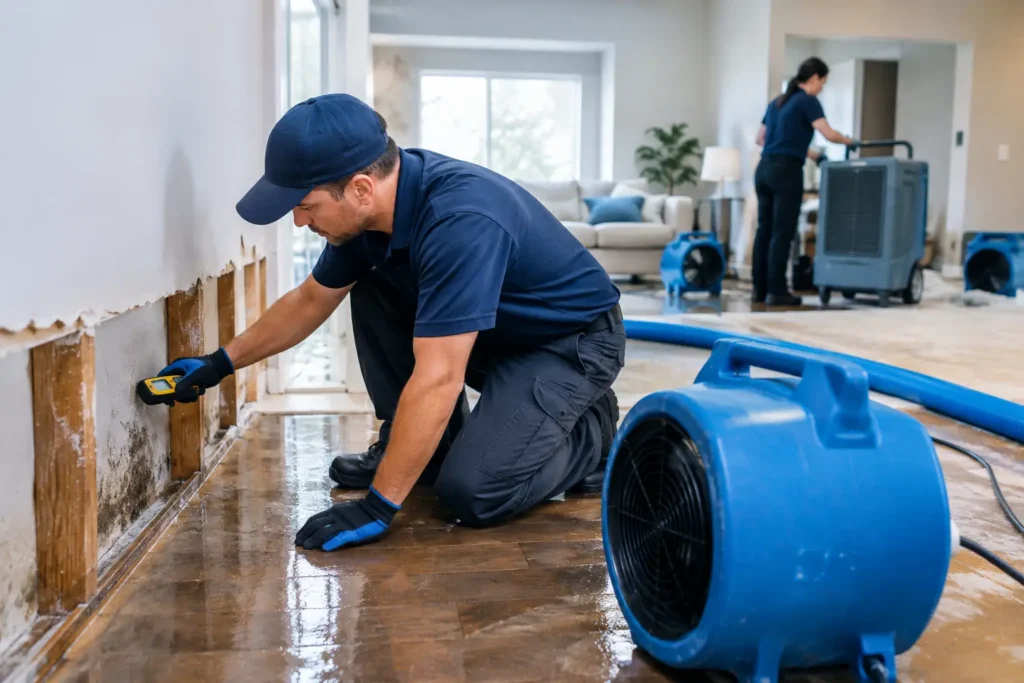
A pipe can burst behind a wall, a washing machine hose can fail, or heavy rain can enter through a damaged roof – and within hours, water can move far beyond the visible wet spot. Understanding water mitigation vs restoration helps you make the right call during those first stressful moments. One process stops the damage from getting worse; the other puts your home back together.
For Southern California homeowners, the distinction matters because delays can lead to warped flooring, damaged drywall, odors, mold growth, and a more complicated insurance claim. The best recovery plan usually starts with immediate mitigation, then moves into careful restoration once the structure is dry and safe.
Water Mitigation vs Restoration: The Core Difference
Water mitigation is the emergency response phase. Its purpose is to limit additional damage after a leak, flood, overflow, or appliance failure. Think of it as stabilizing the property: removing water, controlling moisture, protecting unaffected areas, and documenting what happened.
Water restoration is the repair and recovery phase that follows. Once moisture levels have been brought under control, restoration focuses on returning damaged materials and spaces to their pre-loss condition where possible. That may include repairing drywall, replacing flooring, repainting, reconstructing affected areas, and cleaning or restoring contents.
The two services work together, but they are not interchangeable. Replacing a baseboard before the wall cavity is properly dried is not restoration – it is a repair that may trap a moisture problem behind finished materials.
What Water Mitigation Includes
Mitigation begins with an assessment of the water source, the affected materials, and the category of water involved. Clean water from a supply line requires a different response than contaminated water from a sewage backup or outdoor flooding. Technicians identify the source, stop it when possible, and determine how far the water has traveled.
The next priority is extraction. Standing water can soak carpet padding, subflooring, cabinets, drywall, and framing quickly. Professional extraction equipment removes as much water as possible before high-powered air movers and dehumidifiers begin the drying process. The faster water is removed, the better the chance of preserving materials that might otherwise need replacement.
A thorough mitigation project may also include removing saturated carpet padding, lifting affected flooring where appropriate, creating drying access behind baseboards or inside wall cavities, and protecting dry areas from cross-contamination. Moisture meters and thermal imaging tools help locate hidden wet materials that cannot be judged by touch or appearance alone.
Mitigation is not complete just because a room feels dry. A professional team monitors moisture levels over multiple visits and adjusts equipment as conditions change. Drying goals are based on the material and surrounding conditions, not a guess from the surface.
Why fast action matters
Water damage is progressive. Wood can swell, laminate flooring can separate, drywall can soften, and insulation can hold moisture long after visible puddles are gone. In warm conditions, elevated moisture can also create an environment where mold may develop.
That is why emergency response is about more than removing water. It is about controlling the conditions that allow secondary damage to spread. Calling for help quickly can reduce the scope of repairs and provide clearer documentation of the loss for your insurance carrier.
What Water Restoration Includes
Restoration begins after mitigation has achieved documented drying and the affected area is ready for repairs. The exact scope depends on what was damaged, how long materials were wet, and whether those materials can be safely restored.
In a minor water event, restoration may be as simple as reinstalling baseboards, repairing a small section of drywall, and repainting. A larger loss may require replacing cabinets, flooring, insulation, drywall, or parts of the structure. When demolition is necessary, it should be targeted and purposeful, removing unsalvageable materials while preserving what can be saved.
Restoration can also involve cleaning affected contents, odor control, and coordinating reconstruction so the home becomes functional again. This phase is often what homeowners picture when they hear the word “restoration,” but it depends on the mitigation work that came before it.
Restoration is about lasting results
A room can look repaired while hidden moisture remains behind a wall or beneath flooring. That is why a responsible restoration plan does not rush cosmetic work ahead of proper drying. The goal is not simply to make the damage less visible. It is to rebuild on a dry, stable foundation.
There are trade-offs in every project. Saving a material may be possible, but only if it can be properly dried, cleaned, and returned to a sound condition. In other situations, replacement is the safer and more practical choice. A qualified assessment helps homeowners understand those decisions instead of being left to guess.
A Typical Water Damage Timeline
The timeline varies based on the source of the water, the size of the affected area, the materials involved, and how quickly the issue was discovered. Still, most professionally managed projects follow a similar sequence.
First comes emergency contact and inspection. The water source is addressed, affected areas are documented, and a drying plan is created. Next, the mitigation team extracts standing water, removes unsalvageable materials when needed, sets drying equipment, and monitors progress until moisture readings support the next phase.
After the space is dry, the restoration scope becomes clearer. Repairs and reconstruction can then be planned around the actual condition of the home rather than assumptions made while materials were still wet. For homeowners filing a claim, photos, moisture records, and itemized documentation from the emergency phase can be valuable when communicating with an insurer. Coverage decisions remain with the insurance carrier and policy terms, but organized documentation can make the process easier to follow.
When You Need Mitigation, Restoration, or Both
If water is actively present, surfaces are wet, or you suspect moisture has traveled behind walls or under flooring, mitigation is the immediate need. Do not wait for a repair estimate before addressing standing water and hidden moisture. The emergency work protects the property from becoming a larger restoration project.
If the area is already dry and the remaining issue is damaged finishes, missing materials, or reconstruction, restoration may be the primary need. Many homeowners need both services, especially after a burst pipe, roof leak, overflowing fixture, or appliance failure that affected multiple rooms.
Contaminated water requires additional care. Sewage backups and other unsanitary water events should be handled by trained professionals using appropriate containment, cleaning, and safety procedures. The priority is protecting the home and the people who live in it while returning the affected area to a safe condition.
Questions to Ask During an Emergency
When choosing a water damage team, ask how they will locate hidden moisture, how often they will monitor drying, and what documentation they provide. You should also know who will explain the work, communicate changes in scope, and coordinate the transition from emergency services to repairs.
Clear communication matters as much as equipment. A homeowner should understand what is happening in the home, why certain materials may need to be removed, and what the next steps look like. At SOS Restoration, certified technicians help guide homeowners from emergency water extraction and structural drying through the repair process, with hands-on support for property documentation and insurance communication.
The Right First Step After Water Damage
When water enters your home, do not treat visible cleanup as the finish line. The right first step is to stop the source if it is safe to do so, avoid affected electrical areas, and arrange a prompt professional inspection. Fast mitigation gives restoration work a clean, dry starting point – and gives your home the best chance of a lasting recovery.