
A burst pipe, kitchen fire, sewage backup, or smoke-filled home creates two urgent problems at once: stopping further damage and figuring out what your insurance company needs. The right insurance claim questions can make the process less confusing, help you document the loss clearly, and keep restoration moving while details are reviewed.
The first priority is always safety and damage control. Once the area is safe, report the loss promptly, save records, and get professional mitigation underway when needed. Waiting for every insurance answer before extracting water, drying materials, or securing a damaged property can allow the loss to grow.
Insurance Claim Questions to Ask Right Away
Call your insurer as soon as practical after discovering damage. Have your policy number, property address, date and time of loss, and a brief description of what happened available. Ask for a claim number and write down the representative’s name, contact information, and the date of the call.
Your first conversation should clarify the immediate next steps, not settle every coverage detail. Ask whether the insurer has emergency procedures for water removal, temporary protection, smoke cleanup, or other urgent work. Find out how to submit photos, invoices, moisture reports, and other documentation, and ask when an adjuster may inspect the property.
It is also reasonable to ask whether there are preferred documentation formats or limits for emergency services. Policies and claim procedures differ, so clear answers from the start can prevent avoidable delays later.
Can I Start Emergency Restoration Before an Adjuster Arrives?
In many property-loss situations, prompt mitigation is necessary to prevent secondary damage. Standing water can move into walls and flooring. Wet drywall and insulation can deteriorate. Smoke residue can continue to affect surfaces and contents. A broken window, roof opening, or exposed area may need temporary protection quickly.
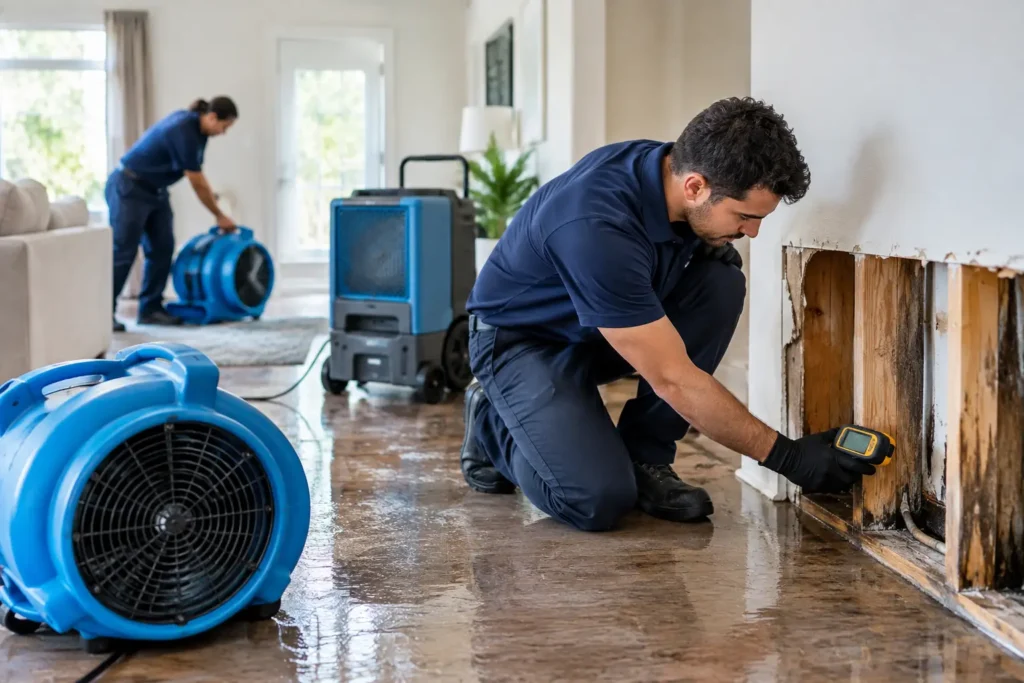
Take photos and video before work begins when it is safe to do so. Then keep a record of what was done, why it was needed, and when it happened. A qualified restoration team can document conditions with photos, readings, drying records, and an itemized scope of work. This documentation helps show the difference between the original loss and damage that could develop if the property is left untreated.
Do not assume an insurer will approve every service simply because it is performed. Instead, communicate early, preserve records, and focus on reasonable steps that protect the home from further damage.
What Should I Document for a Property Damage Claim?
Good documentation tells the story of the loss from discovery through restoration. Begin with wide photos that show each affected room, then take closer images of damaged flooring, walls, cabinets, ceilings, furniture, appliances, and personal items. Capture the source when possible, such as a failed supply line, overflowed fixture, or visible fire and smoke damage.
Keep damaged items until the insurer advises otherwise, unless they create a health or safety concern or must be removed as part of emergency mitigation. Before disposal, photograph the item from several angles and note its make, model, approximate age, and condition. Receipts, warranty records, manuals, and previous photos of the home can also be useful.
Maintain one organized claim file with your claim number, policy communications, photos, inspection reports, invoices, estimates, and notes from phone calls. For each conversation, record who you spoke with, what was discussed, and any next step promised. This simple habit can be valuable when several people are involved in the claim.
What if Damage Is Hidden Behind Walls or Under Flooring?
Not all damage is visible on day one. Water can travel beneath flooring, behind baseboards, and into wall cavities. Smoke can affect areas beyond the room where the fire occurred. Mold growth may be discovered after materials are opened or moisture testing identifies wet areas.
That is why professional assessment matters. Moisture monitoring, thermal imaging when appropriate, controlled removal of affected materials, and detailed inspection can reveal conditions that a visual walk-through misses. If additional damage is found after the initial estimate, the restoration scope may need to be updated and submitted for review. This is commonly called a supplement.
A supplement is not a sign that someone did something wrong. It can reflect conditions that were not accessible or apparent during the first inspection. Ask how newly discovered damage will be documented and communicated to the insurer.
Questions to Ask About Coverage and Payment
Your insurer is the right source for explanations of your policy, deductible, limits, exclusions, and payment process. Avoid relying on assumptions based on a neighbor’s claim or a policy from years ago. Two homes with similar damage can have different coverage outcomes.
When you speak with the claims representative, these questions can help you understand the practical path forward:
- What is my claim number, deductible, and primary point of contact?
- What emergency mitigation expenses should I submit, and how should I submit them?
- When will an adjuster inspect the property, and what should I prepare for that visit?
- Does my policy pay actual cash value, replacement cost value, or a combination for affected items?
- How are personal property, temporary repairs, and additional living expenses handled under my policy?
- What is the process if additional covered damage is discovered during restoration?
Some claims involve separate payments for mitigation, repairs, contents, or depreciation held back until qualifying work is complete. Ask the insurer to explain the timeline and required paperwork in plain language. Keep in mind that coverage decisions depend on the policy and the cause of loss. A restoration contractor can provide damage documentation and repair information, but the insurer makes coverage determinations.
How a Restoration Company Can Help With Claim Documentation
A restoration company should do more than remove water or clean smoke residue. In a well-managed project, the team documents affected materials, records equipment use, tracks drying progress, identifies visible and hidden damage, and prepares a clear scope for necessary work.
For water damage, that may include extraction records, moisture readings, daily monitoring logs, dehumidification details, and photographs of affected areas. For fire and smoke damage, documentation may cover soot conditions, odor impact, damaged contents, cleaning needs, and areas requiring repair. For mold-related damage, a professional assessment can identify moisture conditions and the extent of affected materials so the work plan addresses the source as well as the visible issue.
This information helps homeowners understand what is happening in their home and gives the insurer a more complete picture of the restoration work. It also creates accountability: you should know what work is being performed, why it is necessary, and what comes next.
At SOS Restoration, certified technicians can support the claims process with organized documentation while focusing on the urgent work of protecting your property and indoor environment. The goal is to reduce hassle, not add another layer of confusion during an already stressful event.
Common Mistakes That Can Complicate a Claim
The most common mistake is waiting too long to report damage or begin mitigation. A slow leak, damp carpet, or smoke-damaged room can become more difficult to restore with time. Another frequent problem is throwing away damaged property without photographs or a record of what was removed.
Homeowners can also run into trouble when they rely only on verbal updates. Confirm important conversations in writing when possible, save emails and text messages, and request copies of estimates, reports, and invoices. If an adjuster or restoration professional identifies a new issue, ask what evidence supports it and what step follows.
Finally, do not confuse a repair estimate with a coverage decision. An estimate describes the work believed necessary to restore damage. The insurer reviews the claim under the terms of the policy. Keeping those roles clear makes conversations more productive.
When property damage interrupts life at home, clear records and timely questions give you a steadier path forward. Protect the property first, document what you see, and ask for the next step whenever the process feels unclear.