
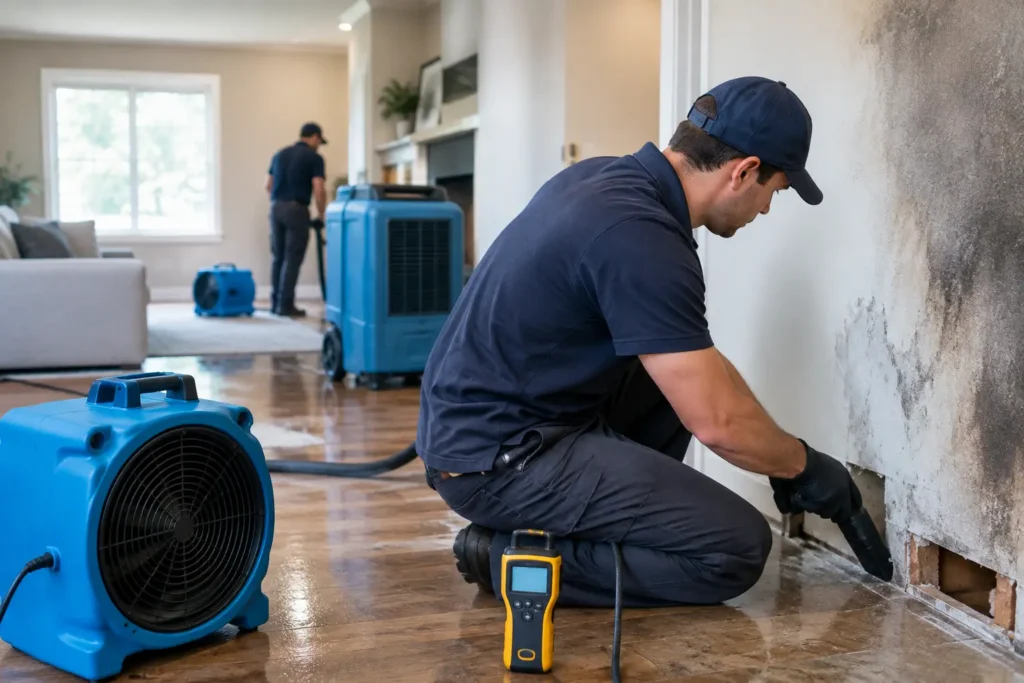
Smoke residue can look like a light gray film, yet it may contain acidic particles, oily deposits, and odors that keep circulating long after the fire is out. The best smoke damage cleaners are not necessarily the strongest-smelling products on a store shelf. They are the cleaners and methods matched to the type of smoke, the material affected, and the extent of damage inside the home.
For Southern California homeowners dealing with wildfire smoke, a kitchen fire, or smoke that drifted in from a nearby property, the first priority is protecting the home from further contamination. Cleaning the wrong way can grind soot into paint, fabric, carpet, and wood grain. It can also spread fine particles from one room to another.
What Makes Smoke Damage Difficult to Clean?
Smoke is not one uniform substance. A low-oxygen fire often leaves sticky, greasy soot. A fast-burning paper or wood fire can produce dry, powdery residue. Smoke from synthetic materials, appliances, plastics, or food may leave a heavy odor and residue that behaves differently on every surface.
That difference matters because water can smear some soot, while an overly aggressive cleaner can damage finished wood, painted walls, natural stone, or delicate belongings. Odor is another challenge. Fragrance may temporarily cover the smell, but it does not remove the particles causing it.
The best results come from a process that begins with assessment and dry removal, then uses the appropriate cleaning agent, controlled moisture, and odor treatment as needed. When smoke has traveled through several rooms, entered the HVAC system, or affected porous materials, professional restoration is often the safer and more complete option.
Best Smoke Damage Cleaners by Surface
There is no single all-purpose product that is best for every smoke-damaged surface. A cleaner should be selected based on the residue and the material being cleaned.
Dry cleaning sponges for loose soot
Dry chemical sponges, often called soot sponges, are useful on dry, non-greasy soot found on walls, ceilings, painted trim, and some hard surfaces. They lift particles instead of pushing them deeper into the surface. The technique matters: wipe in straight, overlapping strokes and avoid scrubbing.
These sponges are usually a first step, not a complete smoke restoration solution. Once the sponge becomes loaded with soot, its surface can be trimmed or replaced. Using a dirty sponge can redeposit residue.
Low-residue degreasers for oily smoke
Protein fires, cooking fires, and many synthetic-material fires can leave oily or tacky residue. In these situations, a professional-grade, low-residue degreaser may be appropriate for washable walls, cabinets, metal, tile, and sealed countertops.
The trade-off is that degreasers can dull finishes or remove protective coatings if they are too strong or left on too long. Always test an inconspicuous area first, use a soft cloth rather than an abrasive pad, and follow the product directions closely. Painted surfaces with significant staining may still need specialty cleaning and sealing before repainting.
Mild pH-neutral cleaners for finished surfaces
For sealed wood, certain stone surfaces, vinyl, laminate, and other sensitive finishes, a mild pH-neutral cleaner is generally safer than a harsh alkaline cleaner. Use minimal moisture and dry the surface promptly. This is particularly important around cabinetry seams, flooring edges, and engineered wood, where moisture can create additional damage.
A gentle cleaner can be the right choice for light surface film, but it will not solve deeply embedded smoke odor or staining. If the smell returns after the surface dries, residue may remain in nearby materials or hidden cavities.
Specialized fabric and contents cleaning
Upholstery, curtains, clothing, and soft furnishings need more than a spray cleaner. Smoke particles can settle deep into fibers, and water-based cleaning can set certain stains or spread residue. Contents cleaning professionals use methods suited to the item, fabric, and smoke type, then evaluate whether deodorization or further restoration is needed.
This is especially valuable for items with sentimental or practical value, such as family textiles, furniture, and important household contents. Do not place smoke-damaged items back into cleaned rooms until they have been properly evaluated and treated, or they can reintroduce odor.
Why Household Cleaners Sometimes Fall Short
A household cleaner may improve the appearance of a light smoke film, but appearance is only one part of the problem. Fine soot can be nearly invisible, particularly on light walls and ceilings. Smoke odor may also linger in insulation, carpet padding, upholstered furniture, wall cavities, and HVAC components.
Avoid relying on bleach as a general smoke cleaner. It does not remove soot effectively, can damage materials, and introduces strong fumes into an already affected indoor environment. Abrasive powders, stiff brushes, and dry dusting tools can also create scratches or send particles airborne.
Air fresheners and scented candles are not smoke-removal tools. They can mask odors for a short time, but they do not remove the source. If you still smell smoke after basic surface cleaning, the home may need deeper cleaning and deodorization rather than another fragranced product.
A Safer Order for Cleaning Light Smoke Residue
If the smoke exposure was limited and there is no visible charring, heavy soot, or ongoing odor, start carefully. Ventilate the area when conditions allow, keep children and pets away from the work zone, and wear appropriate protective gear for dust and cleaning products.
Begin by removing loose soot with a HEPA-filtered vacuum held slightly above the surface or with a dry chemical sponge. Do not use a standard household vacuum, which may exhaust fine particles back into the room. After dry removal, clean washable hard surfaces with the mildest effective product for that material.
Work from ceilings and upper walls downward so falling particles do not contaminate already-cleaned areas. Change cloths frequently, avoid oversaturating surfaces, and dry cleaned areas promptly. Launder washable linens separately from unaffected items. If residue transfers repeatedly to a clean cloth, the contamination is likely beyond a simple wipe-down.
When to Call a Smoke Damage Restoration Team
Some smoke damage needs immediate professional attention, even when the fire itself was small. Call for an inspection when soot is visible across multiple rooms, odor persists after cleaning, HVAC vents or filters appear contaminated, or smoke reached carpets, upholstery, insulation, or unfinished wood.
Professional restoration is also appropriate after wildfire smoke infiltration. Even without flames inside the property, fine particles can enter through gaps, open windows, ventilation systems, and attic spaces. A certified team can assess affected materials, use HEPA filtration and controlled cleaning methods, address odors at their source, and document conditions for an insurance claim.
For a fire-damaged home, restoration typically involves more than selecting a cleaner. Technicians may secure the property, inspect structural and contents damage, remove soot safely, clean and deodorize affected areas, monitor indoor conditions, and coordinate repairs where needed. This approach helps prevent a surface-level cleanup from becoming a recurring odor or staining problem.
How to Choose the Best Smoke Damage Cleaners or Service
Look for a cleaner that clearly identifies which surfaces and smoke residues it is designed to treat. Products should have understandable instructions, material limitations, and safety information. Be cautious with any product marketed as a universal fix for walls, fabrics, odors, and electronics at once.
For substantial damage, choose a restoration provider with certified technicians, specialized smoke-cleaning equipment, and a clear explanation of the proposed work. You should understand what will be cleaned, what may need separate contents treatment, how odors will be addressed, and how the damage will be documented for your insurer. A careful inspection is a sign that the team is looking beyond what is immediately visible.
SOS Restoration provides 24/7 emergency support for homeowners who need help after fire or wildfire-related smoke damage, with clear communication from inspection through recovery. A prompt assessment can help protect both the property and the people living in it.
Smoke damage does not always announce itself with black walls or a strong burnt smell. Treat even light residue with care, and when the scope is unclear, let a trained restoration professional identify what your home needs before hidden contamination has more time to settle in.