
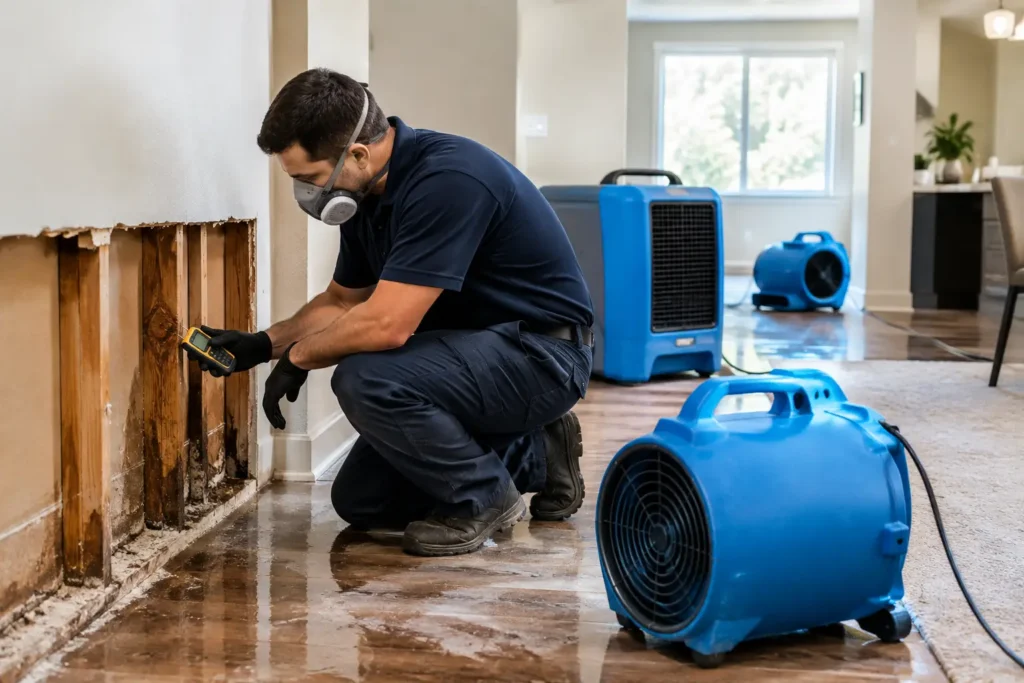
A sewage backup is not a normal water-damage event. When wastewater reaches a bathroom, kitchen, garage, crawl space, or living area, sewage cleanup versus sanitization becomes a critical distinction. Removing visible water and applying a disinfectant are not the same as restoring a contaminated area safely. Your home may need both, along with controlled drying, removal of damaged materials, and careful moisture monitoring.
For homeowners, the immediate goal is simple: keep people away from the affected space and get qualified help quickly. For a restoration team, the work is more detailed. The source must be contained, contaminated materials must be assessed, surfaces need to be cleaned and treated appropriately, and the area must be dried before repairs begin.
Sewage Cleanup Versus Sanitization: The Core Difference
Sewage cleanup is the full response to a wastewater release. It starts with controlling the affected area and extracting contaminated water. From there, technicians identify which materials can be cleaned and which porous materials may need to be removed. Cleanup can include removing contaminated debris, cleaning affected structural surfaces, managing odors, drying the property, and documenting damage for the insurance claim process.
Sanitization is one part of that larger process. It refers to reducing contamination on cleaned surfaces through appropriate antimicrobial or sanitizing treatments. A sanitizer cannot do its job properly through standing wastewater, soil, residue, or absorbed contamination. If the source is still present, or if contaminated material remains in place, spraying a product does not resolve the underlying problem.
Think of cleanup as removing what does not belong in your home. Sanitization is a controlled treatment step after physical cleaning. Both matter, but neither replaces the other.
Why Sewage Requires a Different Response Than Clean Water
Water from a supply line or rain intrusion can cause major property damage, but sewage creates a contamination concern as well. Wastewater may carry bacteria, viruses, organic matter, and other contaminants. The risk can increase when the backup comes from a toilet, sewer line, drain system, or floodwater that has mixed with sewage.
That is why a sewage loss should be treated as an urgent restoration event rather than a routine cleaning task. Contaminated water can travel under flooring, into wall cavities, behind baseboards, through insulation, and into stored belongings. What appears to be a small bathroom overflow may have reached adjoining materials that are not visible from the surface.
The type of material also changes the response. Nonporous surfaces, such as certain tile, metal, glass, and sealed plastic, may be cleaned and sanitized if they remain in sound condition. Highly absorbent materials such as carpet padding, insulation, particleboard, and some upholstered contents can retain contamination. Depending on the exposure and condition of the material, removal may be the safer restoration decision.
What Professional Sewage Cleanup Usually Includes
Every loss is different, so the scope depends on the source of the backup, how long water was present, where it traveled, and the materials affected. Still, a professional response follows a deliberate order.
First, the team works to protect the area from further spread. This may involve isolating the affected space and using professional protective equipment while the source is addressed. If wastewater is still entering the property, the plumbing issue needs attention before restoration can move forward.
Next comes extraction and removal of contamination. Technicians remove standing water, contaminated debris, and materials that cannot be effectively restored. This stage matters because treating surfaces without removing the wastewater and residue can leave contamination behind.
After physical cleaning, appropriate sanitation and antimicrobial treatment can be applied to salvageable structural surfaces. The exact products and methods should match the materials and conditions in the home. Certified restoration professionals use established procedures and equipment designed for contaminated-loss work, rather than relying on a one-size-fits-all approach.
Drying follows closely. Even after sewage has been removed and surfaces treated, hidden moisture can lead to secondary damage. Commercial-grade air movement, dehumidification, and moisture monitoring help technicians confirm that affected building materials are drying as intended. This is also where a thorough restoration process helps reduce the chance that a sewage event turns into a longer-term moisture or mold problem.
Why Sanitization Alone Is Not Enough
It is understandable to want the fastest possible solution after a backup. Homeowners often see a wet floor, smell an unpleasant odor, and hope that a strong cleaning product will take care of it. But sanitization alone does not remove wastewater from cracks, seams, subfloors, wall cavities, or absorbent materials.
It also does not repair the damage caused by prolonged moisture. If the water reached beneath flooring or soaked into drywall, the surface can look clean while conditions behind it remain unresolved. Odor can be another signal that materials, moisture, or residue need further attention, though odor should be evaluated alongside the full inspection rather than treated as the only measure of contamination.
The trade-off is that complete cleanup can require removing materials that a homeowner hoped to save. That can feel disruptive in the moment. Yet leaving contaminated, moisture-damaged material in place can create more extensive repairs later. A clear assessment helps you understand what needs immediate removal, what can be cleaned, and what reconstruction may be needed once the area is dry and cleared for repairs.
What to Do While You Wait for Help
The safest first step is to keep people and pets out of the affected area. Close the door or block access if possible, especially in homes with children or elderly family members. Avoid walking through the water and then into unaffected rooms, since that can spread contamination across flooring.
Do not use a household vacuum, standard mop, or fans to manage sewage-contaminated water. These tools are not designed for this type of loss and may spread contaminants or create additional exposure concerns. If water is near electrical outlets, appliances, or the electrical panel, stay clear of the area and report that condition when you call for help.
If it can be done without entering the contaminated space, take a few photos of the visible damage for your records. Then contact a qualified restoration company. Prompt documentation and a professional damage assessment can make the insurance conversation more manageable, although coverage depends on your specific policy and the cause of the loss.
When a Backup Becomes a Restoration Emergency
A sewage problem deserves prompt attention whenever wastewater has entered living areas, soaked carpet or flooring, reached drywall, affected belongings, or traveled beyond the immediate fixture area. The same is true when a drain backs up repeatedly, a toilet overflows with contaminated water, or sewage appears in a shower, tub, or floor drain.
Time matters because water keeps moving while it sits. It can wick into baseboards and drywall, migrate below flooring, and affect rooms next to or below the original backup. Fast response is not about rushing through the work. It is about containing the loss early so the cleanup, drying, and repairs have a better chance of staying limited.
For homeowners across Southern California, SOS Restoration provides 24/7 emergency response for sewage losses and related water damage. Certified technicians can assess the affected materials, begin containment and extraction, monitor drying, and help document the restoration process for your insurance claim.
A sewage backup can make a familiar room feel unsafe in minutes. The right response restores more than surfaces: it helps bring clarity, control, and a clean path forward when your household needs it most.