A pipe can burst at 2 a.m. A washing machine supply line can leak while you are away. Smoke can settle into walls and furniture long after a nearby fire is out. In those moments, searching for the best Orange County restoration companies is not about finding a convenient appointment next week. It is about finding a team that can protect your home, limit secondary damage, and explain what happens next without adding to the stress.
The right restoration company does more than remove visible water or wipe soot from a surface. It identifies the full extent of damage, addresses moisture and contamination safely, documents the loss, and helps move the property toward repair. Here is what Orange County homeowners, landlords, and property decision-makers should look for when the unexpected happens.
What the Best Orange County Restoration Companies Do Differently
A restoration emergency is time-sensitive because damage changes quickly. Water can move beneath flooring, behind baseboards, and into wall cavities. Damp building materials can create conditions for mold growth. Fire and smoke damage can leave odors and residues far beyond the room where the event began. Sewage backups require careful containment because contaminated water can affect the safety of the space.
The strongest restoration providers respond with a clear, organized process. First comes emergency stabilization: stopping or limiting the source when possible, extracting standing water, securing affected areas, and protecting contents. Next comes assessment, including moisture detection and documentation of affected materials. Then the team carries out drying, cleaning, remediation, and repairs based on the type and extent of the loss.
That sequence matters. Removing surface water alone is not the same as drying a structure. A room can look dry while moisture remains under flooring or inside drywall. Likewise, a fresh scent after smoke damage is not proof that smoke residue and odor sources have been properly addressed.
Start With 24/7 Emergency Availability
When water is actively spreading or sewage has entered a living area, waiting until business hours can increase the scope of the loss. Look for a company that offers real 24/7 emergency response, not simply an online contact form that will be answered later.
During the first call, a prepared restoration provider should ask practical questions: What happened? Is the water still running? Is there standing water? Which rooms are affected? Is electricity involved? Is the damage related to a drain backup, stormwater, or a clean plumbing leak? These details help the team arrive with appropriate equipment and safety precautions.
Fast response does not mean rushed work. It means urgent containment followed by a methodical plan. The provider should tell you what will happen upon arrival, what access they need, and which immediate steps can help prevent additional damage.
Look for Certified Training and the Right Equipment
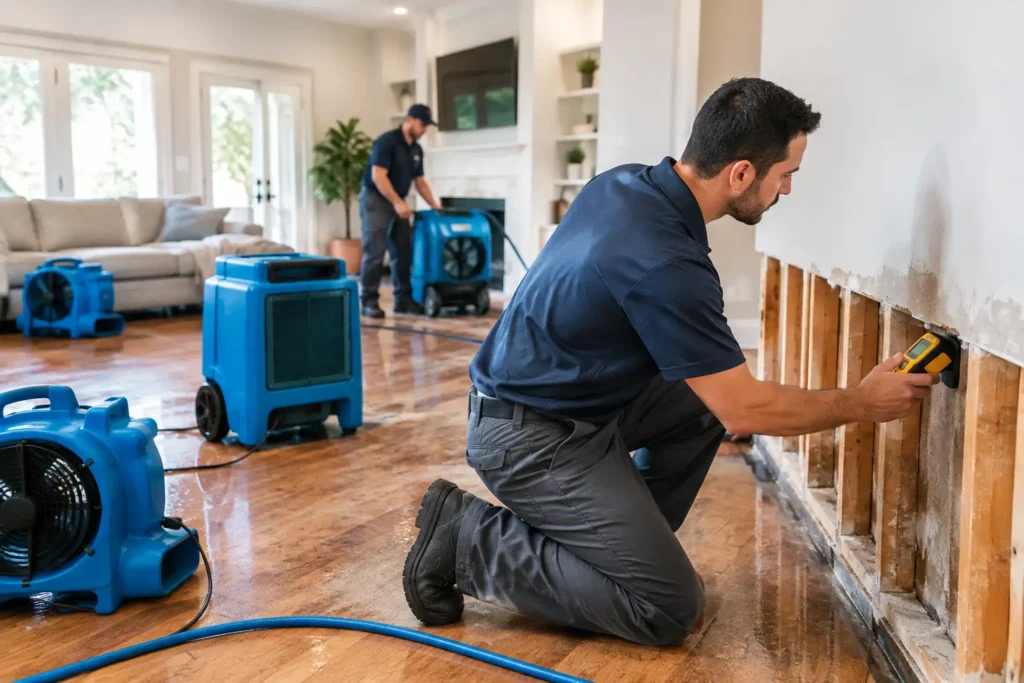
Restoration work involves more than fans and cleaning supplies. Proper water mitigation may require high-capacity extraction, commercial dehumidifiers, air movement equipment, moisture meters, thermal imaging, containment materials, and ongoing moisture monitoring. Fire and smoke recovery may involve specialized cleaning methods, odor control procedures, and careful evaluation of affected contents and building materials.
Ask whether the technicians follow IICRC service standards and have training relevant to the loss. IICRC-certified professionals are trained in recognized restoration principles for water damage, fire and smoke damage, and mold remediation. Credentials alone are not the entire decision, but they are a meaningful sign that a company takes procedures, documentation, and continuing education seriously.
Equipment matters because every property needs a different drying or cleaning plan. Over-drying, under-drying, or placing equipment without a moisture-based plan can create delays and leave problems behind. A qualified team should measure conditions, adjust the approach as the property dries, and explain why certain materials can be saved while others may need removal.
Make Sure the Scope Matches the Emergency
Not every restoration company handles every phase of recovery. Some may focus on initial mitigation, while others can coordinate the work from emergency cleanup through reconstruction. Neither approach is automatically better. The best fit depends on the damage and on how much coordination your home will need.
For a small, contained plumbing leak caught quickly, mitigation and targeted repairs may be enough. For extensive flooding, a kitchen fire, recurring moisture, or widespread mold damage, it is often easier to work with a provider that can manage assessment, cleanup, drying, repairs, and reconstruction support in a coordinated way.
Ask direct questions about the scope of work. Can the company remove standing water and dry structural materials? Do they handle sewage cleanup with proper containment? Can they clean smoke-affected contents? Do they provide mold remediation when an inspection identifies a problem? Can they support repairs after mitigation is complete? Clear answers prevent the frustrating handoff between multiple vendors during an already difficult time.
Expect Clear Communication About Your Home
A good restoration plan should never feel like a mystery. You deserve to know what technicians found, which areas are affected, what equipment is being used, and how progress will be evaluated. The company should also explain practical disruptions, such as whether rooms need to remain closed, whether furniture must be moved, and when daily monitoring may occur.
Be cautious if a provider gives broad assurances without inspecting the property or cannot explain its recommendations in plain language. Restoration decisions are often based on material type, moisture readings, contamination category, smoke migration, and the condition of the building. There may be trade-offs. For example, removing a limited section of damaged drywall may be necessary to dry concealed framing correctly, while other materials may be salvageable with prompt action.
The goal is not to create unnecessary work. It is to address the damage thoroughly enough that your home can be restored safely and reliably.
Ask How Documentation and Insurance Support Work
Insurance claims can add another layer of pressure after a property loss. A restoration company cannot promise what a policy will cover, but it can make the process easier by documenting conditions, taking photographs, recording moisture data, listing emergency services performed, and communicating clearly about the scope of work.
Before work begins, ask how the company documents the loss and whether it can provide the information your insurer may request. You should also understand what authorizations you are signing, what work is considered emergency mitigation, and how changes in the scope will be communicated.
Direct insurance-claim assistance can be valuable because it helps keep the technical details organized. Still, you remain part of the process. Keep copies of communications, ask questions when something is unclear, and notify your insurer promptly according to your policy requirements.
Pay Attention to Safety and Health Protection
Water damage is not all the same. Clean water from a supply line is handled differently than water from a toilet overflow or sewage backup. Smoke damage may require different precautions depending on the source and spread. Mold concerns call for a careful inspection and containment-focused remediation plan rather than a quick cosmetic treatment.
A responsible company will identify safety concerns early, use appropriate protective measures, and tell you if certain spaces should be avoided until cleanup is complete. This is especially important when there is contaminated water, visible mold growth, strong smoke residue, or compromised building materials.
Eco-friendly methods can also be a useful consideration, but effectiveness and safe application should come first. Ask what products and methods will be used in your home and how the team protects occupants, pets, and unaffected areas during the work.
Local Response Is About More Than Distance
Orange County homes range from coastal properties exposed to humidity and storm conditions to inland homes affected by plumbing failures, appliance leaks, and fire-related smoke. A local team understands that response conditions, construction styles, and access needs can vary from one neighborhood to another.
What matters most is that the provider can arrive prepared, communicate reliably, and stay accountable through the recovery process. SOS Restoration provides 24/7 emergency property restoration support designed to move homeowners from immediate containment through drying, remediation, and reconstruction support with clear guidance along the way.
Questions to Ask Before You Authorize Work
When time is limited, a few focused questions can help you make a confident decision. Ask whether the company can respond now, whether technicians are certified for the type of loss, and how they will determine that drying or cleanup is complete. Ask what documentation you will receive and who will be your point of contact.
Also ask whether the initial plan could change after moisture readings, material removal, or further inspection reveals concealed damage. That possibility is normal in restoration work. What matters is that the company communicates changes quickly, explains the reason, and obtains appropriate authorization before proceeding.
The best next step after a water, fire, smoke, sewage, or mold emergency is to act early and choose a team that treats your property with care. A calm, qualified response can protect more of your home, reduce uncertainty, and give you a clearer path back to a safe, comfortable space.