
- ✓ Open 24 hours, 7 days a week
- ✓ Serving Los Angeles County, Orange County, Riverside County and 195 more areas
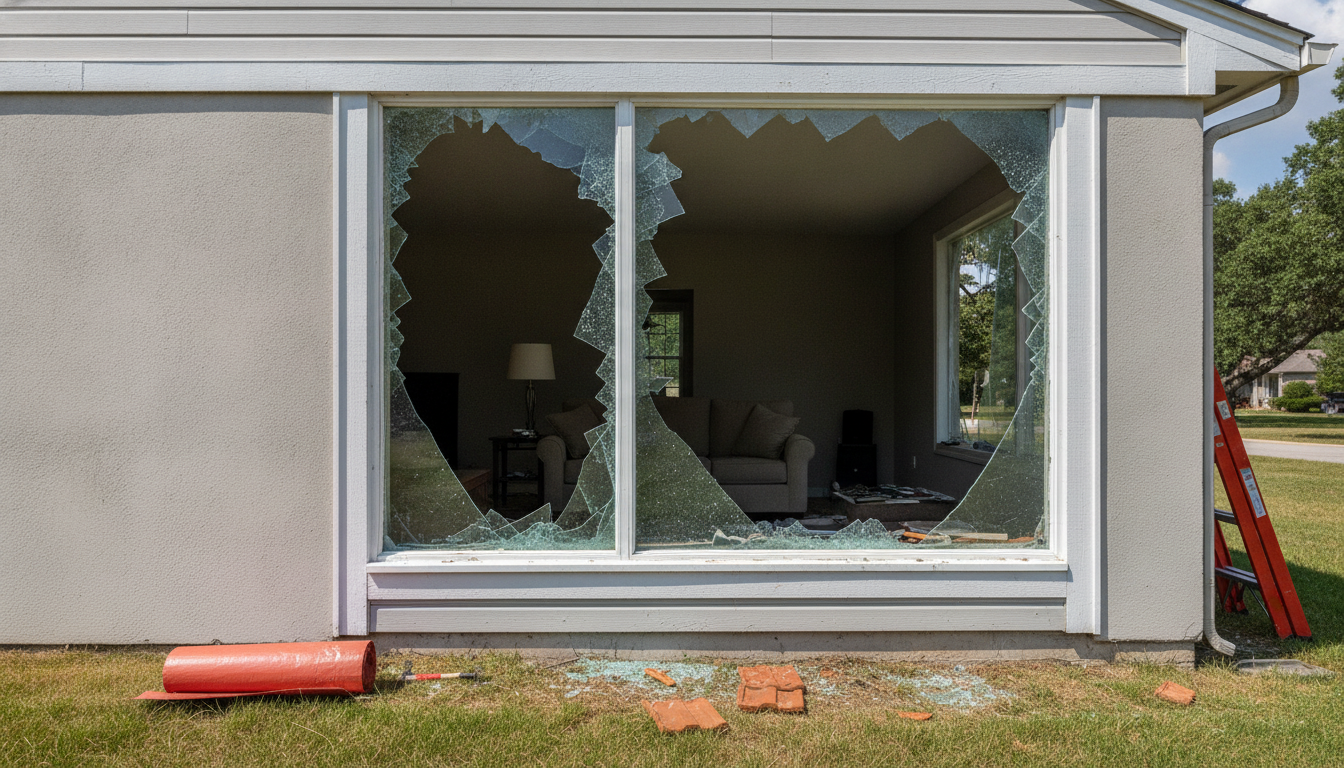
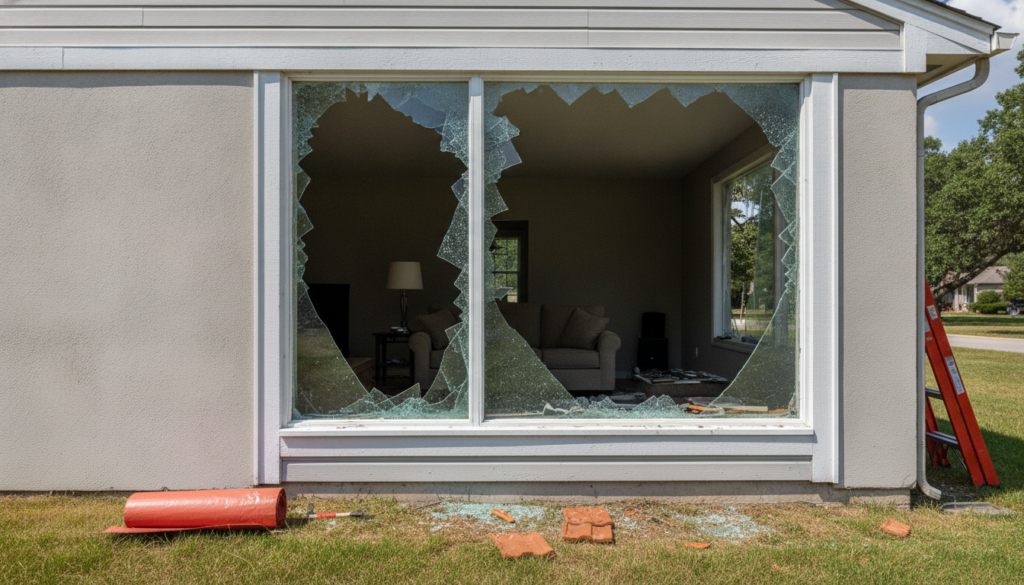
Treat a damaged window or door as urgent if you cannot safely secure the opening, keep people away from broken material, or protect the interior while waiting for repairs. Consider waiting for permanent repairs only when the opening remains closed and secure, the surrounding area can be avoided safely, and the repair arrangements address the condition as it stands.
1. Judge the opening, not just the visible damage
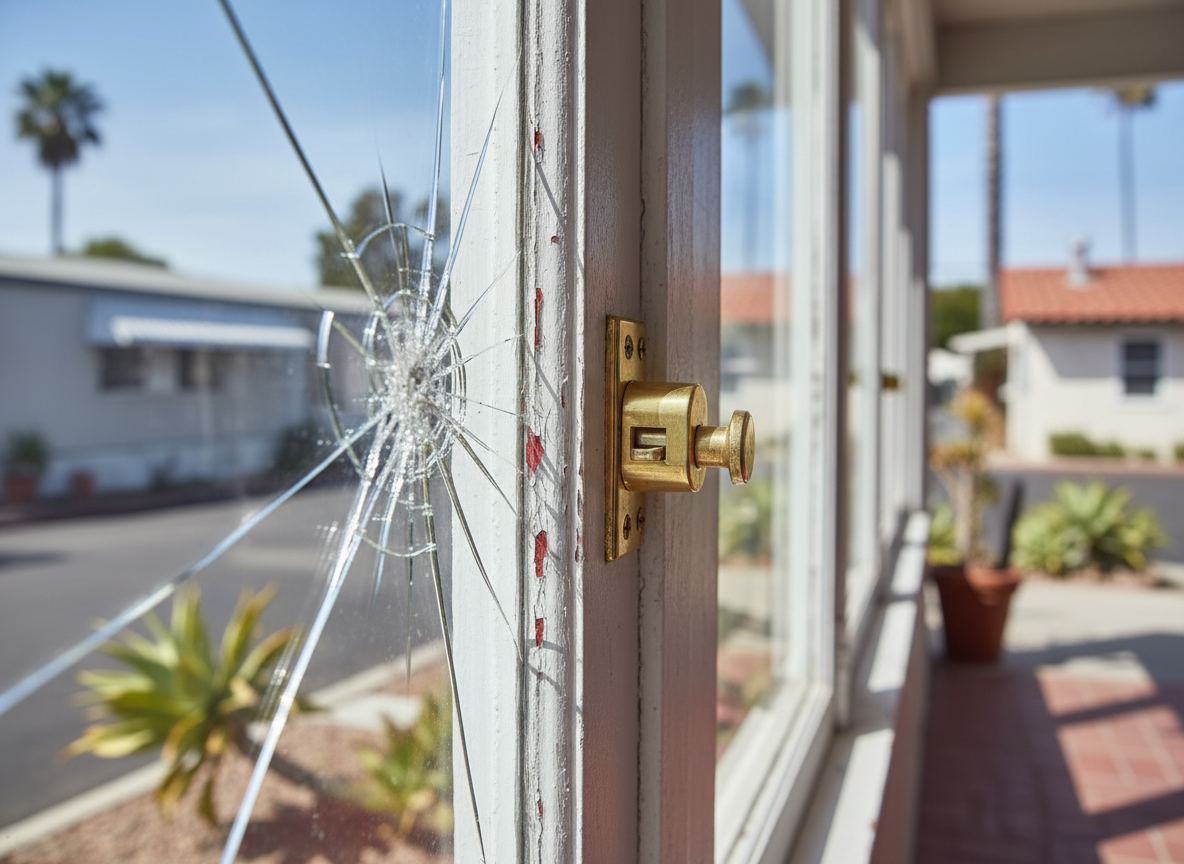
Start with the practical question: Can this window or door still serve as a secure boundary until it is repaired? From a safe position, look at whether there is an open gap, whether the door or window sits in its frame, and whether it appears fully closed. Do not test damaged glass, force a bent frame, or repeatedly operate a damaged door to find out how much movement it will tolerate.
A small-looking defect should not be your only reason to postpone help. If the door will not close or the window leaves an accessible opening, treat securing it as a separate decision from arranging the permanent repair. Conversely, do not assume that every visible mark calls for board-up; describe what is damaged and whether the opening still closes and locks.
If you cannot judge the condition without touching broken material or entering an unsafe area, stop there. Ask for help rather than trying to complete the assessment yourself.
2. Use security, exposure, and access to set urgency
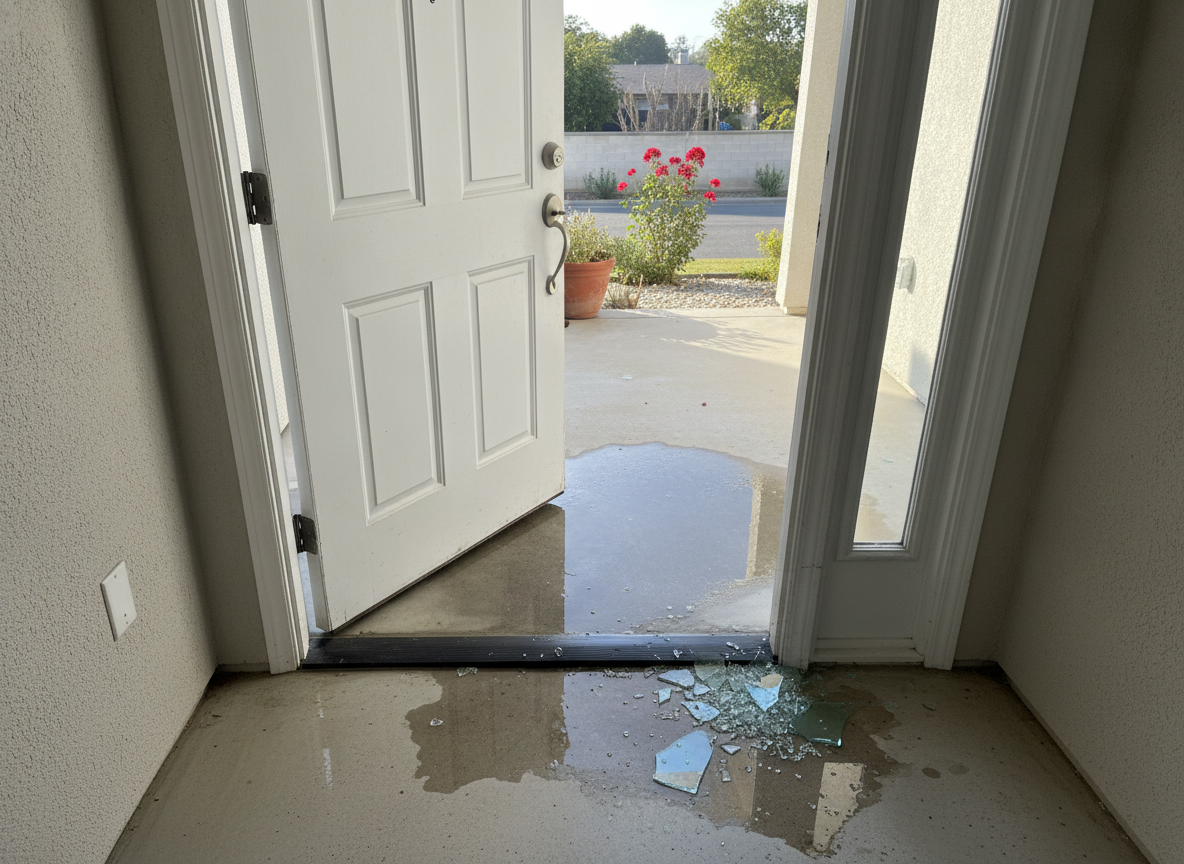
Consider three questions together: Can someone enter through the opening? Is the interior exposed to outdoor conditions? Can people stay clear of the damaged area? If any answer gives you concern, seek an emergency board-up assessment rather than relying solely on a later repair appointment.
Give particular attention to an opening you cannot supervise or a property you need to leave unattended. Before deciding to wait overnight, ask whether the window or door can actually be secured—not simply whether you can close curtains, shut an interior door, or move valuables out of sight. Do not use those measures as your reason to dismiss an unsecured exterior opening.
Also consider how people use the space. If the damaged door is needed for access or exit, or the broken window is beside a regularly used passage, explain that when requesting help. Do not improvise a barrier that blocks a needed exit or requires people to pass close to damaged glass.
3. Separate temporary protection from permanent repair
Make two decisions rather than one: what needs attention now, and what needs permanent repair afterward. When discussing emergency board-up, ask what temporary protection is appropriate for the specific opening and what arrangements you will still need to make for the window or door itself.
Having a repair appointment does not, by itself, answer whether you should leave the opening as it is until then. Compare the appointment timing with the current condition: whether the opening can be secured, whether the interior is exposed, and whether people can avoid the area. Describe those conditions to the person handling your request instead of asking only whether they can “fix a window.”
Likewise, do not assume that requesting board-up also books replacement glass, a new door, or other permanent work. Ask which work is being discussed before agreeing to the next step.
4. Know when waiting deserves a second look
Consider waiting only after checking the practical conditions around the damage. Is the opening fully closed? Does the lock still function without forcing anything? Is there any loose or broken material you would have to approach? Can the affected area remain unused while repairs are arranged? If you cannot answer confidently, seek an assessment rather than treating uncertainty as reassurance.
Reconsider the plan if the situation changes. A door that no longer closes, a newly visible gap, or an inability to keep people away should prompt a fresh call. Describe the change plainly, including whether the property will be occupied or unattended before repairs take place.
Base the decision on the condition of the opening now—not just on how soon you hope to have it repaired.
5. Prepare a clear description before you call
From a safe location, note whether the damage affects a window or door, whether it is on the ground level or higher, and whether the opening is exposed or accessible. Explain what you can observe about the frame, glass, closure, and lock without handling damaged parts. If you can take a photograph safely, ask whether it would help with the discussion; do not move closer just to get a better picture.
Be specific about timing and access. Say when you noticed the damage, whether anyone is currently at the property, and whether you already have permanent repairs arranged. Ask about availability and the next step rather than assuming that round-the-clock business hours mean a particular arrival time.
SOS Restoration offers emergency board-up and is open 24 hours a day, seven days a week. When you call, explain the condition of the opening and ask about help for your situation.
Frequently Asked Questions
Does every cracked window need emergency board-up?
Do not decide from the crack alone. Consider whether the opening remains secure and whether people can safely avoid it. If assessing that would require touching or testing damaged glass, leave it alone and request guidance.
Can I wait if permanent repairs are already booked?
Evaluate the time before that appointment separately. If the opening cannot be secured or the affected area cannot be avoided safely, ask about temporary protection rather than relying on the repair booking alone.
Should I move broken glass before calling?
You do not need to clear the damage to explain the situation. Keep people away, describe what you can see from a safe position, and avoid handling broken material just to prepare for the call.
What if there is immediate danger?
Move away from the affected area and contact emergency services if anyone is in immediate danger. Address restoration arrangements after immediate safety needs have been handled.
For emergency board-up help, call SOS Restoration at 888-817-1650.
Areas we serve
- ● Los Angeles County
- ● Orange County
- ● Riverside County
- ● San Bernardino County
- ● Ventura County
- ● Santa Barbara County
- ● Agoura Hills
- ● Alhambra
- ● Arcadia
- ● Artesia
- ● Avalon
- ● Azusa
- ● Baldwin Park
- ● Bell
- ● Bell Gardens
- ● Bellflower
- ● Beverly Hills
- ● Bradbury
- ● Burbank
- ● Calabasas
- ● Carson
- ● Cerritos
- ● Claremont
- ● Commerce
- ● Compton
- ● Covina
- ● Cudahy
- ● Culver City
- ● Diamond Bar
- ● Downey
- ● Duarte
- ● El Monte
- ● El Segundo
- ● Gardena
- ● Glendale
- ● Glendora
- ● Hawaiian Gardens
- ● Hawthorne
- ● Hermosa Beach
- ● Hidden Hills
- ● Huntington Park
- ● Industry
- ● Inglewood
- ● Irwindale
- ● La Cañada Flintridge
- ● La Habra Heights
- ● La Mirada
- ● La Puente
- ● La Verne
- ● Lakewood
- ● Lancaster
- ● Lawndale
- ● Lomita
- ● Long Beach
- ● Los Angeles
- ● Lynwood
- ● Malibu
- ● Manhattan Beach
- ● Maywood
- ● Monrovia